The government will establish a dedicated national centre to counter disinformation and synthetic media attacks from hostile foreign powers, Prime Minister Andy Burnham announced on Tuesday, framing the initiative as essential to protecting British democracy and society from what he described as a corrosive campaign of information manipulation.
The National Centre for Information Defence will work across intelligence agencies, law enforcement and technology companies to identify the sources of foreign information attacks, assign responsibility for them, and neutralise their effects. The centre will also strengthen public understanding of disinformation tactics, helping communities recognise and resist false narratives designed to undermine confidence in British institutions and values.
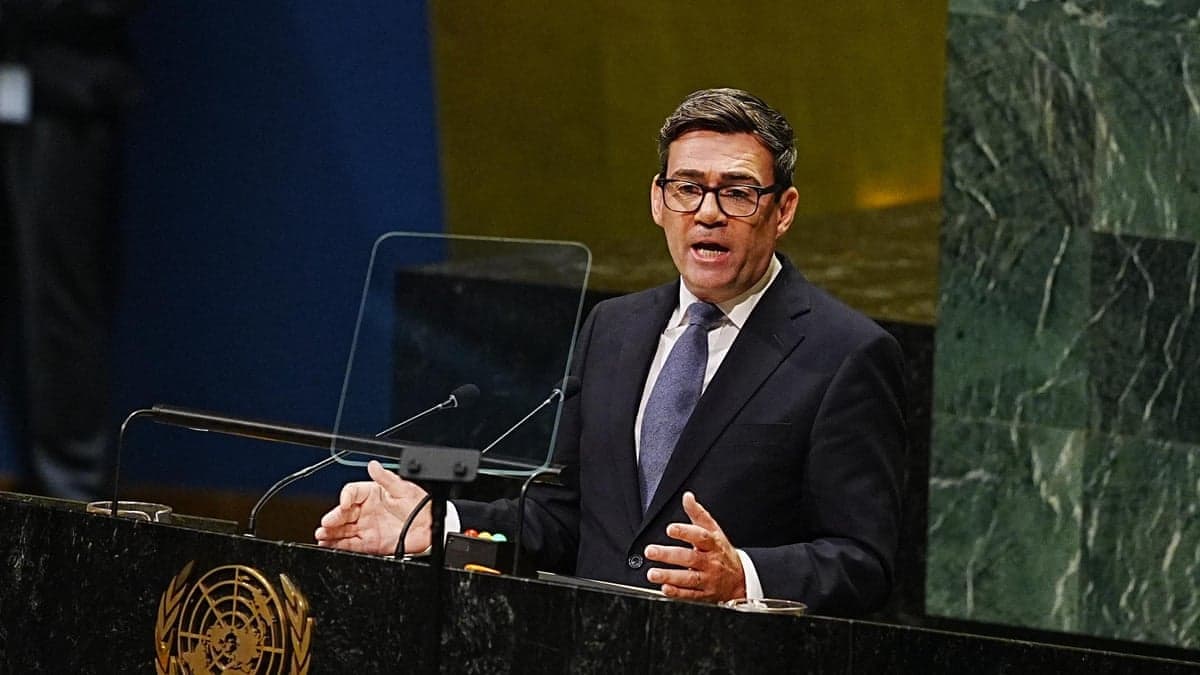
Burnham delivered his announcement during a speech to the United Nations in New York, where he warned that the coming decade would require heightened vigilance against what he termed "insidious" campaigns orchestrated primarily by Russia. He argued that the Kremlin had systematically sought to distort public perception of life in Britain, amplifying narratives of national decline and social fracture.
The prime minister highlighted a particular vulnerability: people facing economic hardship or lacking employment, education or training opportunities may be more susceptible to foreign influence operations.
"If you're struggling with the cost of living and your life is not improving – or if you're a young person not in employment, education or training – then you are going to be much more vulnerable to this kind of influence," Burnham said.
He connected this observation to broader social cohesion, arguing that widening inequality creates conditions in which disinformation takes root.
"When inequalities grow too wide, our societies are at greater risk. So we will work to make life more affordable. And we will put in place the architecture we need to stem this poisonous tide."
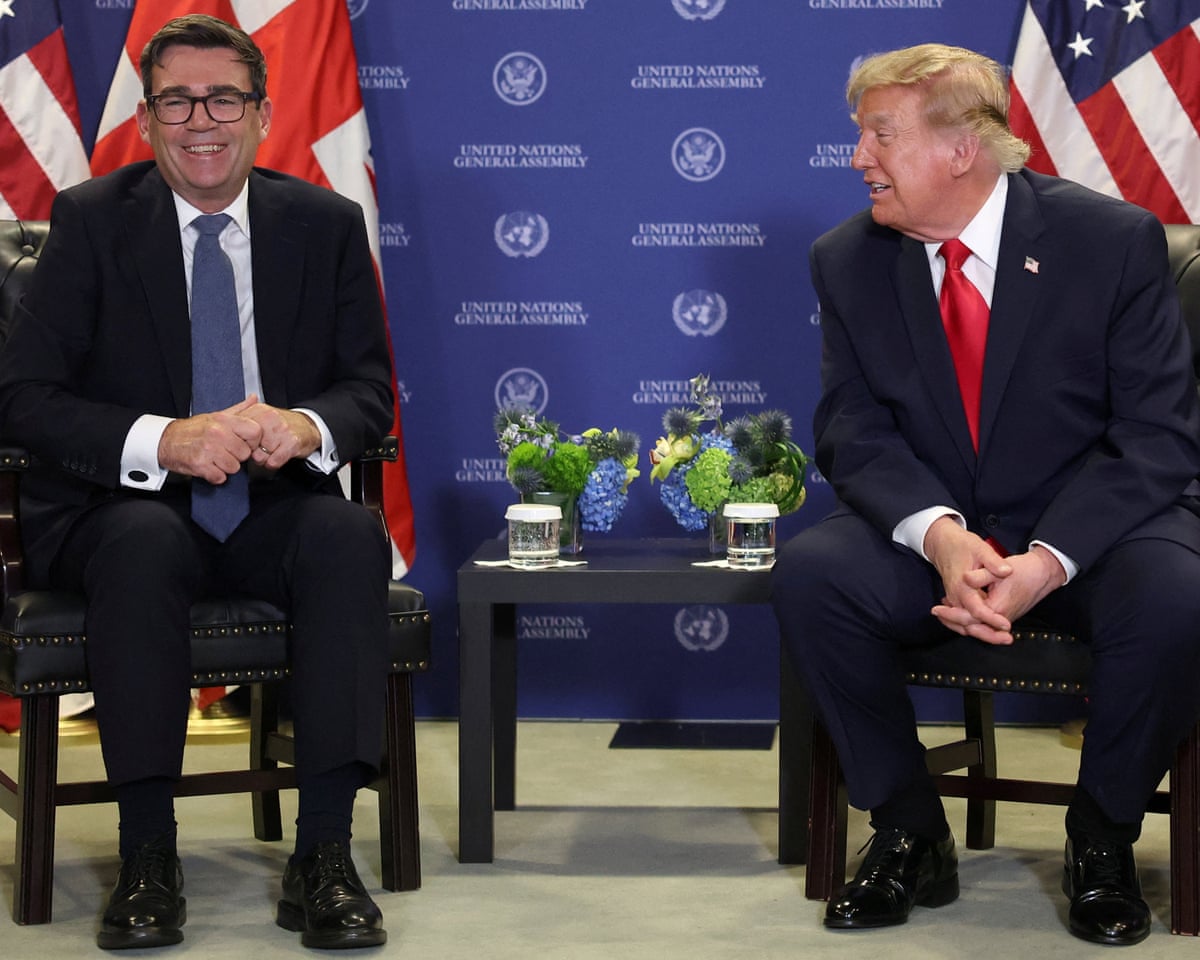
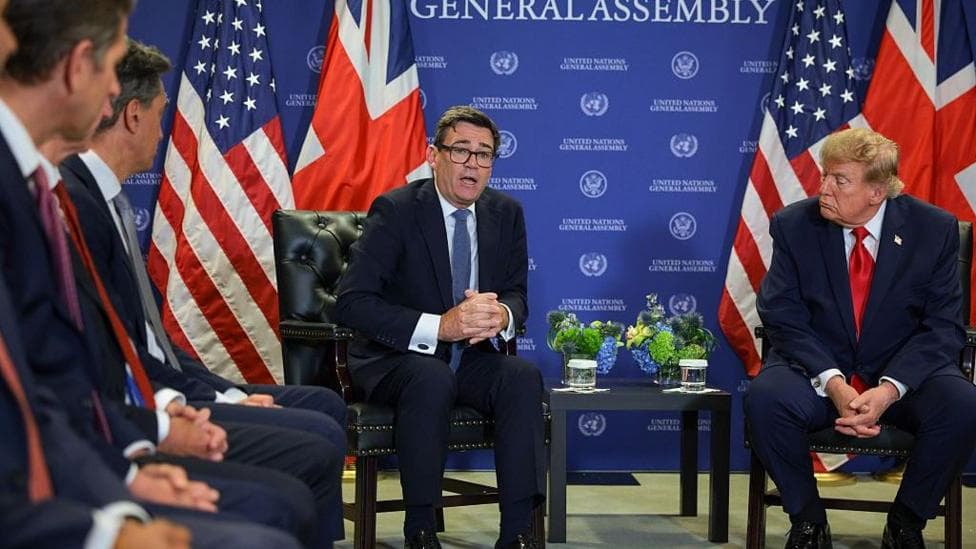
The announcement came after US President Donald Trump, during a UN press conference with Ukrainian President Volodymyr Zelenskyy, suggested that Burnham's government had adopted an overly confrontational stance towards Moscow. Trump stated that London "needs to be a little bit careful" regarding its rhetoric on Russia. Downing Street rejected this characterisation, with the prime minister's official spokesperson reaffirming that every UK prime minister, including Burnham, had maintained a consistent position that Russian threats—whether military, cyber or rhetorical—were "egregious and unacceptable". The spokesperson added:
"The UK is united with our allies on the importance of defending ourselves, and Russia's aggression will not deter us from supporting Ukraine."
What tactics has Russia deployed?
Burnham detailed the scale and sophistication of Russian information operations. He stated that the Kremlin allocates approximately £1.3 billion annually to information manipulation campaigns. Russian state agencies have deployed a range of techniques including automated bot networks, fabricated websites, forged news articles and counterfeit branding of legitimate British organisations—among them universities and national media outlets.
"Russian agencies have used every means at their disposal to spread lies and disinformation and prey on people's fears. They've used bots and fake websites. Falsified newspaper articles. Forged the branding of 28 British organisations – including universities and the BBC. They've amplified far-right narratives."
The prime minister also referenced evidence that Russia had attempted to exploit social tensions following major incidents, using tragedy and public distress as opportunities to deepen divisions.
"We also know that they have tried to stoke tensions and unrest in the wake of horrific events. The idea that anyone would try to use such things to their advantage is just repulsive – but it is what they do."
The UK government has already taken enforcement action against Russian information warfare actors. According to official government records, the UK has sanctioned 106 entities and individuals linked to Russia's information warfare operations since October 2024. This includes 56 interference actors sanctioned on 11 May 2026 for destabilising Ukraine and 10 Rybar affiliates sanctioned on 13 July 2026 for the same purpose.

How will the new centre operate?
The National Centre for Information Defence will function as a coordinating hub bringing together the UK's security and intelligence apparatus with private sector partners. Its core mission involves three interconnected functions: detecting foreign information attacks as they occur, attributing them to their source states or actors, and implementing measures to disrupt their spread and impact.
According to reporting from , the centre will be tasked with building national resilience by equipping communities with the knowledge and tools to identify and counter disinformation before it takes hold. The centre is initially being led from the Office of the Prime Minister and Cabinet.
Burnham emphasised that the challenge extends beyond defensive measures.
"We have tiptoed around this for too long. Over the last decade we have given too much ground to those who want to run a negative, corrosive narrative about life in Britain, which bears no resemblance to reality. Well, no more. We are going to face the new decade in a different way – with our eyes wide open."
What international partnerships are being developed?
The UK intends to position itself as a leader in countering information warfare globally. Burnham announced that the government will share its experience and expertise with other nations facing similar threats, particularly as elections approach across Europe. Moldova has already received UK support in protecting its electoral processes from Russian interference.
Beyond the information defence centre, Burnham is announcing a new UK-US artificial intelligence defence partnership designed to strengthen protection of critical infrastructure and enhance threat detection capabilities. This reflects growing recognition that artificial intelligence will amplify the sophistication and scale of future disinformation and deepfake operations.
The UK is also advancing a parallel agenda on global artificial intelligence safety standards. According to reporting on the government's UN engagement, the UK is pushing for international consensus on AI governance frameworks that would help prevent hostile actors from exploiting emerging technologies for information warfare.
The threat posed by AI-generated synthetic media is accelerating. Kremlin-linked networks have already begun deploying AI-cloned celebrity deepfakes in interference campaigns, including recent operations targeting US politics. This technological escalation underscores the urgency of the UK's new institutional response.
What regulatory steps are being taken?
The government's response to information warfare extends to platform regulation. UK media regulator Ofcom has set a deadline of 30 September 2026 requiring social media and online platforms to deploy hash-matching technology capable of identifying deepfake intimate images. Platforms failing to meet this deadline face significant financial penalties.
Burnham framed the new centre as part of a broader commitment to defending democratic values and the rule of law.
"We are going to be much prouder in standing up for our values and the rule of law. And we are going to help our people to strengthen their resilience – because, faced with this information warfare, security starts in every home."
The announcement reflects mounting concern across Western governments about the sophistication and scale of Russian information operations. Unlike traditional military threats, information warfare operates through channels that reach directly into homes and communities, making public awareness and resilience central to any effective defence strategy.
Key Facts
- The National Centre for Information Defence will detect, attribute and disrupt foreign information attacks, bringing together UK intelligence agencies, law enforcement and social media companies.
- Russia spends approximately £1.3 billion annually on information manipulation, deploying bots, fake websites, forged articles and counterfeit branding of British organisations.
- The UK has sanctioned 106 entities and individuals linked to Russian information warfare since October 2024.
- A new UK-US artificial intelligence defence partnership will enhance protection of critical infrastructure and threat detection.
- Ofcom requires UK platforms to deploy deepfake detection technology by 30 September 2026 or face fines.