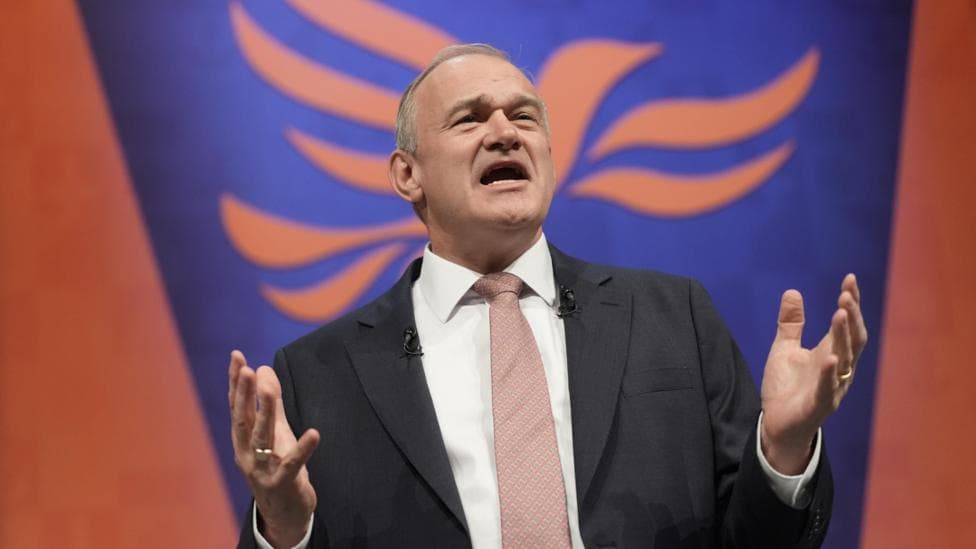
Sir Ed Davey presented a markedly different persona at this year's Liberal Democrat party conference in Brighton. Gone were the theatrical moments that have characterised his leadership—the paddleboard mishaps, the rollercoaster rides—replaced by a more measured and purposeful tone.
"This is the fight of our lives,"he told delegates repeatedly throughout the gathering. The messaging centred on positioning the party against Reform UK, but his headline announcement targeted a broader audience: Conservative-leaning voters concerned about their tax burden.
The centrepiece of Davey's closing speech was a £17 billion income tax cut package designed to reshape the party's electoral appeal. According to ITV's reporting of the announcement, the plan would raise the personal allowance to £15,000 and lift the 40p tax threshold to £56,000. The party claimed this would deliver most taxpayers a £680 annual tax cut and remove 2.5 million of the lowest-paid workers from income tax altogether, while also taking 760,000 people out of the higher-rate band.
The proposal extended beyond lower earners. By raising the additional-rate threshold above £125,000, the party ensured that higher-income households would also benefit—a deliberate choice to appeal across income groups rather than targeting relief downward.
How would the Lib Dems pay for this?
The funding mechanism reveals Davey's strategic positioning. Rather than following Reform UK's approach of cutting welfare spending, he proposed financing the tax cuts through economic growth generated by rejoining the EU's Single Market and customs union. This creates a stark dividing line: while Reform UK and the Conservative Party both advocate welfare reductions, the Lib Dems argue that European integration would unlock growth sufficient to fund tax relief without spending cuts.
According to reporting from a national news outlet, Davey framed the policy as part of a broader effort to repair Britain's trade relationship with Europe. In Monday's remarks, he said the Lib Dems want to
"repair that trade relationship with Europe"through closer ties with the single market and customs union. The party insists a deal could be negotiated within a year if it entered government after the next election.
Economic forecasters, including the Office for Budget Responsibility, have suggested the UK economy could expand under Single Market membership. However, recent political history offers cautionary lessons: EU negotiations frequently prove more protracted and complex than party leaders anticipate, and basing tax cuts on speculative future growth carries inherent risk.
Are the numbers credible?
The Institute for Fiscal Studies, an independent think tank, raised concerns about the party's arithmetic. The organisation stated that the policy as outlined in the Lib Dems' press release would cost substantially more than the £17 billion budgeted figure. This discrepancy has not been fully resolved, leaving questions about whether the sums genuinely add up.

A further complication is timing. The Lib Dems have stated the tax cut would not take effect until the fifth year after the next election. If a general election occurs in 2029, as widely anticipated, implementation could be pushed as late as 2034—potentially eight years away. This extended timeline means voters would be asked to support a promise with no immediate benefit and considerable uncertainty about whether the conditions for its delivery would materialise.
What does this mean for Lib Dem strategy?
Davey entered the conference facing private criticism from some MPs and public concerns from party members about the party's ambition and direction. The tax announcement appears to have quietened those doubts, at least temporarily. One previously sceptical MP told analysts afterwards:
"That was the speech a lot of us have been waiting for him to give."
A minority within the party remains uncomfortable with the policy's distributional impact. Some MPs would have preferred the focus to shift toward younger voters by addressing student loan repayment burdens—a longstanding source of tension within the party. Overall, however, the conference and Davey's speech were well received by the party faithful.
The strategic calculation is transparent. The Lib Dems are targeting the 27 seats where they came second in 2024, most held by the Conservatives. Davey's tax cuts are explicitly designed to appeal to voters in those constituencies. The party is not merely defending its record 72 seats from the last election but attempting to expand its parliamentary presence.
What about coalition politics?
Davey has given his clearest answer this week on post-election arrangements. He has ruled out a coalition government with the Conservatives and has done the same for Reform UK. Notably, he has not ruled out a pact with Labour. This positioning has already drawn attack from the Tories, who characterise the Lib Dems as
"Labour's lapdog."That line of attack will likely recur repeatedly before the next election.
Davey has already experienced government, serving in coalition with David Cameron's Conservatives from 2010 to 2015. His ambitions clearly extend beyond opposition.
"I've got no ceiling on our ambitions,"he declared this week, signalling that another spell in office remains his objective.
What happens next?
The next major test arrives with the general election. According to reporting on the policy announcement, the tax cuts would only begin in the final year of a parliament, potentially pushing implementation to 2034 if the next election is in 2029. The party will need to maintain its current momentum while defending its tax plan against scrutiny from both left and right. The Conservatives will continue portraying the Lib Dems as Labour allies, while Labour may argue the tax cuts favour the wealthy over public services. The party leaves Brighton with renewed energy and clear messaging, but the path to delivering on its promises remains uncertain and contingent on electoral success followed by successful EU negotiations.

Key Facts:
- The Lib Dem tax cut plan would raise the personal allowance to £15,000 and the 40p threshold to £56,000, delivering most taxpayers a £680 annual cut
- The party proposes funding the £17 billion package through economic growth from rejoining the EU Single Market and customs union, contrasting with Reform UK's welfare-cutting approach
- Implementation would not begin until the fifth year after the next election, potentially pushing the start date to 2034
- The Institute for Fiscal Studies has questioned whether the party's figures are accurate, suggesting the true cost exceeds the £17 billion estimate
- The Lib Dems are targeting 27 seats where they came second in 2024, most currently held by the Conservatives