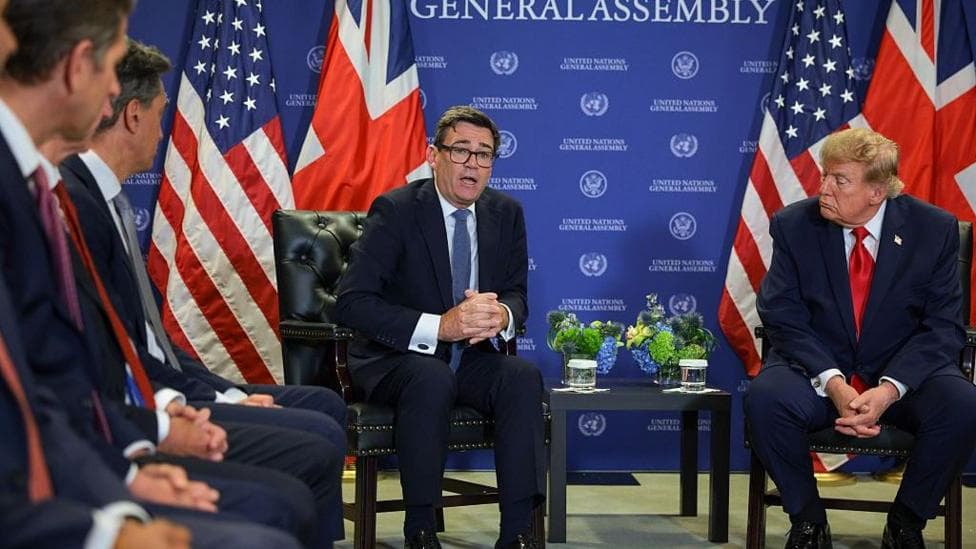
Positioned between the cameras in a basement meeting room at United Nations headquarters, I watched a president intent on projecting magnanimity as he sat across from Britain's newest prime minister. Donald Trump possesses the capacity to display genuine warmth when circumstances suit him, though acerbity remains equally within his range.
Andy Burnham, elevated from his role as a city mayor mere months earlier, now occupied a seat beside the world's most powerful leader. The scenario carried an undeniable weight, though Burnham had expressed genuine anticipation for the encounter beforehand. Yet beneath that optimism lay an unmistakable current of apprehension.
As journalists filed into the windowless, nondescript meeting room situated down a dingy corridor in the basement of the UN building, Burnham's nervousness was visible. What followed, however, saw compliments flowing steadily from the American president. According to reporting on the meeting, the two leaders had already spoken twice by telephone before this face-to-face encounter on 22 September 2026.
The original scheduling had called for media access at the meeting's outset, potentially within minutes of the two men first greeting one another. Instead, journalists remained outside during their private discussions, an arrangement that ultimately proved advantageous—it allowed both leaders substantially more material to discuss about each other and their conversation than would have otherwise emerged.
Burnham understood, as does the wider world, the unpredictable nature of these unscripted, camera-present exchanges with Trump. They operate without safety mechanisms, careening in directions that cannot always be predicted.
How did the first face-to-face encounter develop?
Having positioned myself in Trump's direct line of sight, I waited for Burnham to complete his opening remarks. The moment silence fell, I posed my question: whether the president viewed the prime minister as someone with whom business could be conducted, given their political divergences.
Trump's response carried unmistakable warmth.
"I do, I think he's a natural business person. We've had a lot of discussions even before this meeting. We've spoken to each other numerous times on the phone. Yeah, I think so, I think so. He gets it. He understands what he has to do."The evident cordiality suggested that any nervousness from Downing Street may have begun to dissipate.
The question then became how long the questioning would continue. This remained Trump's performance to control; on previous occasions, such sessions have stretched well beyond thirty minutes. This particular venue—a basement room at the UN rather than the Oval Office—perhaps diminished the ceremonial weight somewhat, yet the fundamental dynamic remained unchanged.

According to , the meeting lasted approximately 40 minutes, during which the two leaders found what Burnham described as "common ground" on cost-of-living pressures, Middle Eastern conflict, and economic reindustrialisation.
Where did disagreements emerge?
Questions about immigration, potentially contentious terrain, passed without significant friction. Similarly, the British government's decision—announced by Foreign Secretary Ed Miliband, who attended the meeting—to impose sanctions on West Bank settlements proceeded without derailing the discussion, despite the decision's infuriation of Israel.
The Chagos Islands question, however, proved different. Trump made no attempt to conceal his assessment that Britain's decision to transfer sovereignty to Mauritius while leasing back the Diego Garcia military base constituted a
"terrible"arrangement. The president continued:
"I think the prime minister is going to be looking at [the deal],"to which Burnham simply replied
"yep."
Subsequently, I conducted a brief interview with Burnham on behalf of all broadcasters present. The prime minister characterised the meeting as
"very encouraging"and stated that
"we've established a good connection."When pressed specifically about whether the Chagos arrangement would change, Burnham deliberately framed it as a deal he had
"inherited"and indicated that
"we've got to find a resolution, and so work will continue now…to see where that resolution might lead."His language suggested the agreement would likely undergo revision.
What lies ahead in the US-UK relationship?
Future friction points with Trump appear virtually inevitable—few world leaders navigate his administration without encountering them, and Burnham may eventually choose to challenge the president on certain matters in service of British interests. Conversely, Trump may independently press Burnham on issues like the Chagos arrangement, whether or not the prime minister welcomes such pressure.
According to reporting from the New York Times, Trump used the meeting to signal that a potential "settlement" on Iran could materialise soon, indicating the breadth of topics under discussion.
For now, Burnham has established a presidential relationship upon which he can build following this initial face-to-face conversation. The prime minister's subsequent meetings at the UN proceeded according to conventional diplomatic protocols—a marked contrast to the unpredictable intensity of his encounter with Trump.
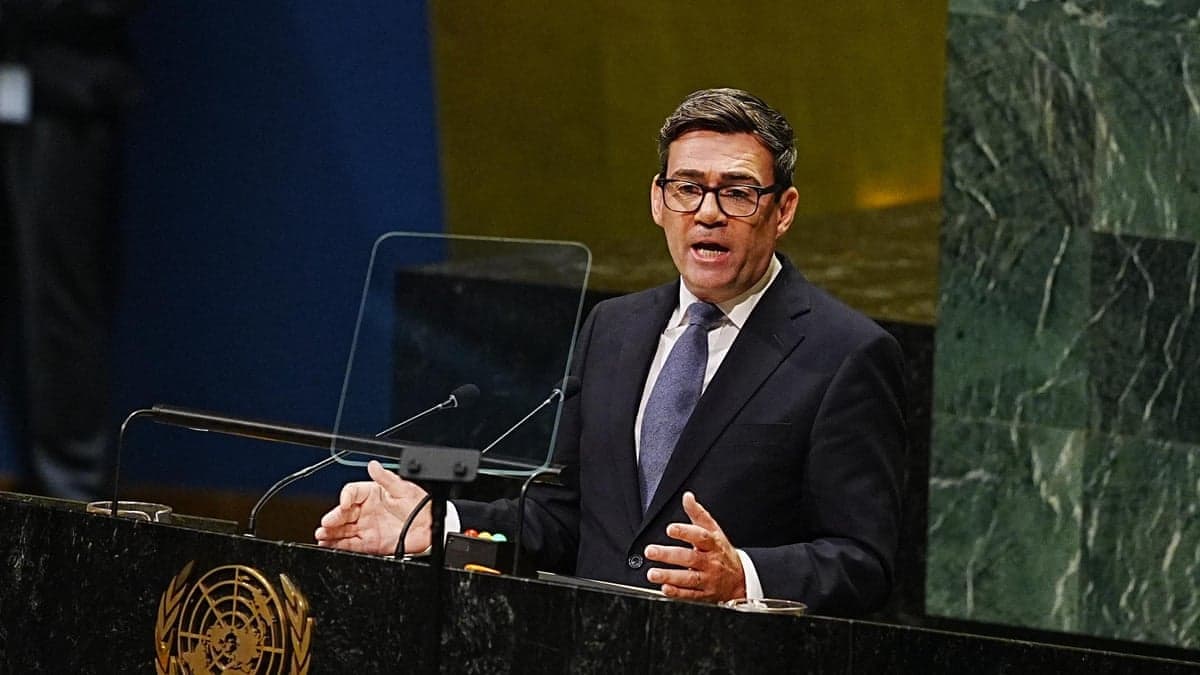
Burnham had entered the meeting fresh from delivering his inaugural address to the UN General Assembly, where he warned about the dangers of unconstrained artificial intelligence and disinformation. His elevation from municipal leadership to the prime ministerial office, occurring only months before this encounter, underscored the significance of his first direct engagement with the American president.