A newly developed camera system being trialled on motorways in south-east England has identified thousands of vehicles displaying illegal registration plates designed to evade automatic number plate recognition (ANPR) technology. The discovery, revealed through investigative journalism, exposes a significant vulnerability in the UK's road enforcement infrastructure and highlights growing risks to public safety.
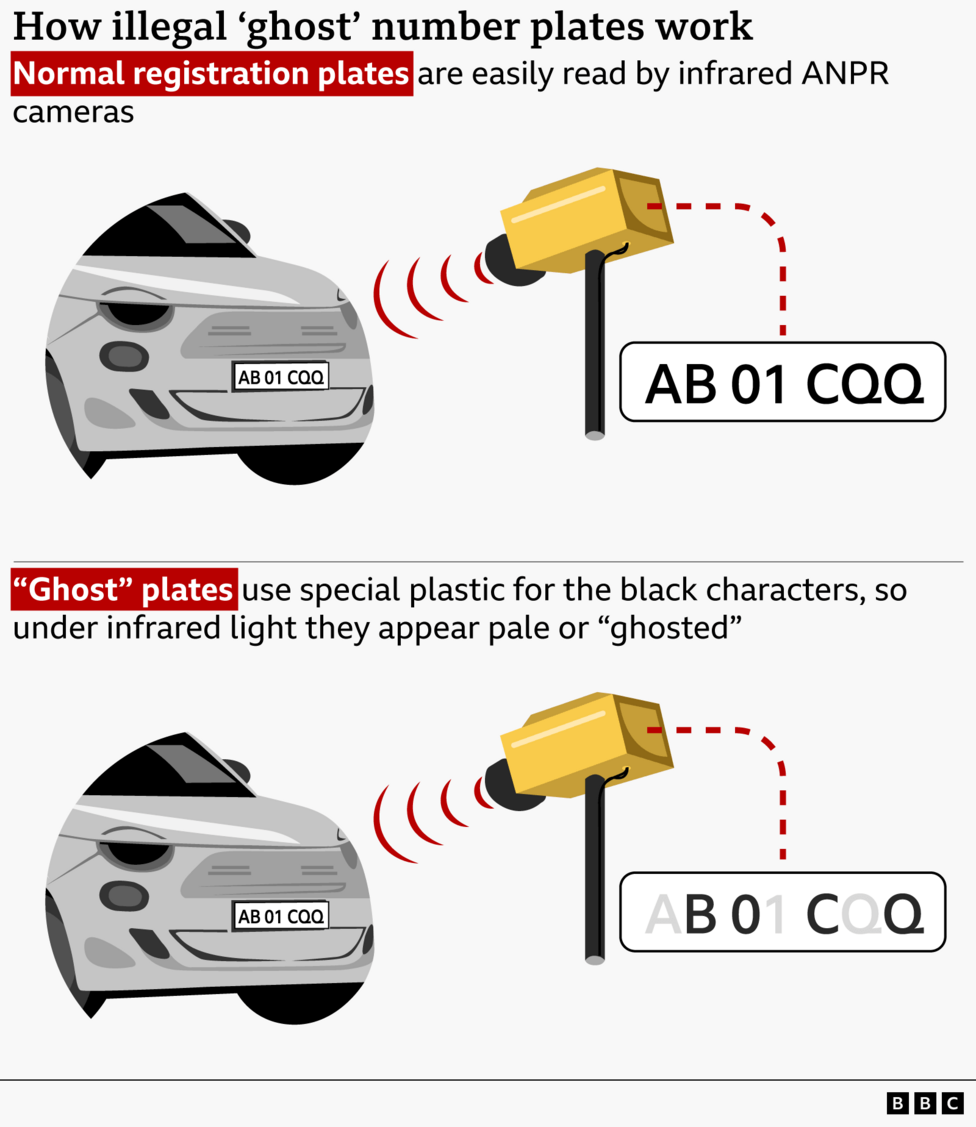
These altered plates employ various techniques to prevent identification by ANPR systems, which are deployed to enforce speed limits, monitor low emission zones, and track criminal suspects. The problem encompasses both cloned plates—where two vehicles share identical registration numbers—and so-called ghost plates, which use special reflective materials to render registration details unreadable to most motorway cameras.
The scale of the issue has prompted urgent government action. According to recent government announcements, a centralized crackdown is being established through the National Roads Policing Coordination Centre, bringing together police forces to share intelligence and trial new detection technologies. The minister responsible for vehicle registration across the UK has confirmed that a national plan is now underway to assess how widespread the problem has become and determine appropriate responses.
The UK operates one of the world's largest ANPR networks, with 14,000 camera sites capturing approximately 100 million number plates daily. However, many experts contend that this system is failing to keep pace with the evolving tactics employed by drivers determined to avoid detection.
How the new detection system is revealing the problem
MAV Systems, a leading provider of ANPR technology, has been testing a camera system specifically designed to identify and read ghost plates. At a test site near the Dartford Crossing outside London, the equipment has recorded an average of more than 1,000 ghost plates daily over several months. Two additional test locations have been operational for nearly two years: one near the M25 has seen detections increase from 1,000 per day to nearly 2,000 daily, while another near the Eurotunnel at Folkestone is flagging more than 400 instances per day.
Tragic consequences of illegal plates
Families have reported devastating impacts from road incidents involving vehicles displaying illegal registration plates. These cases demonstrate how the inability to track such vehicles through standard ANPR systems can enable dangerous driving behaviour and obstruct justice.
Jason Wallis died in a motorcycle crash in Buckinghamshire during 2023 after colliding with a car while riding at high speed. His brother-in-law, Lewis Baker, survived the incident but was subsequently imprisoned for 15 months following conviction for dangerous driving. In court proceedings, Baker admitted to using a device to conceal his number plate from public view and acknowledged that he and Wallis had engaged in high-speed riding on more than 100 occasions. Sharon Gannon, Wallis's mother, describes the crash's impact on her family: "It has broken us all."
A second fatal incident occurred in 2025 when 81-year-old Graham Slinn was struck by a vehicle at a pedestrian crossing. The driver, 20-year-old Cain Byrne, was operating the car without a valid licence or insurance and had consumed nitrous oxide minutes before the collision. Byrne was identified only after police reviewed extensive CCTV footage, with one camera capturing the moment he attached the illegal plates to his vehicle. He received an 11-year-and-six-month prison sentence for causing death by dangerous driving, driving while disqualified, and driving without insurance.
Nicola Timmis, the victim's daughter, characterizes cloned plates as a "gateway drug" that encourages progressively riskier behaviour. "It seems like it's harmless, but then one thing leads to another, leads to another, and before you know it, it's somebody dead," she explains. "It is not a victimless crime."
Understanding cloned and ghost plates
Both cloned and ghost plates appear identical to standard vehicle registration plates when viewed with the naked eye, yet they function very differently. Cloned plates involve at least two vehicles on the road bearing identical letters and numbers, with only one registration being lawful. Ghost plates display correct vehicle details but incorporate reflective materials that render the registration unreadable to most ANPR cameras.
Tony Porter, a former senior counter-terrorism officer who has advised the government on surveillance systems, emphasizes the security implications. "The police need an effective ANPR system that doesn't have weaknesses [and] doesn't put the public at risk," he states. He highlights a stark contrast: while passports incorporate multiple security features including watermarks and electronic ID chips, the UK permits £10 number plates with no security mechanisms whatsoever.

The ability to use illegal plates undermines police capacity to track organized criminals. According to government sources, the new crackdown specifically targets organized crime groups alongside drivers attempting to evade fines, addressing both cloned plates and ghost plates that employ transparent film or other materials to circumvent camera detection.
How easily can illegal plates be obtained?
The UK currently permits more than 34,000 businesses registered with the Driver and Vehicle Licensing Agency (DVLA) to supply number plates. The registration process requires only completion of a basic form and payment of a one-time fee, creating minimal barriers to entry.
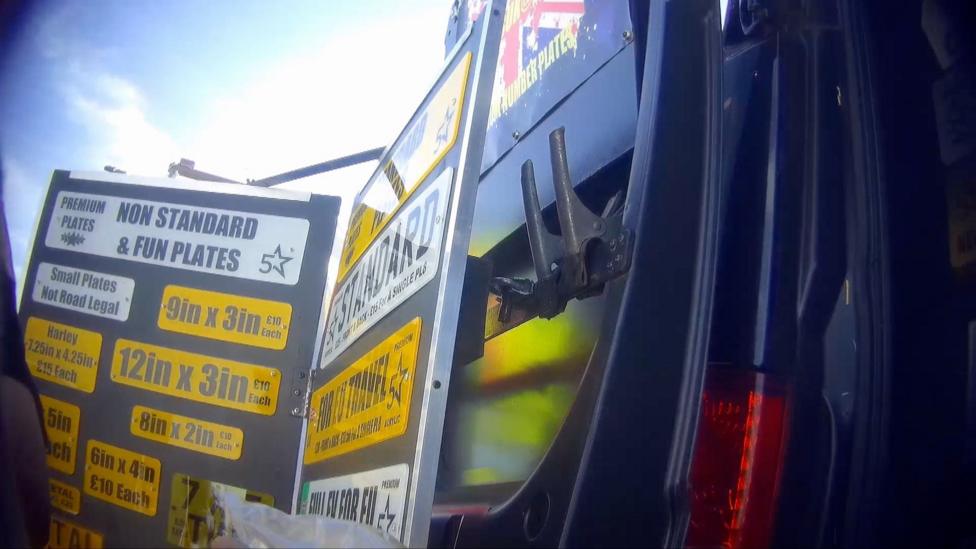
Undercover investigation at a market in Essex revealed the ease with which illegal plates can be purchased. Of three businesses approached, two offered ghost plates explicitly marketed as capable of evading London's Ultra-Low Emission Zone (Ulez) cameras. One supplier sold a ghost plate for £40 in cash without requesting identification or proof of authorization to use the registration—both legally mandated requirements. The entire transaction took eight minutes.
While purchasing a ghost plate is not itself illegal, installing and driving with one constitutes a criminal offence. According to university research supporting the government response, drivers displaying incorrectly displayed number plates can face fines of up to £1,000.
Enforcement of existing regulations remains minimal. A Freedom of Information request revealed that only two number plate suppliers have been prosecuted and removed from the DVLA register since 2020. The DVLA currently employs just six officers to inspect and audit the thousands of registered suppliers across the UK. In a statement, the DVLA indicated it was "cleaning up the register, strengthening compliance and enforcement" and continuing collaboration with police and Trading Standards to "tackle suppliers who break the rules."
What enforcement operations have uncovered
During a roadside operation conducted jointly by police and the DVLA at a location on the edge of Birmingham and West Bromwich, officers stopped a van displaying a ghost plate, detected using specialist infrared goggles that simulate how ANPR cameras view registration numbers. The driver received a £100 fine but claimed unawareness that the plate was illegal.
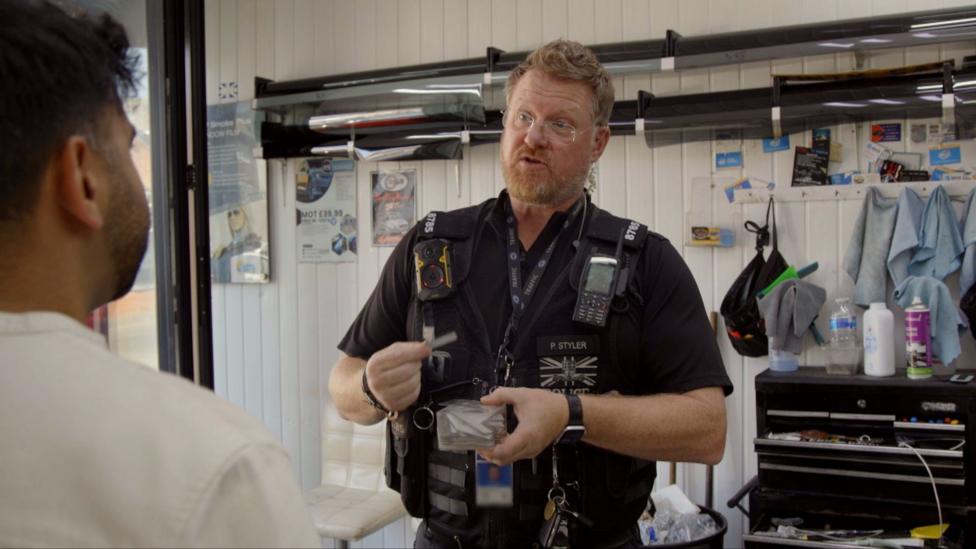
Police subsequently visited the plate supplier, where staff denied selling ghost plates. However, when officers used infrared goggles to examine the supplier's stock, they identified two ghost plates displayed on a wall alongside legal plates. Police also discovered that the supplier maintained ghost letters and numbers on a separate shelf, which officers interpreted as indicating "some level of intent." The supplier received a warning letter, though prosecution remains under consideration.
Police and government response
Chief Constable Tim Forber, the UK's policing lead on ANPR, emphasizes the scale of the problem: "Not a week goes by where we don't see an example of someone on cloned plates involved in serious and organised crime." Police forces are advocating for tighter licensing and regulatory frameworks governing number plate suppliers.
Justin Madders, the minister responsible for UK vehicle registration, acknowledges that a problem requiring action exists and that a more robust system may be necessary. He confirmed that the government is establishing a national centre to address illegal number plates, uniting police forces to exchange intelligence and evaluate new technologies aimed at enhancing road safety, combating organized crime, and preventing drivers from circumventing penalties.
"I don't think we can rule anything in or out at this stage,"Madders stated.
The Department for Transport has previously consulted on enhanced penalties for ghost plates, including revised standards for number plates and strengthened enforcement mechanisms. Following closure of the consultation in June, the department indicated it was evaluating responses before announcing subsequent steps on tougher penalties for illegal plates.
What happens next
The government is currently reviewing consultation responses before announcing its next steps regarding enhanced penalties for illegal plates. The National Roads Policing Coordination Centre will continue trials of specialist detection equipment and coordinate intelligence-sharing among police forces. Further regulatory changes affecting number plate suppliers and enforcement procedures are anticipated as the government's response develops.
Key facts
- New camera systems have detected an average of 1,000 to 2,000 ghost plates daily at test sites on south-east England motorways
- The UK's ANPR network comprises 14,000 camera sites capturing approximately 100 million number plates each day
- Only two number plate suppliers have been prosecuted and removed from the DVLA register since 2020, despite more than 34,000 registered suppliers operating in the UK
- Drivers displaying illegal number plates can face fines of up to £1,000, with more severe penalties possible for related offences
- A national centre is being established to coordinate police intelligence-sharing and trial new detection technologies to combat illegal plates