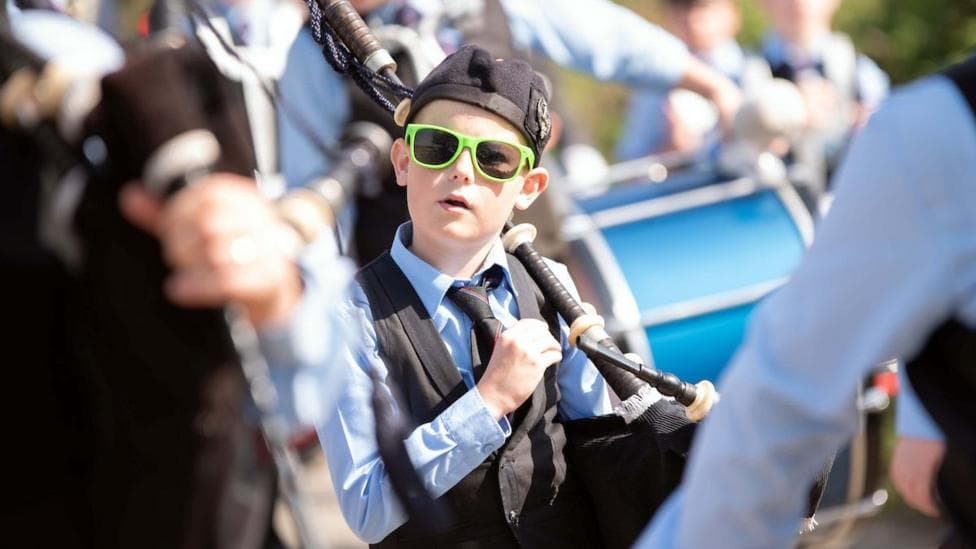
Members and supporters of the Royal Black Institution are gathering across five locations in Northern Ireland on 29 August 2026 to mark the organisation's annual Last Saturday demonstrations, which signal the traditional conclusion of the summer marching season.
Approximately 17,000 members and supporters are expected to participate throughout the day, with roughly 300 marching bands taking part in parades and demonstrations. The flagship County Down event is being held in Newry, where organisers have billed it as the largest 2026 Last Saturday demonstration, with the procession expected to move from Newry High School to Shandon Park and take over two hours to pass a single viewing point.
Demonstrations are also taking place in Larne, Dungannon, Dundonald and Coleraine, drawing participants from across Northern Ireland, the Republic of Ireland and overseas. The event remains one of the most significant dates in the Royal Black Institution's calendar.
What is the Royal Black Institution?
The Royal Black Institution, founded in Ireland in 1797 two years after the formation of the Orange Order, currently has approximately 17,000 members. While the majority are based in Northern Ireland, the organisation maintains preceptories in Scotland, England, the Republic of Ireland, Canada, Australia and New Zealand. Members are known as Sir Knights.
The institution describes itself as being grounded in the teachings of Holy Scripture and dedicated to advancing the Christian message of the Cross. Its two principal annual demonstrations are the Sham Fight on 13 July and the Last Saturday demonstration at the end of August.
How will the Newry parade unfold?
The Newry demonstration, hosted by Newry Royal Black District Chapter No. 4, will begin with two local bands parading at 9:30 on 29 August, followed by County Down grand officers leaving the Orange Hall at 11:30, with the main parade set for 12:00 noon. The procession will travel through Ashgrove Road, Belfast Road, Downshire Road, Trevor Hill, Kildare Street, Hill Street, Margaret Square, Margaret Street and The Mall, before returning via Sugar Island, Trevor Hill, Downshire Road, Belfast Road, Millbrook Villas, Cloghanramer Road and Carnbane Way. The demonstration field is located on Cloghanramer Road, approximately one mile from the city centre.
Large crowds are expected to line the routes as lodges parade through their respective host towns, ahead of the traditional platform proceedings and religious address, before making their way back along the return route.

What arrangements are in place at other venues?
In Larne, about 5,000 people are expected to attend, with the return parade scheduled for 4:15 on 29 August. The Larne demonstration involves 76 preceptories and 71 bands, with up to 10,000 spectators anticipated.
The five host venues for 2026 are Newry in County Down, Larne in County Antrim, Dungannon spanning Counties Armagh and Tyrone, Dundonald in the Belfast area, and Coleraine in County Londonderry.
Who will address participants?
The Sovereign Grand Master, Rev William Anderson, is expected to address members during the day's proceedings. Senior officers are also anticipated to acknowledge the efforts of host committees, volunteers and the hundreds of bandsmen and women participating in the day's events.
What traffic disruptions should people expect?
Police in Belfast have warned there will be an impact on traffic. Drivers and those not attending are advised to avoid the affected areas and take alternative routes if possible.
In north Belfast, the parade began at approximately 9:15 on Crumlin Road and proceeded through Carlisle Circus, Clifton Street, Donegall Street, Royal Avenue, Donegall Square and concluded at Linenhall Street. The return parade from Linenhall Street began at approximately 17:15, following the same route in reverse.
Another parade began at West Belfast Orange Hall and moved along Shankill Road, Peters Hill, North Street and Royal Avenue to York Street. The return parade, which began at 17:30, followed the same route in reverse.
In east Belfast, the main parade started at approximately 9:15 on Templemore Avenue, moving along the Newtownards Road, Bridge End, Queens Quay and onto Station Street. The return parade, which began at 17:30, followed the same route in reverse.
What happens next?
Newry's return parade was scheduled to begin at 4:00 on 29 August, following the religious service and platform proceedings. Demonstrations and services were expected to continue through the afternoon at the remaining venues on 29 August 2026.
Key Facts
- The Last Saturday demonstration marks the traditional end of the summer marching season for the Royal Black Institution
- Approximately 17,000 members and 300 marching bands are participating across five Northern Ireland locations on 29 August 2026
- The Newry parade, the largest of the five demonstrations, is expected to take over two hours to pass a single viewing point
- The Royal Black Institution was founded in 1797 and has members across six continents
- Traffic disruptions are expected in Belfast and other host towns throughout the day