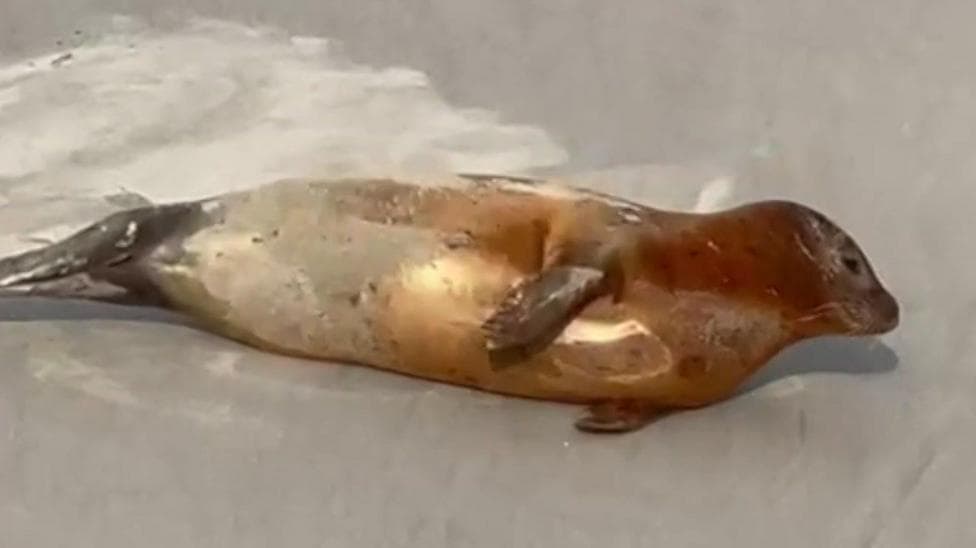
Marmalade the harbour seal earned her name from her distinctive golden-coloured coat and became a familiar presence along the River Thames, regularly appearing near Greenwich and Rotherhithe in south-east London. However, her death in May from a parasitic disease has coincided with growing concern about public safety as seal sightings along the river continue to increase.
As more seals venture further upstream—with recent sightings reported as far west as Windsor—Thames Seal Watch has issued an urgent appeal for the public to maintain distance from these animals. The charity emphasises that despite their appealing appearance, seals pose genuine risks to those who approach them.

Emma Kelly from Thames Seal Watch explained the dangers:
They can bite and they carry zoonotic diseases which are not very pleasant if you were to suffer a bite. They will do that to protect themselves.Beyond the immediate threat of injury, Kelly stressed that close human contact causes significant distress to the animals.
Getting close to the animals can cause them distress and stress, which could lead to their death.
How many seals live in the Thames?
The Thames estuary supports a substantial seal population. According to a 2024 survey by the Zoological Society of London, approximately 599 harbour seals and 2,988 grey seals inhabit the river overall. The survey counted 431 harbour seals and 714 grey seals hauled out on sandbanks, with additional population estimates derived from monitoring animals in the water. Marmalade was particularly notable because harbour seals remain relatively scarce in the Thames compared to their grey seal counterparts.
Why are seals moving further upstream?
Seals are highly mobile animals that follow food sources. Gareth Richards from UK Seal Alliance noted that
seals are very transient, and will basically go to where there is good fish stocks.He added that
seals can swim from anything between 60 and 80 miles a day, enabling them to travel vast distances in search of feeding grounds. This mobility explains why sightings have become more frequent and why animals are appearing in locations further from their traditional estuary habitat.
What legal protections do seals currently have?
Despite increasing public interest in Thames seals, the animals lack comprehensive legal safeguards. Neither grey nor harbour seals are protected from intentional or reckless disturbance under the Wildlife and Countryside Act 1981. In response to this gap, UK Seal Alliance launched its Give Seals Space campaign in May, calling on the government to reconsider previous recommendations and extend
the legal protection they deserveto both species.

The campaign highlights the specific threats posed by human activity. The charity warns that seals are highly sensitive to disturbance from the public, animals and drones, and that such interference can have long-lasting health consequences. These include pup abandonment, wasted energy from constant alertness and injuries sustained during panic-driven flight.
Gareth Richards has expressed his view that stronger legal protections are necessary given the frequency of seal sightings. The Department for Environment, Food and Rural Affairs (Defra) responded to concerns by stating:
We have a suite of legislative protections in place which make it an offence to take, injure, capture or kill a seal.However, this protection does not extend to disturbance-related offences.
How did Marmalade become an icon for Thames conservation?
Marmalade's death prompted a community response that underscored her significance to local wildlife advocates. Volunteers from Thames Seal Watch, including Kelly, gathered at one of the seal's favourite spots near the University of Greenwich to hold a memorial service. Flowers were cast into the river and a small plaque was installed in her honour.

Kelly reflected on Marmalade's broader impact:
Marmalade was really special to the community. We created a community around Marmalade where there was lots of us to keep an eye on her and ensure she stayed safe.Beyond her symbolic value, Marmalade's presence attracted numerous new volunteers to Thames Seal Watch. Those who attended the memorial made a collective commitment to continue supporting London's wildlife through ongoing conservation efforts.
How can the public help Thames seals?
According to the Zoological Society of London, members of the public can contribute to seal conservation by reporting observations to the Thames Marine Mammal Survey for live sightings, or to the ZSL-led Cetacean Strandings Investigation Programme for deceased animals. Ongoing monitoring through the Thames Marine Mammal Survey continues to track seal populations across air, land and sea, demonstrating that the species now use the estuary as a regular habitat.
The most important action members of the public can take is to maintain appropriate distance. Keeping dogs on leads near the foreshore and refraining from approaching seals protects both human safety and animal welfare. As seal sightings become increasingly common along the Thames, respecting these animals' space remains essential for coexistence.
Key Facts
- The Thames estuary is home to approximately 599 harbour seals and 2,988 grey seals, according to 2024 monitoring data
- Seals can travel between 60 and 80 miles daily and move upstream to follow fish stocks
- Neither harbour nor grey seals currently have legal protection against intentional or reckless disturbance under UK wildlife law
- Thames Seal Watch and UK Seal Alliance are campaigning for enhanced legal protections for both seal species
- Public sightings can be reported to the Thames Marine Mammal Survey to support ongoing conservation monitoring