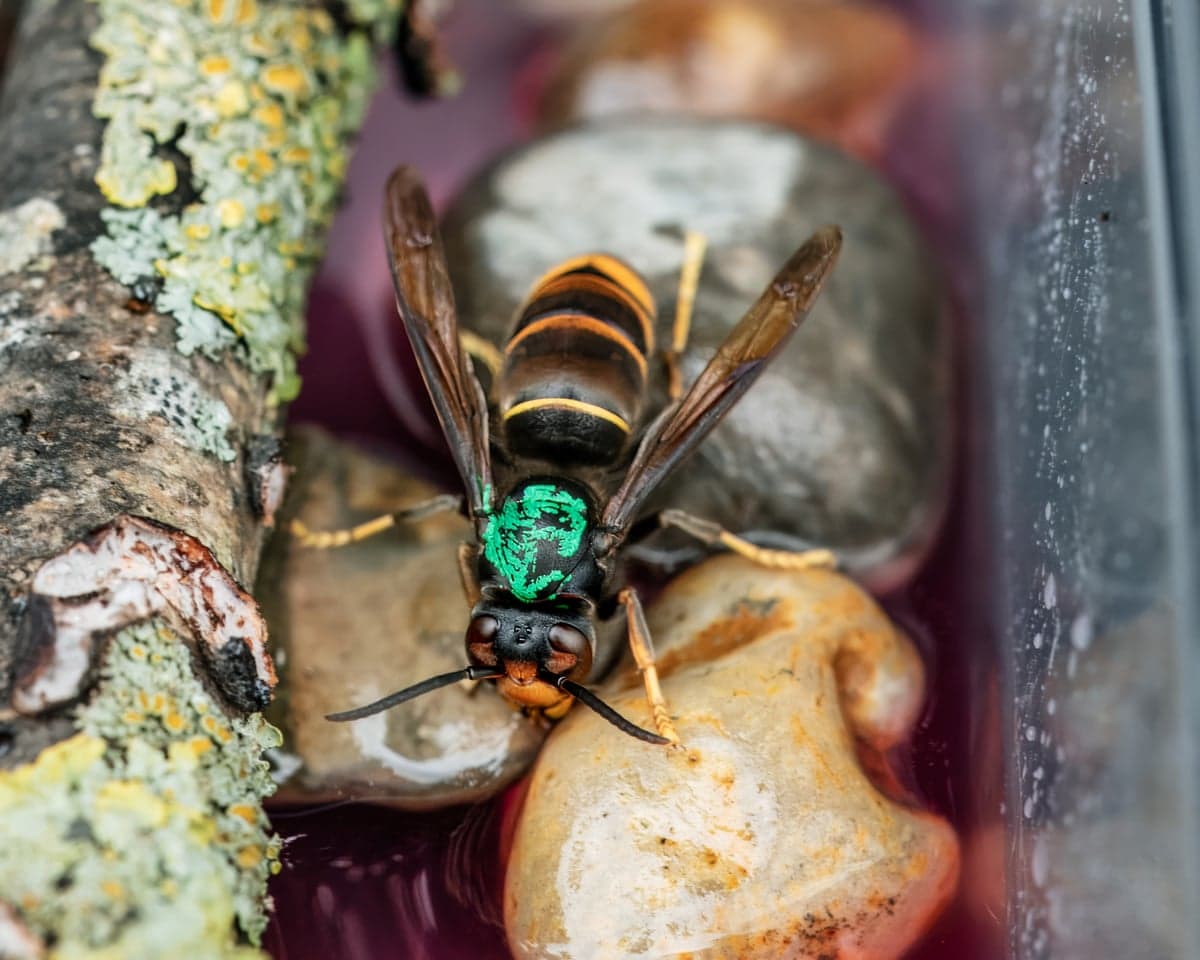
British beekeepers have called for a government-led national awareness campaign to combat the threat posed by invasive Asian hornets, warning that the species is creating "pollinator deserts" and jeopardising food security across the country.
The yellow-legged hornet, native to south-east Asia, is believed to have arrived in Europe in 2004 and has continued spreading since then, with increasingly warm springs and summers likely accelerating its expansion. The species was first detected in the UK in 2016 in Tetbury, Gloucestershire, and has since become an established concern for biodiversity officials and beekeeping communities alike.
Why is late summer critical in the fight against Asian hornets?
The end of summer represents a pivotal moment in Britain's efforts to control the species. As colonies mature and nests reach their maximum size, the hornets produce fertile new queens that leave the nest, mate and search for places to survive the winter. When spring arrives, these queens establish new colonies, leading to an expansion of nests across a wider geographical area.
What damage do these hornets cause?
Asian hornets are predatory insects that pose a significant threat to native pollinators.
Yellow-legged hornets cause significant damage to native pollinators, including our much-loved honeybees,said Kate Wilson, head of the National Bee Unit (NBU), which oversees bee health in England and Wales as part of the government's Animal and Plant Health Agency (Apha).
Beyond threatening honeybees and complicating honey production for beekeepers, the species raises serious concerns about human safety, pollination services and broader biodiversity, according to Lucie Chaumeton, a trustee of the British Beekeepers Association (BBKA) and vice-chair of its committee on the yellow-legged hornet.
Asian hornets leave behind pollinator deserts, with a serious impact on food security and agricultural economy,Chaumeton, who is also a practising beekeeper, explained.
How long has the government known about this threat?
The government has been aware of the threat to biodiversity since completing a risk assessment in 2011. This assessment prompted the Department for Environment, Food and Rural Affairs (Defra) and the Welsh government to develop a contingency plan for managing the species. The strategy centres on destroying nests to prevent the hornets from establishing themselves. Failing to locate and destroy even a single nest allows an already established colony to persist and risks the emergence of new colonies elsewhere.
How effective has the eradication strategy been?
The number of nests discovered provides one measure of the strategy's success. However, genetic analysis of nests found in 2024 revealed that queens had successfully mated, survived winter and established new nests the following year, indicating that the species has achieved some level of establishment in the UK. This finding underscores the importance of intervention during the period when queens emerge from hibernation.
More recently, a nest of yellow-legged Asian hornets was discovered in Somerset for the first time, with the National Bee Unit confirming the find on 2 September 2026 and the nest being destroyed. The same month saw additional confirmed sightings added to the official record, including a nest destroyed in Yarm, North Yorkshire on 25 September.

What role do the public and beekeepers play?
Apha has emphasised that the public and beekeepers are essential to the eradication effort. Public sightings and reports are used to identify suspected hornets, while volunteers from the BBKA help confirm sightings, track nests and undertake spring queen-trapping. Once a nest is confirmed, the NBU takes responsibility for its destruction.
The National Bee Unit's response is extremely effective. But this relies entirely on members of the public reporting sightings,Chaumeton said. The scale of public participation has been substantial: in 2024, public reports resulted in the identification of 24 nests. This demonstrates that public reporting is essential to controlling the species, with eradication depending on how quickly new incursions are detected and dealt with.
Why are beekeepers calling for more government action?
Despite the effectiveness of the current response, Chaumeton argued that Asian hornets are still widely perceived as a "beekeeping issue" rather than a threat to national biodiversity requiring a whole-country response.
Beekeepers cannot do this on their own. We urgently need more government-led national awareness campaigns so everyone in the country understands the threat,she said.
The concern reflects uncertainty about the long-term sustainability of a system that relies heavily on volunteers.
We need a clear multi-year commitment from successive governments that eradication will continue,Chaumeton added.
What new technologies are being tested?
Apha has been trialling new approaches to extend its capacity. In 2025, it tested technology to help locate nests more efficiently. Researchers are also testing artificial intelligence systems designed to identify Asian hornets visually, potentially streamlining the detection process.
Official guidance has evolved to reflect the species' established presence in the UK, with government and non-native species programme materials now referring to the species as the yellow-legged hornet rather than Asian hornet.
What happens next?
Defra has stood down spring trapping in England for 2026, shifting focus to nest destruction and surveillance as the primary control approach. The official sightings log continues to be updated with newly confirmed finds and nest destructions, providing an ongoing record of the species' presence across the UK.
Wilson concluded:
We encourage the public to remain vigilant and continue to report any potential sightings using the Asian Hornet Watch app and online.
Key Facts
- Yellow-legged hornets, native to south-east Asia, first arrived in Europe in 2004 and were detected in the UK in 2016.
- The species preys on native pollinators including honeybees and creates "pollinator deserts" that threaten food security and agricultural productivity.
- Public reporting has been crucial to eradication efforts, with 24 nests identified in 2024 through community sightings.
- A nest was discovered in Somerset on 2 September 2026, marking the species' first confirmed presence in that county.
- Beekeepers are calling for a sustained, multi-year government commitment to eradication and a national awareness campaign to engage the entire population.