The Scottish government will need to cut more than £700m from its budget for the 2026-27 financial year, according to forecasts released by Scotland's independent fiscal watchdog. The reduction stems from a shortfall in income tax revenues collected north of the border, combined with how the UK's devolved funding system operates.
The Scottish Fiscal Commission (SFC) warned that the reduction would force difficult decisions about public service funding. The independent body also flagged a deteriorating economic outlook, persistent inflation pressures, and weak growth in household incomes as additional headwinds facing the Scottish government.
Public Finance Minister Hannah Mary Goodlad responded by pledging that the Scottish government would "take a responsible approach to managing the public finances". The current Scottish Budget stands at £67.9bn, and the SFC noted that the final figure for 2027-28 would depend on decisions the UK Government announces in its Budget on 28 October.
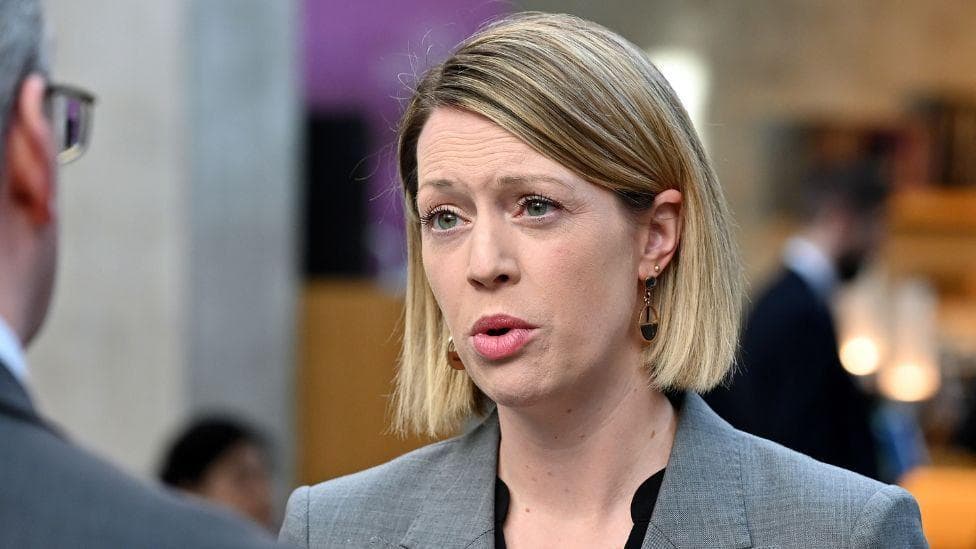
The precise scale of the challenge became clearer when the SFC revealed the full extent of the income tax reconciliation. According to the SFC's 9 July publication, the 2024-25 income tax reconciliation stands at negative £728 million, to be applied when Finance Secretary Jenny Gilruth announces the 2026-27 budget later in the year.
How does Scotland's income tax system create this shortfall?
Scotland operates a distinct income tax regime separate from the rest of the UK. Higher earners in Scotland pay more tax than they would in England or Northern Ireland, while lower earners pay slightly less. The Scottish government retains all income tax revenues it collects within its borders.
However, the UK government's block grant to Scotland is calculated using a complex formula. The Treasury deducts from the grant what it estimates it would have collected in income tax had its own rates applied across Scotland. This mechanism is designed to ensure Scotland neither gains nor loses from having different tax rates.
The problem emerged because actual Scottish income tax receipts for 2024-25 fell £209m short of the SFC's forecast. Simultaneously, income tax revenues in England and Northern Ireland exceeded expectations. This combination means the Treasury's deduction from the Scottish Budget has reached a record £720m—a mechanism known as a "negative reconciliation".
The SFC acknowledged that its forecasting error was smaller than in previous years and described such variations as an inherent "feature of the [UK's] fiscal framework". Nevertheless, the scale of the adjustment leaves the Scottish government facing a severe funding squeeze.
What are the consequences for Scottish public services?
While the Scottish government can borrow a limited amount to offset the shortfall, the SFC predicted that borrowing capacity would prove insufficient to protect all services from cuts. This threatens funding across the public sector unless ministers find alternative savings.
The outlook for day-to-day spending is particularly concerning. The SFC expects funding for routine expenditure to fall by 1.2% in real terms in 2027-28, after rising by 3.5% in the current financial year. Scotland's capital budget—money allocated for long-term infrastructure projects—faces additional pressure.
The SFC provisionally forecasts that increased UK Treasury spending on defence, funded by reducing capital budgets across other departments, will cut Scotland's capital block grant by £70m in 2026-27, £87m in 2027-28, and reaching £97m by 2029-30. These reductions will constrain Scotland's ability to invest in roads, schools, hospitals, and other infrastructure.

The Scottish government and the NHS face particular urgency in delivering planned savings. The SFC noted that both must make rapid progress toward achieving £563m in savings during the current financial year. SFC chairman Graeme Roy warned that
the delivery of planned savings, managing workforce costs, and the impact of the upcoming UK Budget will all be important factors in determining the funding available for public services in Scotland.
What broader economic challenges compound the budget pressure?
The income tax reconciliation is not the only headwind. The SFC's report highlighted a deteriorating economic environment that will constrain the Scottish government's options. Higher inflation is expected to erode household incomes in real terms, reducing the purchasing power of Scottish families over the next five years.
The SFC cautioned that improvements in Scottish living standards would "remain weak" over the coming years. This economic backdrop makes it harder for the government to raise additional revenue through taxation without further burdening households already facing cost-of-living pressures.
Prime Minister Andy Burnham has refused to rule out tax rises in the UK Budget, which could have direct implications for Scottish taxpayers or indirect effects on the Scottish Budget through the block grant mechanism. The uncertainty surrounding the UK government's fiscal decisions adds another layer of unpredictability to Scottish budget planning.
What positive developments has the Scottish government received?
Not all recent developments have been negative. The change of leadership at Westminster has delivered some financial benefits to Scotland. The Scottish government will receive an extra £533m in 2026-27 and a further £300m in 2027-28 due to UK government spending decisions on education.
These additions reflect increased UK investment in schools and skills. The 2026-27 draft budget for education and skills included more than £3.5 billion, with increases for colleges, universities and the Scottish Attainment Challenge. However, these gains are substantially offset by the income tax reconciliation and capital budget reductions.
What is the government's response to the budget challenge?
Public Finance Minister Goodlad insisted that her government would "continue to take a responsible approach to managing the public finances, prioritising investment in frontline services". She emphasised that
through progressive taxation and careful stewardship of the public finances, we are protecting those who are most vulnerable to these pressures and Scotland continues to provide the most comprehensive package of cost-of-living support in the UK.
Goodlad added that £1.5bn of planned savings would be achieved through "workforce reform, productivity improvements and changes to how services are delivered". These efficiency measures represent the government's strategy for balancing the budget without proportional cuts to service provision.
The Scottish government's approach reflects broader challenges facing public finances across the UK. Earlier analysis showed that Scotland's upcoming budget faces a £4.8bn shortfall amid rising social security costs, public sector pay pressures, and demographic challenges, with experts warning that no single party's proposals fully address the scale of the problem.
What happens next?
The SFC has called on ministers to provide an update on progress toward savings targets when parliament returns from recess. Roy urged the government to "identify any new or emerging pressures" affecting upcoming budgets.
The UK Government Budget scheduled for 28 October 2026 will be crucial in determining the final scale of the challenge. Decisions on UK spending, taxation, and the application of fiscal rules could alter Scotland's funding position. Finance Secretary Jenny Gilruth will announce the full Scottish Budget later in the year, setting out how the government intends to manage the £720m reduction while maintaining services.
The SFC cautioned that Holyrood's spending power could be altered depending on the UK government's Budget decisions or its interpretation of Treasury fiscal rules, adding further uncertainty to the planning process.