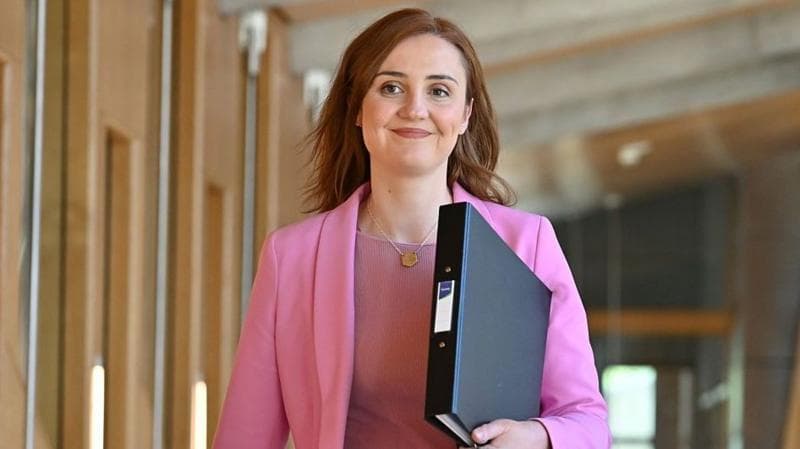
Scotland's education secretary has announced plans for the largest reform to the country's curriculum in over a decade following the release of the 2025 Programme for International Student Assessment (Pisa) results, which revealed a decline in reading and mathematics performance among 15-year-olds.
Màiri McAllan stated she approaches the findings with clear-eyed realism, acknowledging that while the results
"indicate success in our education system" they also "indicate change is required". The assessment, conducted across 91 countries and involving more than 760,000 pupils globally, showed Scotland and Wales falling behind England in reading, maths and science.
The 2025 Pisa study, published on 8 September 2026, involved 115 schools and colleges and 3,066 pupils across Scotland. The results marked a continuation of trends observed in previous cycles of the assessment, which has been coordinated by the Organisation for Economic Co-operation and Development (OECD) since 2000.
How did Scotland's scores compare internationally and within the UK?
Scotland achieved a reading score of 488 in the 2025 assessment, representing a decline from 493 in 2022, 504 in 2018 and 526 when Pisa testing began in 2000. Despite this downward trajectory, the score remained above the OECD average of 463 points and exceeded results from Wales (459), though it fell short of Northern Ireland (482) and England (497), which improved since the previous study.
In mathematics, Scotland recorded 467 points, down from 471 in 2022 and continuing a longer-term decline from 489 in 2018 and 491 in 2015. The latest figure sits just above the OECD average of 465 but trails Northern Ireland (473) and England (492), while exceeding Wales (456).
Science performance showed improvement, with Scotland scoring 491 points compared to 483 in 2022 and 490 in 2018. This placed Scotland ahead of Wales (476) and the OECD average (484), though behind Northern Ireland (492) and England (516).
McAllan highlighted that
"Scotland enjoys an internationally competitive position", noting that for reading, Scotland ranked ahead of countries including Finland, Italy and Wales, while in science it outperformed Italy, Sweden, Germany and Wales.
What do experts say about the results?
Keir Bloomer, chairman of the Commission on School Reform, described the latest results as
"very disappointing", characterising them as
"the poorest set of results that Scotland has achieved"since Pisa assessments began. He noted that Scotland has
"seen a steady decline over the years in all three of the main areas which it tests", and while acknowledging the science improvement, stressed that Scotland remains
"far behind where we were when the Pisa testing started".

The statistical changes in all three main categories since the 2022 assessment were small enough that they could potentially be explained by chance variation, though the longer-term patterns show more substantial shifts.
What curriculum changes are planned?
McAllan announced that
"The changes to the curriculum I am now overseeing will be the largest reform to Curriculum for Excellence since it was introduced in 2010". She explained the reforms would focus on
"clarifying the role of knowledge in our curriculum and the progression a young person ought to make through the curriculum".
The Curriculum Improvement Cycle represents the largest change to Scotland's curriculum in over 10 years and was developed following the OECD's Review of Scotland's Curriculum. McAllan stressed that
"I will not do it to the exclusion of everything else that makes our education system good for our young people, including those other curricular areas like problem solving, moral education, creative expression".
The reform timeline indicates that renewed curriculum guidance is expected in 2027, with implementation beginning in the 2028/29 academic year for primary and lower secondary pupils and in 2029/30 for upper secondary students. The Scottish Government has confirmed that the Curriculum Improvement Cycle will be fully rolled out with the teaching profession by August 2028.
How do these results fit within broader education performance?
McAllan noted that Pisa represents only one of several measuring standards used to assess Scotland's secondary schools. Last month's annual exam results showed that pass rates across Nationals, Highers, Advanced Highers and Skill for Work Awards had increased, with more than 148,000 learners receiving results and record vocational awards achieved.
The education secretary stated:
"My ultimate goal is that young people will enter our education system and be able to achieve both academic excellence and vocational excellences that sets them up well for life".
Scotland's performance reflects broader challenges across the UK nations. Wales' international test scores for 15-year-olds have fallen further behind other UK nations, with mathematics showing the steepest decline, while Northern Ireland's 15-year-olds have experienced declining performance in reading and mathematics over the past decade despite maintaining strong science results. England has moved into the top 10 global rankings, though the OECD has warned of widespread decline in reading skills globally, driven by digital distractions.
What happens next?
The Scottish Government will continue to use Pisa, alongside other international assessments including TIMSS and PIRLS, to judge progress against other developed nations. The curriculum reform process will unfold in phases, with formal adoption of changes beginning in 2028 and continuing into subsequent years. The next opportunity to measure progress will come with the next Pisa cycle, scheduled for 2028.