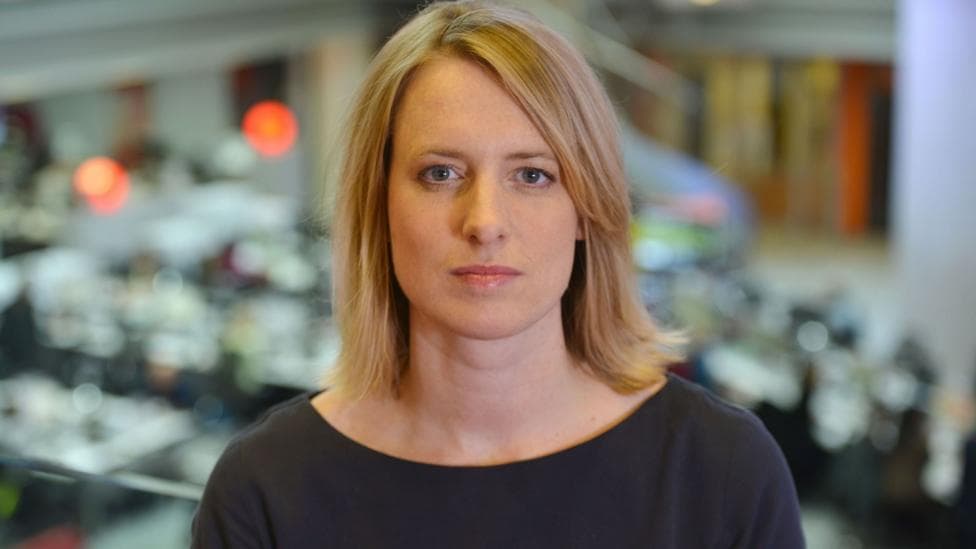
Rachel Jupp has been appointed director of BBC News, nearly a year after her predecessor stepped down amid controversy over editorial standards. The appointment marks a significant leadership change for the corporation's news division, which is undergoing substantial restructuring with around 550 job closures announced and further reductions anticipated.
Deborah Turness, the previous director, announced her resignation in November following an internal memo that revealed an episode of Panorama had edited a speech by President Trump in a misleading way. The scandal also led to the departure of then-director general Tim Davie, who was subsequently replaced by Matt Brittin earlier in the year.
Who is Rachel Jupp?
Jupp brings extensive experience across multiple BBC programmes and roles. She served as deputy editor of Newsnight on BBC Two and held the position of editor at Panorama, though she departed that role several years before the controversial Trump episode aired. Her career at the BBC began in 2013 when she joined Newsnight as deputy editor, having previously worked at News from 2005, where she was head of home news.
More recently, Jupp has led the BBC's editorial work on generative AI from a base in the United States, and previously oversaw a BBC inquiry into antisemitism within the Labour Party. Before taking up her role in documentaries, she was a senior member of the BBC's AI team, developing and leading the corporation's approach to artificial intelligence.
What will Jupp's role involve?
Jupp will oversee approximately 4,500 staff members and serve as a member of the BBC's executive committee. She will be paid a salary of £400,000, comparable to the starting salary of her predecessor Turness in 2022, though Turness's compensation had risen to between £445,000 and £449,999 by her final year.
Jonathan Munro, who has served as interim head of the news division for the past 11 months, will return to his position as deputy director of BBC News when Jupp assumes her role.
What are the challenges facing BBC News?
The appointment arrives as the BBC navigates significant financial and operational pressures. The news division must make approximately £51 million in savings as part of the corporation's broader plan to save £500 million over two years. Across the BBC as a whole, between 1,800 and 2,000 positions—nearly one in ten—are being eliminated.
Journalists are being required to reapply for their roles, and staff have expressed concerns about the depth of the cuts and their impact on editorial quality. BBC News stands or falls by its on-the-ground, eyewitness journalism, and questions have been raised about how much of that the corporation can afford to maintain. Some observers have suggested the BBC may need to learn from its rivals by streamlining the number of stories it produces and prioritising major investigations.
Brittin acknowledged these broader challenges in his statement about the appointment, noting that
in a world of infinite choice, audiences are fragmenting, trust is scarce and facts are contested. He emphasised that the BBC must
recommit to the BBC's distinctive journalistic mission while reinventing how we serve audiences.
What is the strategic significance of this appointment?
Jupp's appointment signals a direction of travel both on the change that the new director general thinks is required and on the use of technology. The fact that Brittin, who previously worked for Google, has chosen someone with significant experience in artificial intelligence to run the news division raises questions about how AI could shape the future of the newsroom.
The appointment also comes after a period of drift during the 10-month vacancy. Staff at BBC News have expressed a desire for clear direction and an end to incremental resource cuts, asking what the priorities are and which areas are less important. There is also a broader challenge in changing viewing habits: while BBC News has a loyal base of viewers still watching on linear channels, the direction of travel is shifting rapidly towards digital platforms. Jupp will need to turbocharge the corporation's digital transformation with fewer resources and a workforce that some observers describe as demoralised.
What did leadership say about the appointment?
Brittin described Jupp as
an outstanding editorial leaderand highlighted her
news judgement, fairness and high standards. He added that she brings
a clarity of vision for the future, and the determined, collaborative approach needed to strengthen BBC News, and praised her as someone with
a fresh perspective to lead into a new era.
Jupp expressed her commitment to the role, stating:
I want to champion our vital, independent and impartial journalism, deepen the trust people have in the BBC and meet our audiences wherever they are. I'm grateful to Matt for this opportunity, and I'm looking forward to working with our dedicated, brilliant teams across the UK and around the world.
Brittin also commended Jonathan Munro's stewardship during the interim period, saying:
I would like to thank Jonathan Munro for his professionalism and leadership of BBC News in the past 11 months. I have been personally grateful for his deep experience, calm head and steady hand.
What is the background to the previous director's departure?
Turness's resignation followed the revelation that a 2023 Panorama episode had spliced together two sections of a speech President Trump delivered in 2021, shortly before the Capitol riots on 6 January. The edit gave what the BBC later acknowledged was
the mistaken impression that President Trump had made a direct call for violent action.
Following the disclosure of the editing error, President Trump initiated a $10 billion (£7.6 billion) lawsuit against the BBC. Although the corporation issued an apology, it rejected his demand for compensation. The case is currently scheduled to proceed to trial in 2027.
The Panorama controversy was part of a broader series of crises affecting the BBC's current affairs output. A documentary about the children of Gaza narrated by the son of a Hamas official, and a documentary about Israel's assault on Gazan medical staff that was commissioned and then dropped by the BBC before being shown on Channel 4, also damaged the corporation's editorial reputation. Some staff have argued that it was the current affairs side of the operation that previously let the organisation down, rather than the news division itself.
What is Jupp's recent career trajectory?
Jupp's appointment to the director role follows a significant expansion of her responsibilities within the BBC. In December 2025, the BBC appointed her to a newly created position as director of News Documentaries and Long Form Journalism, a role she was expected to take up later in 2026. This new documentaries role was designed to set the strategic vision for the BBC's long-form and current-affairs output and would sit on the Board.
The documentaries position was created as part of an action plan following an independent review into the BBC documentary Gaza: How to Survive a Warzone, reflecting the corporation's commitment to strengthening oversight of its documentary output. Promoting Jupp to the top of News after she took over the current affairs department following the scandals signals that she will address what some have viewed as a weak spot with rigour.
What are the trust challenges ahead?
Trust is one of the BBC's core values and is listed on the back of work passes as
the foundation of the BBC. The new director of news will need to ensure that the BBC remains the place of record and an organisation that is trusted. While the BBC remains the most trusted source of news, there are growing numbers of people on all sides of the political spectrum who feel the BBC does not speak for them. Any loss of trust is corrosive to the corporation's mission.
Jupp's challenges are both editorial and practical. She will need to give BBC News greater editorial confidence after years of political attack and the errors of recent years. She will also need to deliver on the bigger prize of getting the news division's trusted journalism to much larger numbers of people around the world, as outlined by Brittin. There will likely be resistance—from viewers, from politicians, from campaign groups—as the BBC decides to move away from old formats and old technology. But the corporation must go where audiences are, and the new head of news will need a strategy to move much more deeply into a digital world in a way that has been piecemeal up to now.
Key Facts
- Rachel Jupp becomes director of BBC News after an 11-month vacancy following Deborah Turness's resignation
- She will oversee approximately 4,500 staff and receive a salary of £400,000
- The news division must make approximately £51 million in savings as part of the BBC's broader £500 million cost-reduction plan
- The previous director departed following controversy over the editing of a President Trump speech in a Panorama episode, which led to a $10 billion lawsuit currently scheduled for trial in 2027
- Jupp has significant experience in artificial intelligence and was previously appointed to a newly created role as director of News Documentaries and Long Form Journalism, expected to commence later in 2026