The UK media regulator, BBC News reports, has determined that the restriction of Irish sporting content to viewers in Northern Ireland—known as geo-blocking—presents an insoluble technical and commercial problem that is likely to worsen as streaming becomes the dominant delivery method for television.
Ofcom concluded that no practical solution currently exists to prevent broadcasters from blocking access to streamed content based on a viewer's geographical location, and the regulator itself lacks the authority to mandate change. The finding comes after Stormont's economy minister, Caoimhe Archibald, asked Ofcom to revisit the issue, which the regulator had last examined in 2015.
Geo-blocking prevents viewers in Northern Ireland from accessing sporting events and other programming on RTÉ and TG4, the Irish public broadcasters. The practice stems from two fundamental constraints: the territorial nature of sports broadcasting rights and the technical limitations of internet protocol (IP) address geolocation, which cannot reliably distinguish between Northern Ireland users and those in Great Britain.
Why can't the regulator stop it?
Ofcom stated it has no legal power to compel rights holders to license content on an all-island basis, nor can it require internet service providers to reserve dedicated IP addresses for Northern Ireland. The regulator is also unaware of any regulatory mechanism that would allow it to impose such requirements on ISPs.
The core problem lies in how sports rights are sold internationally. According to reporting on Ofcom's findings, international sporting organisations and their agents typically sell separate packages for the UK and the Republic of Ireland, with Northern Ireland normally included in the UK package. Bespoke arrangements for Northern Ireland are rarely available commercially, and where they do exist, the additional cost may be prohibitively expensive for smaller public service broadcasters like RTÉ and TG4.
What technical solutions exist?
Ofcom has identified possible mitigations including verified accounts and dedicated set-top boxes with access codes for Northern Ireland viewers. The regulator also notes that unique Northern Ireland IP addresses may be technically feasible for some providers, but such addresses are scarce and expensive; Ofcom does not expect voluntary adoption without a strong financial incentive.
The impact extends beyond major sporting events. The report notes that Northern viewers have also been unable to watch RTÉ's entertainment programming, such as The Traitors, on catch-up services. As streaming becomes an increasingly dominant form of television consumption, Ofcom warned that geo-blocking will affect a growing proportion of viewers' access to content.
What role do the 2010 agreement and governments play?
Ofcom has proposed that a first step toward any solution would be for the British and Irish governments to review their 2010 Memorandum of Understanding, which was designed to ensure BBC channels could be easily received in the Republic and RTÉ and TG4 in Northern Ireland via terrestrial signals. That agreement was implemented after analogue broadcasts ended in 2012, but it focuses on terrestrial distribution and predates the current scale of internet-based television viewing.
A review of the memorandum could assess whether its scope should be expanded to cover internet protocol-delivered services in addition to digital terrestrial television. Ofcom recommends continued dialogue among the UK and Irish governments, broadcasters, sports organisations, ISPs and technical providers, and notes that event-specific workarounds may be possible through such cooperation.
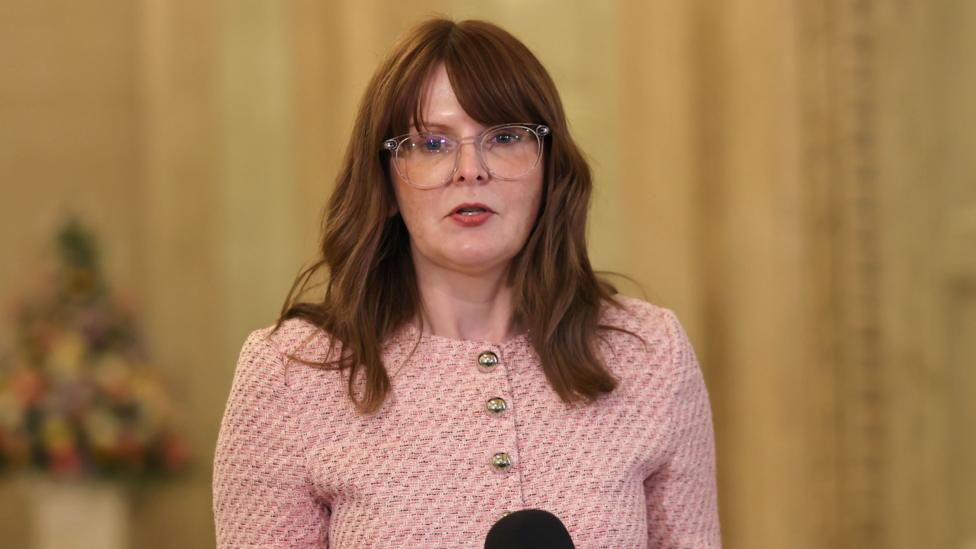
Economy Minister Caoimhe Archibald described the geo-blocking of RTÉ content as
completely unacceptable and must be brought to an end. She has pressed both governments to initiate the review suggested by Ofcom, stating
I have written again to the British and Irish governments to seek their engagement and cooperation on resolving this issue once and for all.
The issue has gained political attention in recent years. In May 2026, a debate in the Irish parliament highlighted Northern viewers missing Ireland's World Cup qualifier against Hungary on RTÉ; Sinn Féin's Joanna Byrne said she would pursue a 2025 bill aimed at opening RTÉ programming to audiences in the North. In 2024, SDLP leader Claire Hanna raised the proposal for unique Northern Ireland IP addresses at Westminster.
Ofcom's assessment also notes that RTÉ and TG4 have an established place in Northern Ireland's media landscape, supporting cultural, linguistic and public-service objectives, underscoring the significance of the access issue beyond mere entertainment.
What happens next?
The Republic's Department of Culture, Communications and Sport says it is engaging with UK counterparts on the matter. Broadcasters and regulators in both jurisdictions are also in discussions about potential pathways forward. However, without changes to the underlying rights agreements or a coordinated government intervention, the technical and commercial barriers identified by Ofcom are likely to persist and expand as more content moves to streaming platforms.