
Northern Ireland has become the first part of the United Kingdom to implement graduated driver licensing (GDL) for learner and newly qualified drivers, marking what the Department for Infrastructure describes as the most significant change to driver licensing and testing in almost 70 years. The regulations took effect on 1 October 2026, introducing a framework specifically designed to reduce fatal road crashes involving young people, particularly those aged 17 to 23.
The scheme applies to all new drivers but is particularly targeted at younger age groups who are disproportionately involved in collisions. Among the key requirements is that learners must spend at least six months gaining driving experience and complete a training programme, recording their learning and driving experience in a logbook before they can take a practical test. New drivers must display R plates for two years: a blue R on white for the first six months, then a white R on blue for the remaining 18 months.
Newly qualified drivers under 24 will face restrictions on carrying young passengers at night, though the passenger limit does not apply if a front-seat passenger is at least 21 and has held a full driving licence for at least three years. The current speed limit of 45mph for restricted drivers has been removed. Drivers who do not comply with the restrictions could receive three penalty points or a fine of up to £1,000.
The regulations apply to new car and motorcycle learners whose provisional licence entitlement begins on or after 1 October 2026. Those whose provisional entitlement began before that date can use the existing system until 31 March 2027; any who have not passed their test by then become subject to GDL requirements.
Why has Northern Ireland introduced these rules?
Official figures reveal the scale of the problem the scheme aims to address. In 2024, drivers aged 17 to 23 were responsible for 24% of all collisions in Northern Ireland despite accounting for only 8% of licence holders. In the same year, 251 people were killed or seriously injured in collisions involving a young driver, with the young driver deemed to be at fault in 65% of those incidents.
The Police Service of Northern Ireland's road safety lead, Chief Superintendent Sam Donaldson, stated that the region experiences more collisions per head of population than any other part of the UK.
Sadly the reality is that young and inexperienced drivers are disproportionately involved in more collisions. Some are minor, some are serious, and some sadly result in fatalities as well.He expressed confidence that the new framework will prevent deaths on Northern Ireland's roads.
Versions of GDL already exist in countries including Australia, the United States and the Republic of Ireland. Campaigners have long called for similar schemes to be introduced across the entire UK. In January, the UK government announced that learner drivers in England and Wales could face a minimum period of up to six months between sitting their theory and practical tests, but stopped short of introducing full GDLs—a decision the motoring organisation the AA described as a missed opportunity. Earlier in the year, Scottish ministers called on the government to grant them powers to introduce their own restrictions on new young drivers, but the UK government said it wanted to keep young people safe while avoiding what it termed
blanket restrictionson new drivers.

How do young drivers feel about the changes?
Reaction from young drivers has been mixed. For 16-year-old Tommy from Omagh, driving represents a significant milestone, and he has been learning the basics by driving with his father in fields and private yards for three years. However, he believes the new rules will disadvantage young people living in rural areas who lack access to public transport and depend heavily on lifts from others.
There's hardly any transport links out here so you sort of have to rely on people giving me lifts,Tommy explained.
We're about five miles out from the nearest transport hub and it's just hard to organise lifts even to get to work or college.Although he considers himself a confident driver who would pass his test on the first attempt and has his own car ready, he views the extended waiting period as disappointing.
It is a bit gutting, because I was so excited until they announced the new rules coming in, it's hard to believe how big of a change it is going to be,he said.

Adam, also from Omagh, recognises that action is needed to address road deaths but shares the frustration about the six-month minimum delay.
I'm really eager to get out on the road, especially since I've been hassling my parents. I go to the gym quite frequently, maybe four days a week, and it's straight after tech. If I can get up off my own two feet, get into my own car, and go to my gym by myself, it's nobody's problem but mine.He noted that the new restrictions have dampened enthusiasm among his peers.
All I used to talk about in high school was 'oh, what car are you getting', 'where are we going on a road trip', and now there's just more complications, it's just bummed everybody out,he added.

Not all young people oppose the scheme. Moss, who is already learning to drive and therefore will not be affected by the new rules, views the changes positively.
You'll get a lot more confidence and a lot more experiences in different kinds of situations which will be really useful,he said. He acknowledged that some people are frustrated, particularly about the six-month wait, but questioned whether the delay is truly significant.
Starting to drive by yourself can be a scary thing, so if it's to help with safety I think its worth it. In the long run, does it really matter if you get your test six months later? It's not that big of a deal.
What do driving professionals think?
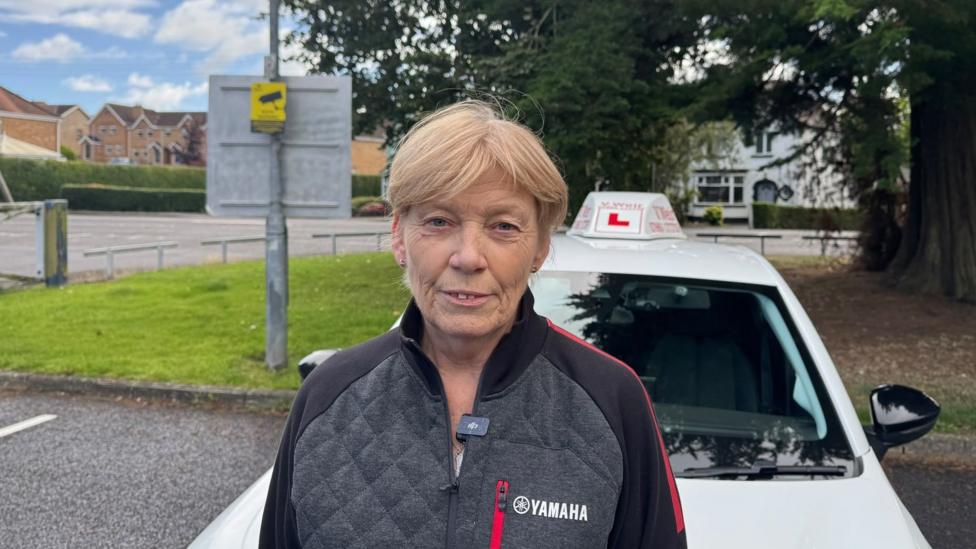
Veronica Weir, a driving instructor with 26 years of experience, describes the law change as
terrificand believes young drivers can be irresponsible.
It's been a long time coming, about 15 years in the pipeline. Kids today just think it's a video game, and if they crash, there's no consequences, there's no ripple effect, they'll just brush themselves off and drive off again,she explained. She emphasised that dangerous driving affects not only the driver but also their family, insurance costs and the wider community.
For Liz Kimmins, the Sinn Féin minister at the Department for Infrastructure who championed the reforms, graduated driver licensing represents a fundamental shift in how young people approach driving.
I think what we've wanted to do here is shift that emphasis from just simply passing your driving test to actually becoming a confident and competent driver,she said.
What happens next?
The first practical driving tests under the new system are scheduled for 1 April 2027. Learners whose provisional entitlement began before 1 October 2026 can continue using the existing system until 31 March 2027, after which they become subject to GDL requirements if they have not yet passed their test.
Key facts
- Northern Ireland is the first UK nation to introduce graduated driver licensing, with regulations effective from 1 October 2026
- Learners must complete a six-month minimum learning period and record their experience in a logbook before taking a practical test
- Drivers aged 17 to 23 were responsible for 24% of all collisions in Northern Ireland in 2024 despite representing only 8% of licence holders
- Young drivers who breach restrictions face three penalty points or fines up to £1,000
- The scheme is described by the Department for Infrastructure as the most significant change to driver licensing and testing in almost 70 years