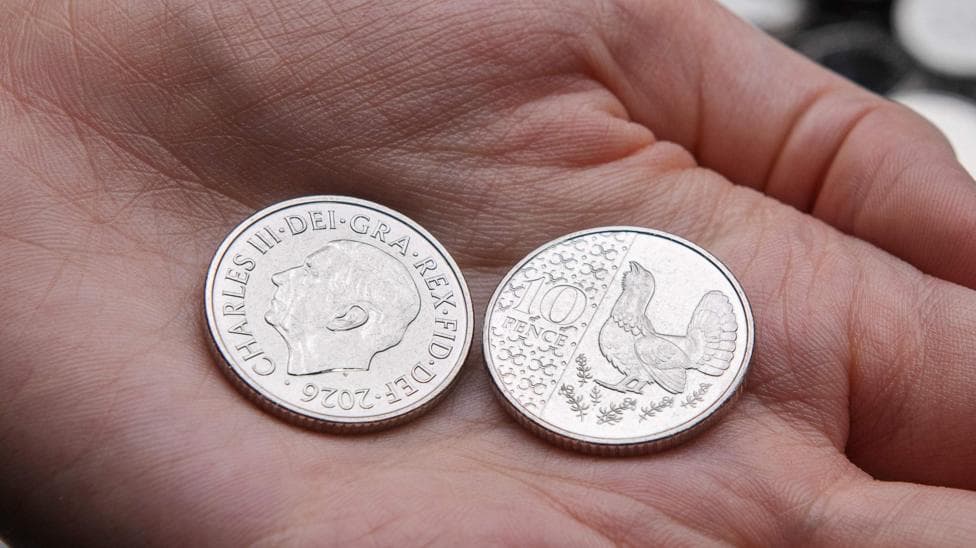
A redesigned 10p piece is now appearing in everyday transactions across the United Kingdom, marking the first time this denomination has been minted in approximately four years. The coin bears the effigy of King Charles III on one side and an illustration of the capercaillie—the world's largest grouse species—on the reverse.
Demand for circulating 10p coins has prompted the Royal Mint to produce fresh supplies after an extended gap. The newly released pieces carry mint dates of 2023 and 2026, with 600,000 coins from the 2023 batch and 6.5 million from 2026 now distributed to banks and post offices throughout the country. According to the Royal Mint's official mintage figures page, these releases represent a significant addition to the existing stock of 1.4 billion 10p coins already in circulation.
The comprehensive redesign of UK coinage was unveiled in October 2023 to celebrate the King's connection to the natural world. Every denomination from 1p to £2 now displays British flora and fauna on the reverse side, ranging from bees to oak tree leaves. Until now, coins bearing King Charles's portrait in circulation have been limited to the 5p, 50p and £1 denominations. Older currency featuring the late Queen Elizabeth II remains legal tender and continues to circulate alongside the new issues.
Despite the release of millions of new coins, those carrying King Charles III's image still account for only about 1% of the 24.1 billion coins in active circulation across the UK, making them particularly attractive to both established numismatists and newcomers to coin collecting.

Why the capercaillie matters
The bird chosen for the 10p design carries urgent conservation significance. The capercaillie illustration, created by artist Mike Langman—who previously contributed work to the Royal Society for the Protection of Birds (RSPB)—represents a species in severe decline. Found only in a restricted area of Scotland, the capercaillie faces extinction for the second time in British history and appears on the UK conservation red list.
The RSPB has warned that the UK capercaillie population has contracted so dramatically that the species now risks vanishing permanently from Britain. Rebecca Morgan, director at the Royal Mint's facility in Llantrisant, South Wales, reflected on this stark reality:
It's a stark reminder that more of these coins will enter circulation than there are capercaillies left in the wild. We hope that by putting this extraordinary bird into millions of pockets and purses, we can spark a nationwide conversation about a species at real risk of vanishing from Britain forever.
According to the Royal Mint's 2026 UK coin archive, the capercaillie 10p design extends beyond circulation coins into collector sets, with proof versions included in the 2026 proof annual set for numismatists seeking higher-quality examples.
What comes next for UK currency?
The shift toward wildlife imagery will soon extend to banknotes. The Bank of England is preparing to replace historical figures—including Sir Winston Churchill—on the next series of £5, £10, £20 and £50 notes with images of British animals, birds and insects.
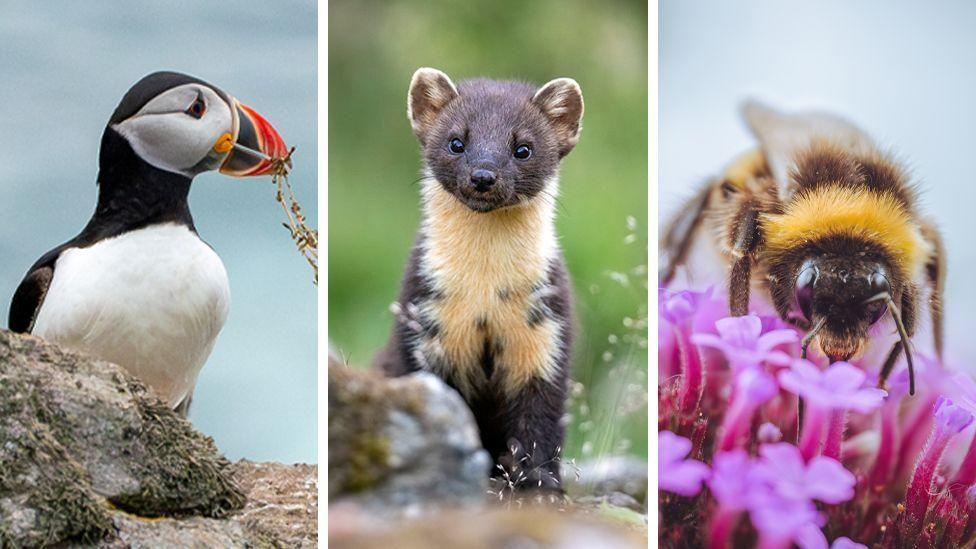
A public voting campaign generated hundreds of thousands of votes from a shortlist of 18 species. Puffins, pine martens and bumblebees emerged as leading contenders. The Bank of England is now weighing these votes alongside security considerations, with Governor Andrew Bailey expected to announce the final selection in autumn.
Key Facts
- The new 10p coin features King Charles III and the capercaillie, a grouse species found only in parts of Scotland and threatened with extinction
- A total of 7.1 million new 10p coins (600,000 from 2023 and 6.5 million from 2026) have entered circulation through banks and post offices
- King Charles coins currently represent only 1% of the 24.1 billion coins in UK circulation, making them sought-after by collectors
- All UK coins from 1p to £2 now feature British wildlife on the reverse, part of a comprehensive redesign unveiled in October 2023
- Banknotes will follow with wildlife imagery, with the Bank of England governor to decide between puffins, pine martens, bumblebees and other species by autumn