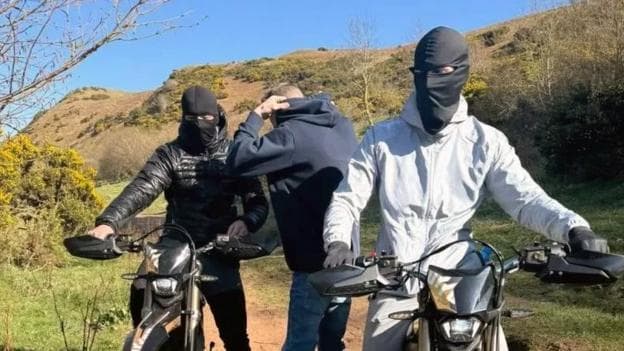
From the Pentland Hills near Edinburgh to the streets of the country's biggest cities, a persistent menace is generating frustration, concern and in some tragic instances even fatalities.
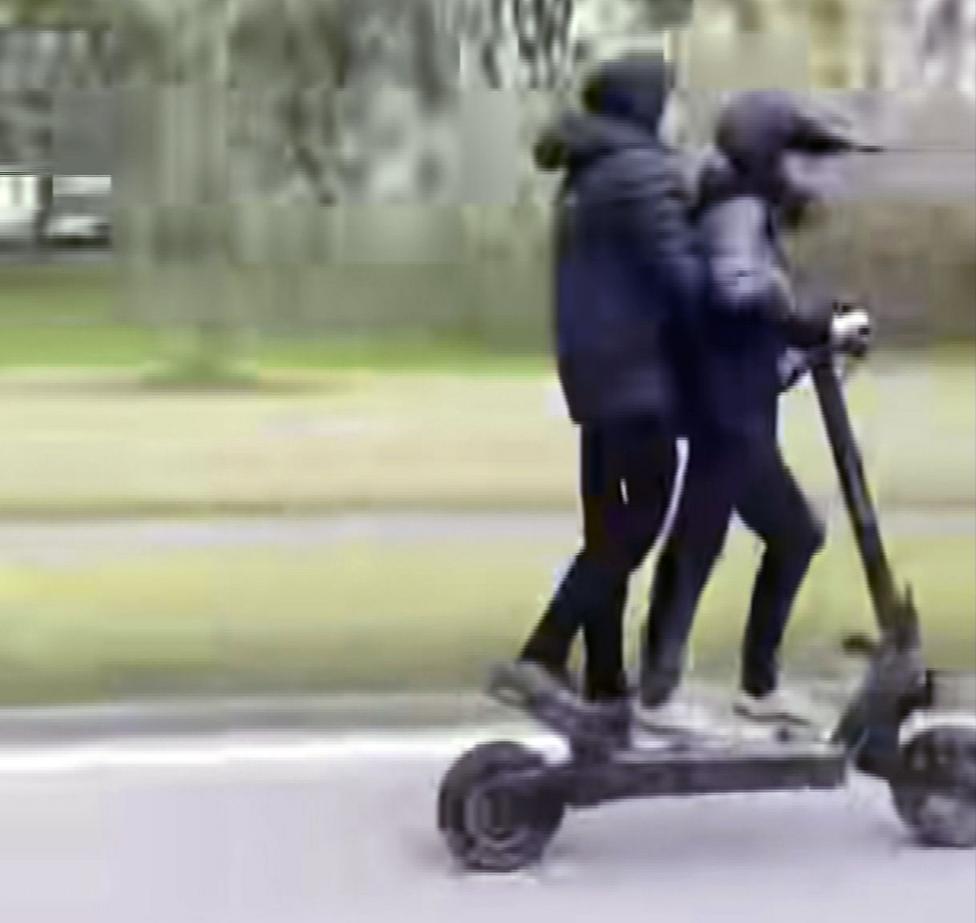
The sight of young men, their faces concealed beneath black balaclavas, speeding around on electric bikes or scooters is becoming increasingly common. A member of the public captured an image of such riders in the Pentland Hills after witnessing them frighten a horse as they travelled illegally across public footpaths.
While that incident resulted only in gravel being scattered by the riders, others have suffered far worse consequences. Earlier this year, a court examined distressing dashcam footage showing the moment an 18-year-old wearing a mask on an electric motorbike struck Gloria Stephenson, an 86-year-old woman, at a pedestrian crossing in Sunderland. Ms Stephenson died at the scene. The rider, Billy Stokoe, had consumed cannabis and was using his mobile telephone at the time of the collision. He received a prison sentence exceeding six years for causing death by dangerous driving.
Few would deny that illegal e-bikes and scooters represent an escalating challenge, yet determining effective responses remains complex. Several approaches are being pursued across the United Kingdom.
Understanding the vehicles and seizing them
The term e-bike encompasses various different vehicles, though strictly speaking it denotes an electrically assisted pedal cycle where an electric motor provides support as the rider pedals. Legally, the motor must disengage at 15.5mph (25km/h) and its continuous power output is restricted to 250 watts.
These safety limits are readily circumvented through "tuning kits" or software modifications that enable speeds exceeding 40mph. Online marketplaces openly display such modifications, frequently sourced from eastern Europe, including motorbike-style twist grip throttles permitting acceleration without pedalling.

Electric dirt bikes manufactured by companies such as Sur-Ron resemble mountain bikes but can reach approximately 50mph—or 70mph or higher when modified. Unlike lawful e-bikes, these require licensing and insurance for public use. E-scooters, though popular, remain illegal on public roads and pavements except within designated rental zones.
All these vehicles share a common characteristic: they are costly, ranging from hundreds to thousands of pounds, with modifications adding hundreds more. Confiscation and destruction therefore represents a substantial deterrent.
Legislation introduced during summer 2026 expanded police powers in England and Wales to seize illegal vehicles without formal warning if they are being operated in an anti-social manner, with destruction possible within 48 hours. In Scotland, ministers have indicated support for enhanced seizure powers, though they note bikes can already be seized under certain conditions.
Recent enforcement activity demonstrates the scale of the problem. According to police data from 2026, the Metropolitan Police had seized more than 2,500 illegal e-bikes and e-scooters already that year, surpassing the entire total from 2025. Across 31 police forces, 7,049 bikes were confiscated in the 12 months to 19 May 2026, compared with 3,858 in the preceding year—an 83 percent increase.
How are police catching offenders?
Apprehending riders presents significant difficulties for law enforcement, as the vehicles' speed and manoeuvrability enable rapid escape. Patrol cars can be evaded by navigating narrow alleys or passing through bollards. David Kennedy from the Scottish Police Federation highlighted more dangerous evasion tactics, noting that riders sometimes travel the wrong way up one-way streets, making pursuit unsafe for officers in vehicles or on motorcycles.
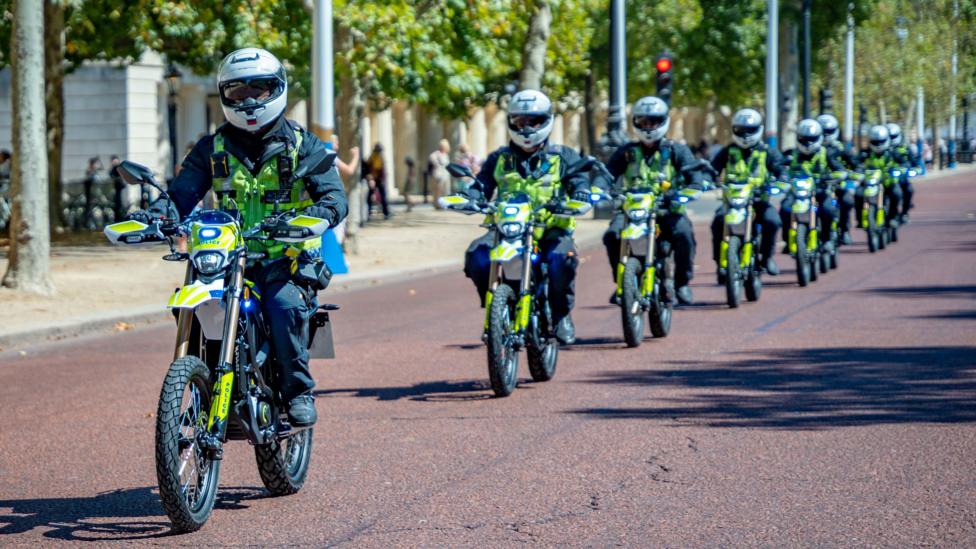
Several forces have established specialised units equipped with technology to address this challenge. The Metropolitan Police operate a fleet of 25 Sur-Ron dirt bikes, partly financed through proceeds of crime funding. As part of an initiative targeting mobile phone thefts—crimes frequently involving such bikes—they report a reduction of 13,000 offences annually.

Other forces have deployed drones to track riders rather than engaging in hazardous pursuits. Officers monitor suspects from above while colleagues on foot move in to seize vehicles and make arrests. In Devon and Cornwall, officers have employed SmartWater, a forensic marking product containing a unique chemical code visible under ultraviolet light, to mark illegal riders and their bikes.
What role can restrictions on face coverings play?
A particularly concerning aspect of e-bike misuse is that riders frequently wear black balaclavas or "ballys." Whether this serves as a practical identity concealment or reflects youth culture, the masked appearance undeniably intimidates many people.
Debate surrounding balaclava-wearing in public extends beyond e-bikes to encompass anti-social behaviour, crime and certain protest activities. New restrictions introduced under Operation Reclaim in Nottingham empower police and council officers to demand removal of face coverings, with £70 fixed penalty notices for non-compliance. Exemptions exist for religious, medical and other legitimate purposes.
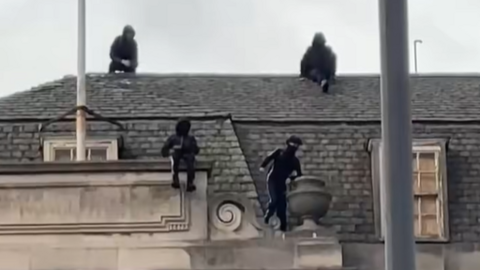
David Kennedy cautioned that localised enforcement might simply displace the problem to other areas. He also raised a related safety concern: riders wearing face coverings frequently do not wear helmets, creating additional hazard.
Can parents and sellers be held accountable?
Many parents remain unaware that knowingly permitting their child to operate an illegal e-bike or e-scooter in public could result in fines or driving licence penalty points. E-scooters are legal only on private land, with limited exceptions for rental trial zones located exclusively in England.
Riders of lawful electrically assisted bikes must be at least 14 years old. Any illegal modification reclassifies the vehicle as a motor vehicle or moped, requiring registration, a driver licence, taxation and insurance. When police stop an under-18 rider, their parents may face accusations of "causing or permitting" a driving offence, potentially incurring £300 fines and six penalty points.
Even children too young to hold a driving licence can have points recorded on a "ghost licence" that transfers to their provisional licence upon application. Government messaging in early September 2026 reiterated that privately owned e-scooters remain illegal on roads, pavements and other public spaces.
Some argue intervention should occur earlier, at the point of sale, through clearer warnings about regulations or mandatory buyer information and registration schemes facilitating police vehicle tracing. An all-party Westminster inquiry last year called for closure of a legal loophole permitting illegal vehicles to be marketed for off-road use. The inquiry also recommended that online marketplaces be held responsible for unsafe products such as modification kits sold on their platforms.
Can alternative activities reduce the problem?
Concern about youth behaviour is historically perennial—scholars have identified texts lamenting declining standards from ancient Mesopotamia dating back 4,000 years. Some contend that the e-bike phenomenon represents merely the latest iteration, and that understanding the underlying boredom and frustration driving participation offers a more constructive approach than demonisation.
In Aberdeen, a go-karting facility offers free sessions where e-scooter and e-bike riders can participate in a legal, safer environment. However, given the scale of illegal e-bike use, the impact of such schemes remains uncertain.
The context includes a prolonged decline in youth services and financial strain on local authorities and charities providing them. A report from the YMCA found council-funded youth services in England and Wales had contracted by more than £1 billion since 2010, with hundreds of youth clubs closing and youth worker positions eliminated. Youth Scotland reports a comparable situation.
What happens next?
Recent enforcement operations indicate intensifying police action. On 4 September 2026, the Metropolitan Police's specialist e-bike team conducted a crackdown near Marble Arch, seizing over 20 e-bikes and e-scooters plus several uninsured motorcycles. One confiscated e-scooter was recorded at a top speed of 70 km/h, and riders received notices of intended prosecution. Those stopped now face potential fines and penalty points following the notices issued.
Whether solutions emerge through drones, dedicated police units, enhanced point-of-sale regulation or expanded youth provision, the common requirement is innovative thinking and—arguably the most significant obstacle—additional funding and resources.