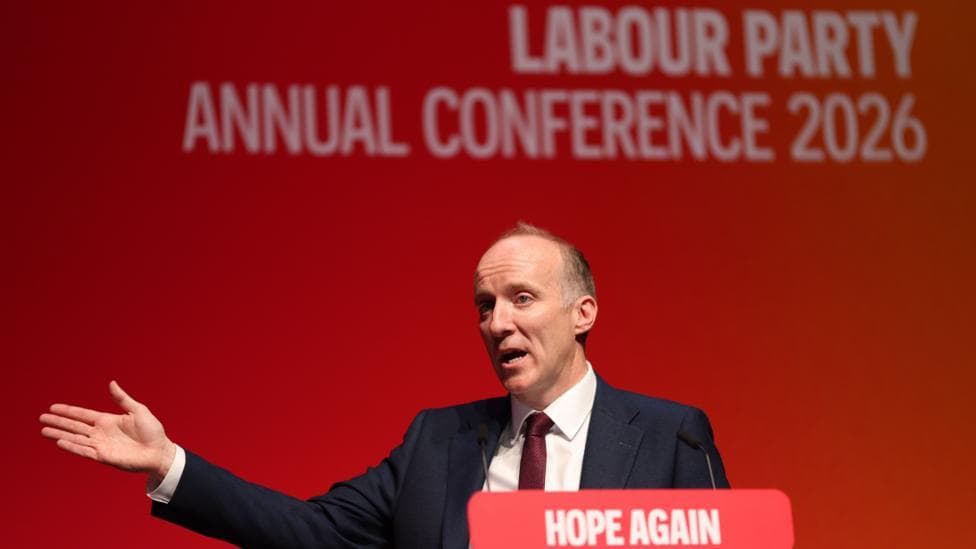
Michael Marra, the newly elected leader of Scottish Labour, used his inaugural speech to the UK Labour conference in Liverpool to call for a radical shift in how Scotland is governed, demanding that the Scottish government relinquish control and resources to local councils, colleges and industries across the country.
Marra, who was elected leader on 19 September 2026 after defeating Joe Fagan in a closely contested race, argued that excessive centralisation of power at Holyrood has stunted Scotland's economic growth and left communities without the tools they need to build thriving local economies. According to reports of his conference strategy, Marra intended to use the platform to push for new devolution deals and greater investment in skills policy to address what he characterised as a national shortage crisis.
In his speech, Marra presented a stark economic comparison to illustrate his point.
Had our regions grown at the same pace as Manchester in the last decade, the Scottish economy would be £30bn larger. Too much power is centralised in Scotland. The Scottish government has hoarded money and control at the expense of Scotland's communities.
What does Marra want to change?
Marra's decentralisation agenda represents a fundamental challenge to the Scottish National Party's governance model. He singled out the SNP's record on education and child poverty as evidence of policy failure, and criticised the party's administration at Glasgow City Council for announcing plans to dismiss and rehire 23,000 workers. He used Scotland's world-renowned shipbuilding heritage as a case study in how poor skills policy has left the country dependent on foreign workers rather than developing a home-grown workforce capable of meeting industry demand.
Shipbuilding – Scotland is famous for it. We're world class at it. There should be a sense of national pride that the ships being built in Scotland are providing opportunity and security for Scottish workers. So, my message to Bute House is put control and money in the hands of the councils, colleges and industries who know what their local economies need better than any bureaucrat in Edinburgh.
Marra's call for regional empowerment builds on positions he outlined during his leadership campaign. In earlier speeches, he argued that Scottish Labour must become a national force rooted in every place, and he proposed establishing regional assemblies to shape party policy while reviewing funding mechanisms including alternatives to council tax and wealth taxes.
How does Marra view the SNP's record?
Marra was direct in his criticism of the Scottish National Party, warning conference delegates not to confuse the SNP's rhetoric with genuine progressive politics. He argued that the party's progressive posturing masks a record of centralised control that has failed Scotland's communities and young people. His particular focus on education reflected a personal commitment rooted in his family history: his grandmother Margaret, one of seven children, was the only member of her family to attend college while her siblings worked six days a week in Dundee's jute mills. That educational opportunity, Marra said, changed her life and subsequently changed his own, two generations later.

It's no longer the SNP's priority, if it ever was. I will make Scottish education the best in the world again. Not just steady, not just average, the best in the world again.
Marra acknowledged that Scottish Labour's performance in the May 2026 Holyrood election had been difficult to accept. The party returned 17 MSPs, leaving them tied with Reform UK as the second-largest party in the Scottish Parliament—the party's worst result in a devolved election. He said the results
hurtand that the party faced
difficult truths to face up to. However, he framed his election as Scottish Labour leader as an opportunity to remind voters what the party stands for after years of decline.
What is Marra's relationship with the UK Labour government?
Marra succeeded Anas Sarwar, who stepped down to take a position in the House of Lords as part of Prime Minister Andy Burnham's government. In his conference speech, Marra revealed that Burnham was the first person to contact him after his leadership victory was announced. While joking that the two might not agree on everything—including their taste in music, with Marra referencing their differing views on dancing to The Smiths—he emphasised that Labour's strength lay in welcoming different approaches and ideas.
Both leaders, Marra said, shared a commitment to combating what he described as the political
poison of hate, anger and fearthat he saw threatening British democracy. He framed the next UK general election as a straight contest between Labour and Reform, positioning his party as the alternative to both the SNP in Scotland and the far-right politics he associated with Reform.
What is Marra's personal background?
Marra, who first joined Labour as a teenager, drew on his upbringing in Dundee to explain his political values. He recalled making his first campaign leaflet run at the age of eight, supporting Ernie Ross, the Labour MP for Dundee West, during the 1987 general election. His family's trade unionist roots and his grandmother's journey from poverty to education shaped his belief that opportunity and education should be available to all Scots.
He said he was
forever gratefulfor his family's sacrifices and described education as the key to transforming lives. This personal narrative underpinned his policy commitment to restore Scottish education to world-leading status, a goal he positioned as central to his leadership agenda.
What happens next for Scottish Labour?
Marra's conference speech marked the beginning of his tenure as Scottish Labour leader following his election on 19 September 2026. The party's leadership campaign, which ran from 18 August to 8 September 2026, concluded with his decisive victory. Beyond the UK Labour conference in Liverpool, Scottish Labour has scheduled further conference activity as part of its 2026 annual conference programme, where Marra's new leadership direction is expected to be developed further.
In his first week as leader, Marra has also signalled positions on Scotland's constitutional future. According to statements made to the Scottish Parliament, he has affirmed that Scotland has the right to decide its constitutional future, while reaffirming Labour's opposition to a second independence referendum. This balancing act—respecting Scotland's agency while opposing another vote—reflects the party's attempt to occupy middle ground in Scottish politics.