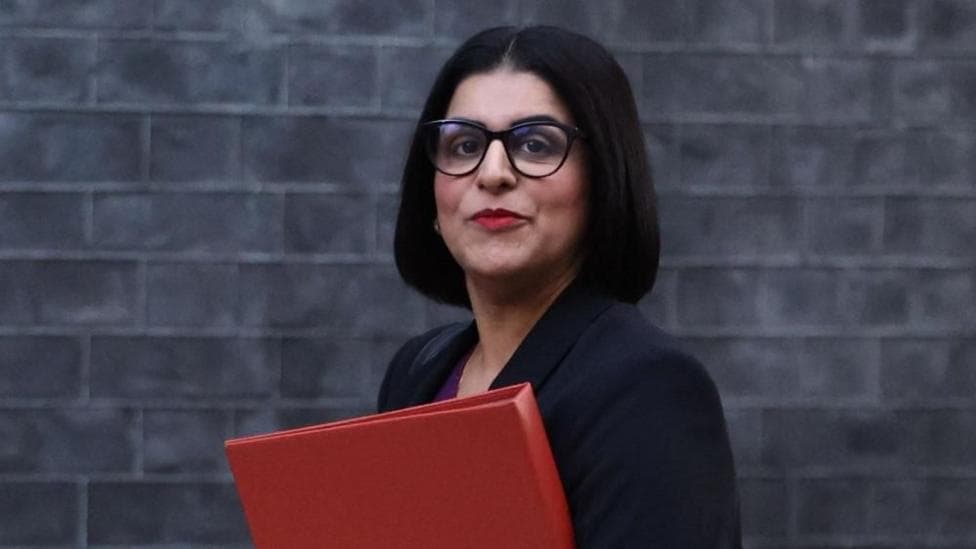
Home Secretary Shabana Mahmood is preparing to announce her final decision on immigration rules governing permanent settlement for legal migrants in the coming week. According to BBC News, the announcement will clarify how long migrants must wait before becoming eligible for indefinite leave to remain—a status that grants the right to live, work and study in the UK indefinitely and access benefits if qualified.
Mahmood had initially proposed extending the settlement wait from five years to 10 years, with some lower-paid workers facing a 15-year timeline. The BBC understands that social care workers already employed in the UK are now likely to be exempted from the extended wait, marking a significant revision from the original proposals. Most other migrant workers are expected to face a 10-year requirement, though this can be reduced if they demonstrate higher incomes or contribute to their local communities.
The Home Secretary's concern centres on the scale of permanent residency eligibility following the period of exceptionally high net migration under the previous administration. On 28 September, Mahmood indicated she was willing to reconsider the proposals, with the Prime Minister confirming the government was still reviewing consultation responses.
Why has this proposal faced such strong opposition?
Mahmood has encountered resistance from within her own government over plans to impose new rules on migrant workers already present in the UK. Housing Secretary Angela Rayner, before rejoining the cabinet, described the original proposals as "un-British" because they would retrospectively alter the terms under which people had arrived in good faith. The prospect of social care workers facing up to 15 years rather than five years proved particularly contentious.
London Mayor Sadiq Khan also joined calls to soften the reforms, arguing the policy should be fair to people already living in Britain. Labour MPs had threatened parliamentary action to expose party divisions, and trade unions unanimously backed motions urging the government to reconsider the extended timelines.
What does the consultation data show?
The government's consultation on the proposed reforms attracted 200,000 responses. The consultation ran from 20 November 2025 to 12 February 2026, with the government's stated model being that settlement would be earned through sustained good conduct, contribution and integration rather than granted automatically after a fixed period.
Conservative figures have cited Home Office research estimating that granting settlement to 117,000 low-paid care workers and 79,000 dependants could cost £9.5 billion. The social care sector has warned that a longer settlement route could exacerbate existing staffing pressures, with 385,000 international workers filling roles against 111,000 recorded vacancies in 2024/25.
What is the context for these changes?
The government's 2025 immigration white paper announced the intention to end overseas recruitment for social care visas. Restrictions took effect on 22 July, with transitional arrangements for some people already in the UK. The policy shift reflects broader concerns about the sustainability of current migration levels and the fiscal impact of settlement eligibility.
What happens next?
Mahmood's final decision will be presented to Parliament in the coming week. The Home Office has declined to comment on the specific details until the formal announcement is made. Once the decision is revealed, it will clarify the settlement pathway for the hundreds of thousands of migrant workers currently in the UK and establish the framework for future arrivals under the new rules.