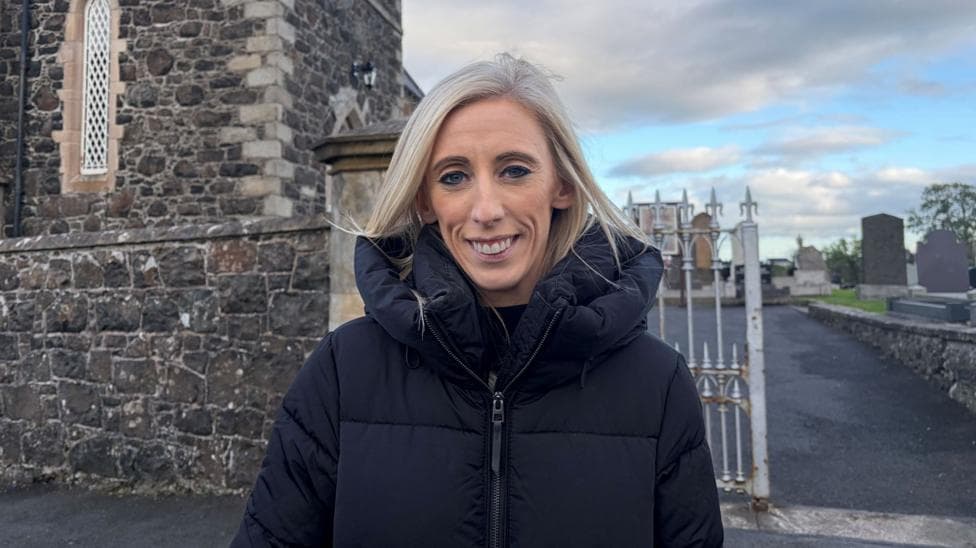
Carla Lockhart has rejected suggestions that her decision to step down as a Democratic Unionist Party (DUP) officer represents a capitulation to hardline elements within unionism. In a statement posted on social media on Saturday, the MP clarified her position following her announcement on Thursday that she could no longer remain part of the party's senior decision-making structures.
According to BBC News, Lockhart said she could not "continue to be part of the team that decide on the direction and strategy discussions of the party, whilst clearly having concerns about that". Her resignation as party officer—a role that placed her on a small, influential committee shaping party direction—follows deepening divisions within the DUP over how to respond to the Drumcree parade controversy and the involvement of Sinn Féin leaders in blocking an Orange Order march.
In her Facebook statement, Lockhart addressed what she characterised as a misreading of her motives.
Suggestions that she is "simply 'satisfying hardliners' misses the point", she wrote, emphasising that her concerns run deeper than symbolic gestures.
"Any belief the steps I have taken are for that purpose is deeply misguided and completely misreads both my strength of feeling, and that of those I represent."
Lockhart stressed the need for substantive rather than performative responses to the crisis.
"I felt strongly that an issue this serious cannot be resolved through symbolic or token gestures. Nor am I interested in myself making any such gestures."She went on to argue that the party must demonstrate through concrete action that its commitments carry weight.
"I believe we must follow through with meaningful action. People need to trust that our words mean something, particularly when the decisions are difficult."
What action is Lockhart calling for?
Lockhart has called on the DUP to remove First Minister Michelle O'Neill from office. According to AOL, her proposed mechanism is for the DUP to withdraw Deputy First Minister Emma Little-Pengelly from the Executive, which would automatically remove O'Neill from the joint First Minister office. Lockhart has argued that this step would neither collapse the Assembly nor grant the Secretary of State additional powers—addressing concerns raised by party leadership about the consequences of such action.
What triggered this dispute?
The Drumcree parade controversy centres on an Orange Order march along the Garvaghy Road in Portadown. The Parades Commission had barred the Orange Order from marching along the Garvaghy Road since 1998, until its September 2026 decision allowed a restricted parade. According to the Irish Examiner, the Parades Commission's permission for the parade was limited to 35 participants and an 8am start. On Wednesday, Michelle O'Neill and Sinn Féin president Mary-Lou McDonald attended voluntary police interviews over their involvement in protests on the Garvaghy Road that blocked the march.
The dispute has exposed fault lines within unionism over how to respond. Lockhart has noted that she has "never seen unionism so united or felt such anger across our community", suggesting that while the community response is strong, the political response remains fractured.
How has DUP leadership responded?
DUP leader Gavin Robinson has taken a more cautious approach than Lockhart advocates. In a letter to party members sent on Friday, Robinson said the outcome of the police investigation into various members of Sinn Féin "will be key". He emphasised that
"Justice must not only be done; it must be seen to be done"and that
"No person can be immune from prosecution because of their politics or position."
Robinson has also expressed reluctance about Lockhart's departure. He previously stated that "she remains a key part of our team" and that he "would rather that she hadn't" quit her party officer role. However, Robinson has cautioned against immediate executive action, arguing that
"by acting now to stop the Executive functioning at all", unionism would be "weakened in the longer term"."This disagreement over timing and tactics represents a significant split in how the party's leadership views the appropriate response to O'Neill's actions.
What happens next?
The legal landscape surrounding the parade ban remains unsettled. A legal challenge to Northern Ireland Secretary Chris Bryant's ban on the Drumcree parade has been heard, with a judge expected to deliver a decision next week. This ruling could reshape the political dynamics around the dispute and may influence how the DUP and other parties proceed.
The no-confidence votes against Sinn Féin ministers over their involvement in the Garvaghy Road protests are also scheduled for Stormont, though assembly rules requiring cross-community support mean these votes are expected to fail. The convergence of these legal and political processes will determine whether Lockhart's call for executive action gains traction within her party or whether Robinson's more measured approach prevails.