

A railway bridge on the A5 Watling Street near Hinckley, Leicestershire, already labelled the most-struck bridge in Britain, was hit by lorries on consecutive days, forcing road closures both times. Leicestershire Police confirmed the road was shut at 05:52 BST on Sunday following the first collision, and again on Monday afternoon after a second "road traffic collision" involving the bridge.
Network Rail inspected the structure after both incidents and found no damage on either occasion, meaning train services were able to continue running. The rail operator said the strikes remain a persistent source of disruption on the line.
What did officials say about the damage and delays?
According to Network Rail, the bridge was checked within 30 minutes of Monday's strike and no structural damage was identified, allowing trains to keep operating safely. The incident nonetheless added to delays on the network.
"A lorry struck the railway bridge on Watling Street, Hinckley, at 13:48 today. The bridge was examined within 30 minutes of the incident and no damage was found, allowing train services to continue operating safely. The incident caused a total of 16 minutes of delay to rail services."
Network Rail said the Monday strike alone caused 16 minutes of delay to rail services, matching the disruption caused by Sunday's incident.
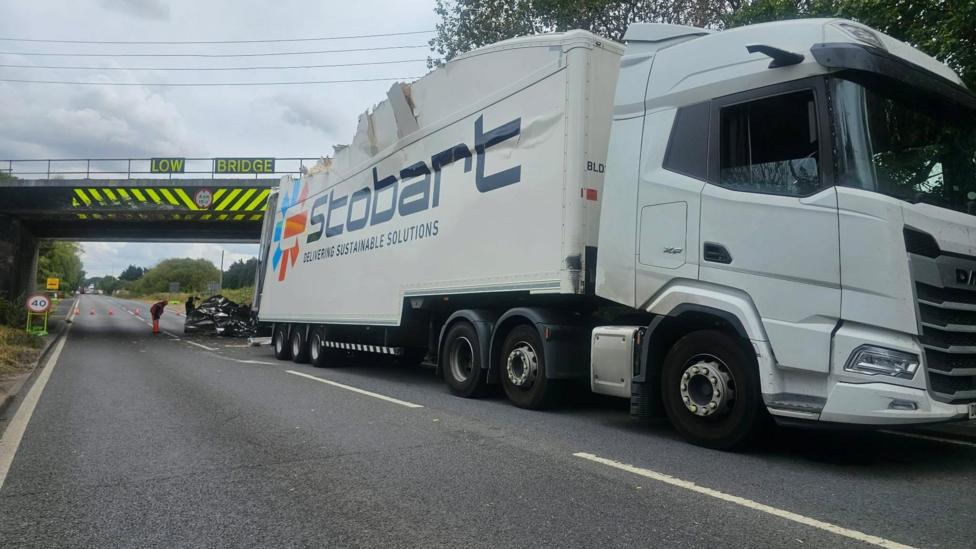
A spokesperson for Network Rail repeated a wider warning about the scale of the problem nationally.

"Bridge strikes remain one of the biggest causes of disruption on the railway."
The organisation also renewed its appeal to lorry drivers to check their vehicle dimensions before setting off.
"We continue to urge drivers to Wise Up, Size Up by knowing the height of their vehicle, planning their route carefully and always obeying road signs and warning systems at low bridges."
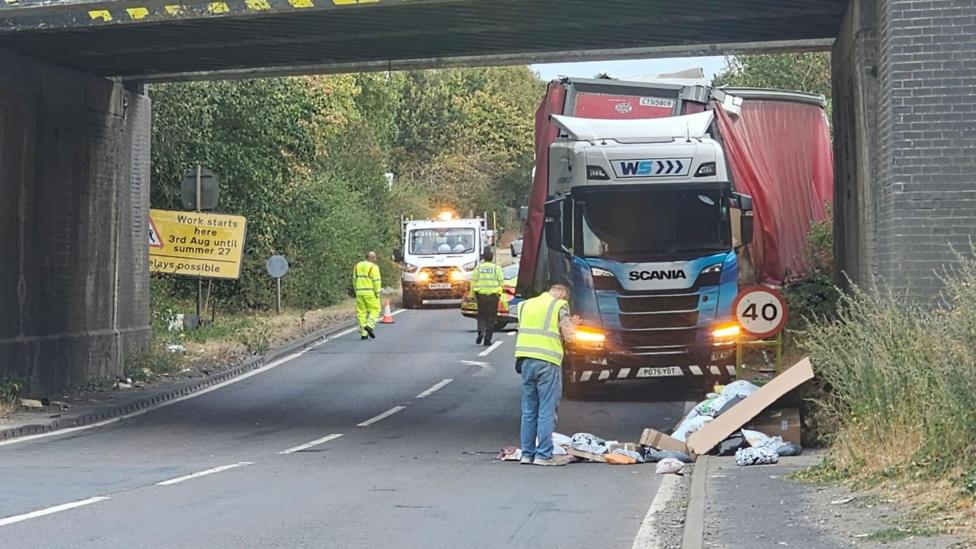
How often has the bridge been hit, and is anything being done?
Network Rail previously named this bridge the most frequently struck in the country after it recorded 22 collisions between 1 April 2024 and 31 March 2025. A separate report has since put the total even higher, stating the bridge has been struck 26 times since March 2025, according to a national broadcaster's report. A local news outlet has also reported that the crossing has now been struck at least six times in 2026 alone, according to a local news report.
In an effort to reduce damage to the railway structure itself, Network Rail has installed protective beams at the site so that some lorries strike the beam rather than the bridge, according to a local news report.
A local news outlet also reported that the road remained closed as of 2.20pm on 17 August 2026 following the latest strike, citing information from Leicestershire Police, according to a local news report.
What happens next?
Plans to lower the road beneath the bridge, intended to prevent further strikes, have already been delayed once, according to an announcement made last month. Network Rail has said that preparatory work on the scheme began in May, with one report suggesting the project may not be finished until summer 2027, according to a news report. However, a separate report citing Network Rail indicated that as of 30 July 2026 the road-lowering proposal had still not received formal authorisation from the organisation, according to a national broadcaster's report.
Overnight closures of the A5 between Wellesborough and junction 2 of the M69 were scheduled for Monday and Tuesday to set up traffic management systems ahead of construction work, according to a national broadcaster's report. Planning documents cited separately suggest the wider highway improvements are expected to be completed by March 2027, according to a national broadcaster's report.
Key Facts
- The A5 Watling Street bridge near Hinckley was struck twice within two days, on Sunday and Monday.
- Network Rail found no structural damage after either incident, though each caused 16 minutes of rail delay.
- The bridge was struck 22 times between April 2024 and March 2025, and reportedly 26 times since March 2025.
- Protective beams have been installed at the site to deflect some lorry strikes away from the railway structure.
- Road-lowering works, delayed once already, may not be completed until between late 2026 and March 2027, depending on the source.


