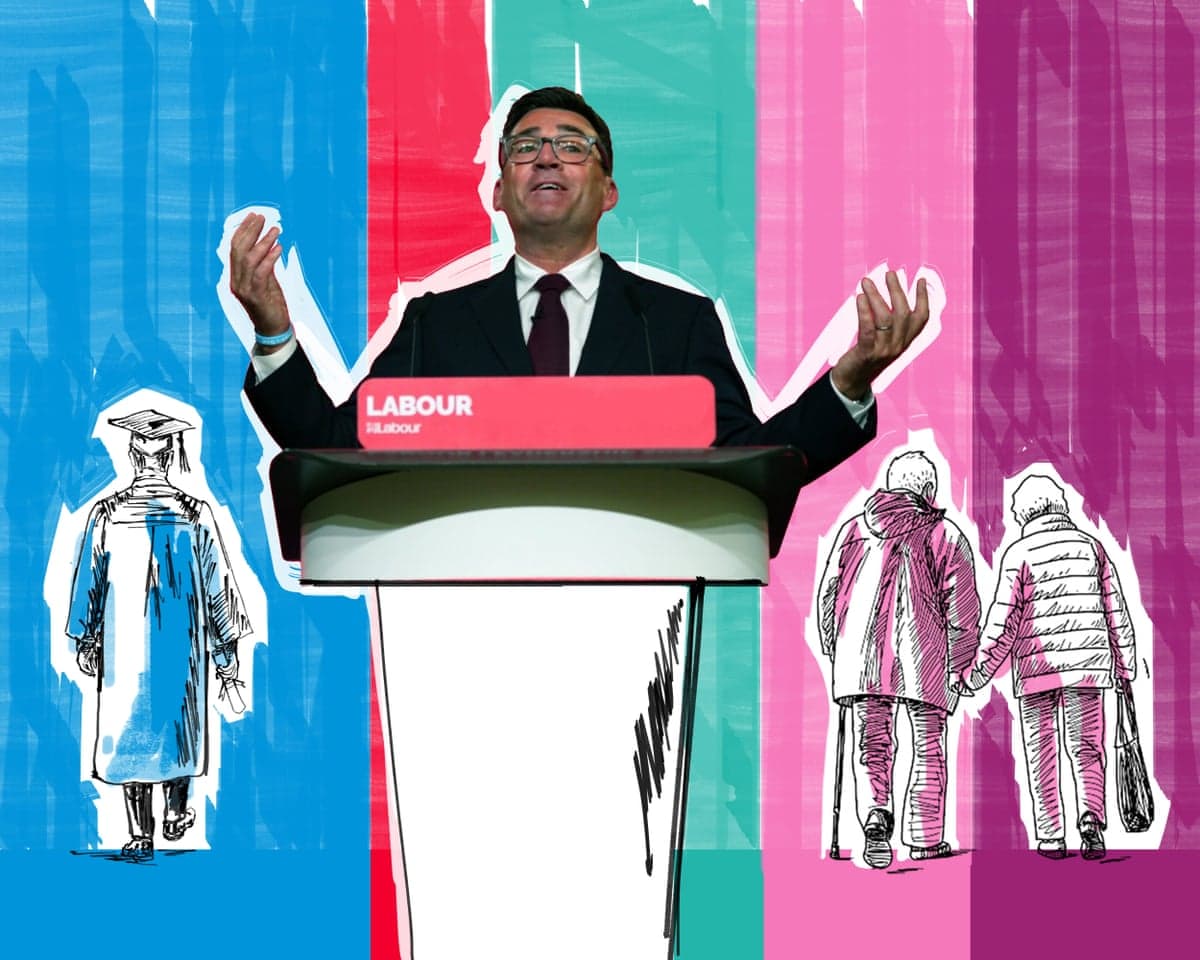
A new analysis of voter behaviour reveals five distinct groups within the "progressive majority" that collectively hold the key to Labour's chances of securing an overall parliamentary majority at the next general election. These voters share broad concerns about living costs and the state of public services, yet diverge sharply on immigration, environmental policy, political trust and the pace of reform needed across the UK.
The research, conducted by Survation and 38 Degrees, examined polling data from more than 8,000 voters and identifies how Labour must simultaneously retain its most loyal supporters while reclaiming those who have drifted towards the Greens, Reform or political disengagement. The stakes are high: Labour strategists, including chief of staff Morgan McSweeney, recognise that holding this coalition together represents a genuine balancing act, though one that may be more achievable than commonly assumed.
Recent polling trends suggest the party's recovery is being driven primarily by voters returning from the Greens and Liberal Democrats rather than from Reform, indicating that Labour's gains are concentrated on its progressive flank. A separate poll found that 80% of Green and Liberal Democrat voters would consider Labour under certain policy changes, including a wealth tax and suspending arms exports to Israel.
Who makes up the progressive majority?
Researchers identified five distinct voter segments that together comprise the progressive majority—those who might plausibly vote for Labour, the Liberal Democrats, the Greens, Plaid Cymru or the Scottish National Party.
Rooted traditionalists are older, economically left-leaning voters deeply concerned about immigration but less interested in environmental issues. Many have migrated from the Conservatives to Labour in recent years, though some could shift again towards Reform. Cost of living pressures and NHS access provide their strongest common ground with other progressive voters.
Open-hearted idealists are affluent, highly educated and the most socially liberal segment, strongly pro-immigration and politically engaged. They lean heavily towards Labour, the Greens and the Liberal Democrats and show particular openness to tactical voting. Bills, NHS access and progressive taxation matter most to them, while tougher immigration policies risk pushing them away.
Quiet persuadables represent the youngest and least politically committed group, often holding centrist or uncertain views. Their support scatters across multiple parties and they are most likely to vote tactically. Though potentially winnable, they require compelling reasons to engage seriously with politics.
Trusting optimists are young, affluent, urban and highly educated, with strong confidence in their personal finances, the government and the country's trajectory. Most support Labour and economically progressive policies, yet they are also the most socially authoritarian group. Their loyalty could weaken if their circumstances deteriorate.
Struggling sceptics are the least financially secure, most distrustful and least electorally engaged segment, with many believing that voting produces little change. Although economically left-leaning, their support divides between Labour, the Greens and Reform. Winning them back may depend on tangible improvements to bills, wages and living standards rather than political messaging alone.

What are the demographic differences between these groups?
Sharp demographic divides separate these five voter types. Quiet persuadables skew youngest, while rooted traditionalists are predominantly older—more than a third aged over 65. Trusting optimists are twice as likely as voters overall to live in London, whereas rooted traditionalists are half as likely to do so.
Educational attainment varies dramatically: struggling sceptics are most likely to hold no or low-level qualifications, while almost two-thirds of trusting optimists are graduates. Income follows a similar pattern—nearly a third of struggling sceptics live in lower-income households, whereas trusting optimists and open-hearted idealists are the most affluent, with most earning more than £40,000 annually.
Ethnic diversity also distinguishes the groups. Rooted traditionalists are overwhelmingly white, while trusting optimists represent by far the most ethnically diverse segment. On Brexit alignment, rooted traditionalists and struggling sceptics contain the highest concentrations of leave voters, while open-hearted idealists are overwhelmingly remain-aligned.
How is Labour's support distributed among these groups?
These five voter segments collectively account for nine in 10 current Labour voters, up from eight in 10 at the 2024 general election—showing that Labour's support has become increasingly concentrated among progressive voters over the past two years.

Open-hearted idealists now provide the largest share of Labour's support at 28%, followed by quiet persuadables at 21%. Trusting optimists have recorded the largest increase, rising four percentage points since 2024. At the time of polling, Labour led among all five groups, though support ranged from 25% among struggling sceptics to 57% among trusting optimists.
The Greens have captured substantial support among open-hearted idealists, attracting 23% of this group. Struggling sceptics represent the most fragmented segment: Labour leads on 25%, but the Greens and Reform both attract significant backing, with 13% remaining undecided—the highest rate across any group. Reform performed relatively strongly among rooted traditionalists, while the Conservatives reached their highest level among quiet persuadables.

Since 2024, Labour has lost support across all five groups, but the losses have not been uniform. The Greens have gained most among open-hearted idealists, while Reform's rise is most concentrated among struggling sceptics and rooted traditionalists. Struggling sceptics represent Labour's biggest defection problem: support fell from 39% to 28%, with both the Greens and Reform rising to 21% and 18% respectively.
Quiet persuadables and trusting optimists have remained most loyal to Labour, recording only small drops since the general election. According to recent polling, among Labour's 2024 voters, the share planning to vote Labour again rose to almost 70%, while the share defecting to the Greens fell from 18.5% to 8%. The same data showed that support among 18-34-year-olds for Labour rose from 23.3% to 33.5%, suggesting younger voters are returning to the party.
Where do these groups disagree on policy?
The five voter segments hold conflicting priorities that present a genuine challenge for Labour strategists seeking to build a winning coalition. Cost of living dominates across every group, cited by between 54% and 77% as a top concern. Health and the NHS generally ranks second, peaking at 56% among open-hearted idealists, while the economy registers as significant but less prominent across all segments.
Immigration reveals the sharpest divide: 34% of rooted traditionalists and 28% of struggling sceptics name it as a concern, compared with just 5% of open-hearted idealists. The climate crisis shows the reverse pattern, reaching 29% among open-hearted idealists but only 10% among rooted traditionalists. Rooted traditionalists also express notably greater concern about pensions, while housing and jobs feature more prominently among trusting optimists and quiet persuadables.

Is immigration a vulnerability for Labour?
Immigration represents the area where Labour is least trusted relative to its competitors, though research suggests this may not constitute a significant electoral vulnerability. The issue is named as vote-deciding by 40% of voters—level with the NHS and second only to cost of living—but Reform leads Labour on it by 10 points, with 31% of the public trusting Reform compared with 21% trusting Labour.
However, these figures reflect the population as a whole. Within the progressive majority, immigration is not a driving factor in most voters' decisions. Instead, cost of living and the economy dominate their voting calculus. Across the public as a whole, Labour leads Reform on every other major issue, including the NHS by 12 points and cost of living by six points.
Damian Lyons Lowe, founder and chief executive of Survation, argued that the apparent divisions are manageable:
Labour's potential coalition is best understood as five distinct segments making up a 'progressive majority' – those voters that strongly consider voting for one or more of Lib Dems, Labour, the Greens, Plaid and the SNP. They have very different views on social and economic policy – the balancing act is real – but our data suggests it's more manageable than the conventional wisdom implies. The issues that divide these groups, immigration above all, are largely ones where Labour isn't trusted and where the voters it could win are already spoken for. The issues that unite them – the cost of living, energy, food and housing bills, and cleaning up politics – are exactly where even the most sceptical parts of the coalition trust Labour more than anyone else. The way to build such a winning coalition isn't to referee their disagreements. It's to deliver visibly on the concerns every one of them shares.

What does this mean for Labour's strategy?
The analysis suggests that Labour's path to an overall majority depends less on resolving the deep disagreements between these voter groups and more on delivering tangible improvements on the issues that unite them. Cost of living will sit at the heart of the party's messaging at its conference, reflecting its salience across all five segments—particularly among struggling sceptics, who require evidence of real change rather than political rhetoric alone.
The research also illuminates why Andy Burnham's team has prioritised economic policy. Recent polling shows Labour and Reform level on 23% in mid-September, with the Conservatives on 20%, underscoring how tight the race remains. Burnham's emphasis on radical economic policies reflects an understanding that the struggling sceptics—the group Labour has lost most—will not return on the basis of messaging alone.
Tactical voting could also play a role in Labour's favour. If significant numbers of progressive voters coordinate their choices to prevent Reform from winning seats, the party could secure an overall majority even without winning back all defectors. However, such a strategy carries risks: it would require unprecedented coordination and could alienate voters who feel their genuine preferences are being overridden.
What happens next?
Labour's conference period is expected to keep cost-of-living messaging central, with strategists monitoring whether the party can hold progressive voters through the autumn political cycle. The Greens and Liberal Democrats will test their own messaging at their conferences, while Reform continues to consolidate support among voters sceptical of the progressive consensus. The next general election will reveal whether Labour's coalition-building efforts have succeeded in reassembling the progressive majority or whether the five voter groups have drifted too far apart to reunite.