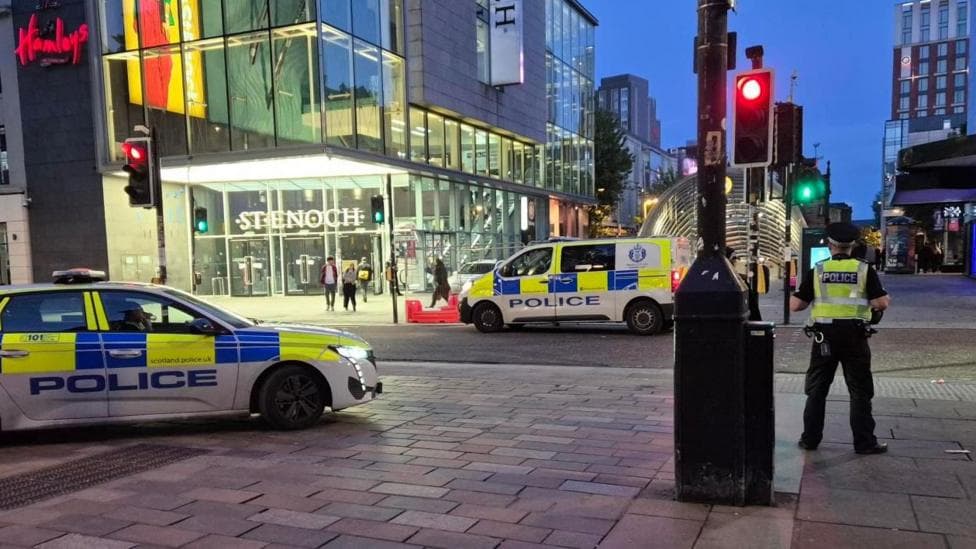
Police Scotland has extended temporary dispersal powers in Glasgow's city centre until December, maintaining authority to remove groups from a designated hotspot area as part of an ongoing effort to combat crime and anti-social behaviour.
The dispersal zone, which began on 20 March 2026, covers Glasgow Central Station, St Enoch Square, Union Street and the surrounding area bounded by St Vincent Place, Glassford Street, Stockwell Street, the riverbank and York Street. According to STV reporting, the zone was initially set to expire on 20 June but has now been extended through the end of the year.
Chief Superintendent Emma Croft, Greater Glasgow divisional commander, announced the extension at a Safe Glasgow meeting. She indicated that police would maintain a focus on visibility and enforcement while exploring additional measures to address the underlying issues driving criminal activity in the area.
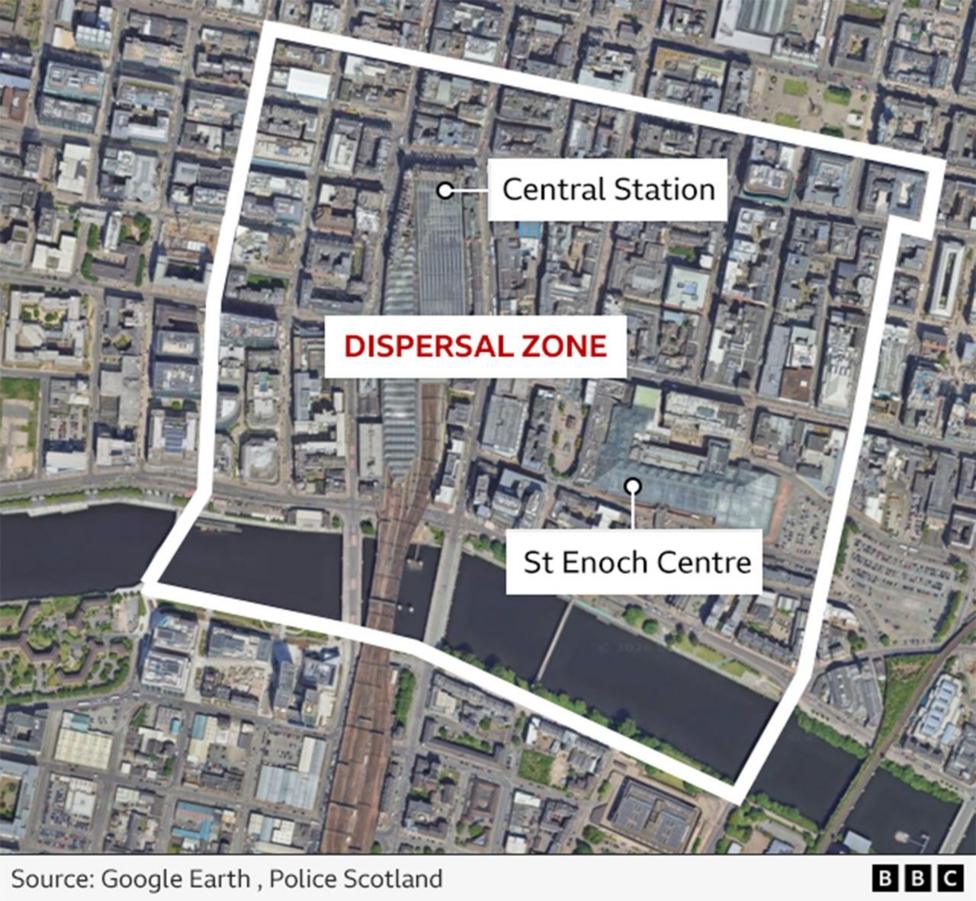
Officers operating under dispersal zone powers can temporarily ban groups of two or more people from the designated area for 24 hours if their behaviour is deemed to be
impacting on the safety and well-beingof others. According to Police Scotland, the zone was introduced to address concerns about drug dealing and other criminal conduct in the city centre.
How frequently have dispersal powers been used?
Police have invoked dispersal powers extensively since the zone's introduction. A Police Scotland report revealed that officers had used these powers 1,362 times since March, demonstrating the scale of enforcement activity in the area. In the zone's first three months alone, according to STV, officers deployed dispersal powers 1,133 times, resulting in 19 arrests during that initial period. Earlier reporting indicated that 43 people were arrested in the first month specifically for breaching dispersal directions, with additional offences including drug possession and assaulting police officers.

What additional measures are being considered?
Chief Supt Croft raised the possibility of police officers occupying premises within the dispersal zone area. This approach would increase police visibility while enabling closer collaboration with council enforcement officers and third sector partners working to address the underlying causes of criminal behaviour. The commander emphasised that the strategy involves providing signposting to support services alongside enforcement action.
What is the legal basis for these powers?
Dispersal zone powers were introduced in Scotland under the Antisocial Behaviour etc. (Scotland) Act 2004. The legislation gave officers a mechanism for addressing behaviour that, while anti-social in nature, did not warrant stronger enforcement measures. Failing to comply with a dispersal order constitutes a criminal offence that can result in arrest under the act. A review conducted three years after the act's passage found that dispersal powers had been used on 14 occasions across 11 separate areas including Glasgow, Edinburgh and Aberdeen, though they have also been deployed in smaller towns such as Dumfries and Dingwall, and were once imposed on an entire village, Mid Calder in West Lothian.
What prompted the crackdown?
The dispersal zone reflects longstanding concerns about conditions in Glasgow's city centre. An investigative report examined claims that parts of Scotland's largest city have become problematic due to crime, homelessness and anti-social behaviour. In August 2026, a documentary investigation described the city centre as being affected by drugs, violence and racism, providing context for the political sensitivity surrounding the crackdown. More recently, in early September 2026, police carried out an enforcement operation in the city centre and made seven arrests linked to disorder in the area covered by the dispersal powers, according to reporting from that period.
What happens when the extension expires?
The dispersal zone extension runs until December 2026. At that point, police and their partners will need to decide whether to end the zone, renew it for a further period or modify its scope and powers. The decision will likely depend on crime statistics, anti-social behaviour reports and feedback from businesses, residents and enforcement agencies operating in the city centre during the extended period.
Key Facts:
- The dispersal zone covers Glasgow Central Station, St Enoch Square, Union Street and surrounding streets bounded by St Vincent Place, Glassford Street, Stockwell Street, the riverbank and York Street
- Police have used dispersal powers 1,362 times since the zone began on 20 March 2026
- Officers can ban groups of two or more people from the area for 24 hours if their behaviour impacts safety and well-being
- Breaching a dispersal order is a criminal offence that can lead to arrest
- The extension continues until December 2026, when police will reassess whether to end, renew or modify the zone