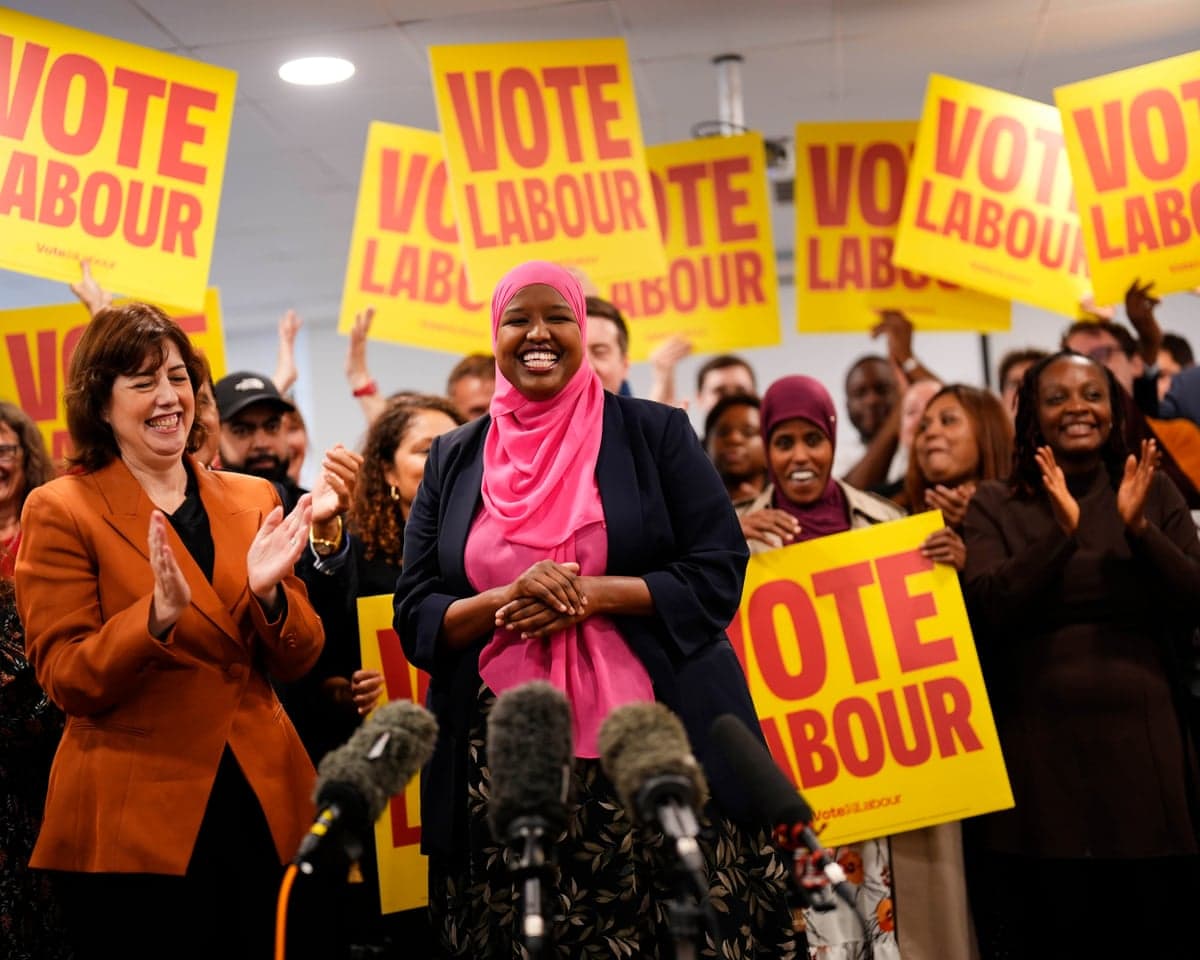
Labour has begun recovering support from progressive voters who abandoned the party during Keir Starmer's tenure as Prime Minister, according to the party's deputy leader following its victory in the Holborn and St Pancras byelection. The result demonstrates Labour's ability to hold diverse inner-city constituencies even as the Greens have mounted increasingly competitive challenges in such areas.
Sagal Abdi-Wali, Labour's candidate, secured 45% of the vote in a contest marked by relatively modest turnout. According to detailed election results, she accumulated 12,292 votes, defeating Green Party leader Zack Polanski, who finished second with 8,928 votes and a 33% share. Labour's majority stood at 3,364, a dramatic contraction from the 11,572-vote margin Starmer had held in the previous general election. The Conservatives received 1,922 votes while Reform UK secured 1,612.
The byelection was triggered after Starmer stepped down as an MP shortly following his removal as Prime Minister by Andy Burnham. The contest unfolded against a backdrop of significant internal turmoil within the Green Party, which had recently adopted a controversial conference motion equating Zionism with racism and calling for Israel to be replaced by a single Palestinian state.
What does the result reveal about Labour's recovery?
Lucy Powell, Labour's deputy leader, framed the outcome as validation of the party's efforts to reconnect with disaffected progressive voters. In remarks to a national newspaper, she stated:
"We hear you, we've listened and we know we needed to be clearer about what we stand for and what type of country we want to see, proudly putting our values centre stage. We're delighted so many of you are backing us once again."Powell has previously argued that Labour must unite progressive voters under Burnham's leadership if it is to secure victory in the next general election.
The party's polling position has strengthened considerably. Labour now leads the Greens by more than 15 percentage points nationally, with the party at approximately 11% support compared to Labour's dominant position. This represents a sharp reversal from earlier in the year when the Greens had briefly peaked at 21% in national polling, surpassing Labour.
The Green vote share in Holborn and St Pancras rose by 22.4 percentage points relative to the previous general election, according to election analysis, underscoring the party's increased capacity to mobilise support in urban constituencies. However, the byelection result suggests this momentum may have plateaued. The turnout of 38.7% was notably lower than the 47.62% recorded when the Greens won Gorton and Denton in Greater Manchester in February, a victory that had significantly weakened Starmer's position at the time.
Why was turnout lower than expected?
The modest participation rate likely reflected widespread polling predictions that Labour would retain the seat comfortably, potentially dampening voter motivation to cast ballots despite intensive campaigning by the Greens. The low turnout also signals a challenge for Burnham in engaging voters across urban areas, particularly in London, where the Greens secured control of three councils during May's local elections.
What did the winning candidate say?
Abdi-Wali, a former child refugee who arrived in the United Kingdom from Somalia during the 1990s, delivered an emotionally resonant victory address that appeared to respond directly to comments made by Reform UK's Zia Yusuf, who had questioned her British identity shortly after the byelection was announced. She stated:
"I hope this moment says something about who gets to belong. For people who look like me, I hope they see themselves reflected in this place and know that their path too belongs here. This is Camden, and this is Britain."
How did the Green leader respond?
Polanski acknowledged defeat while asserting that his party remained a formidable challenge to Labour. He reported that numerous voters had expressed a desire to "give Andy Burnham a chance" at leading the country. The result marked the Greens' second-best byelection performance on record, further evidence of the party's growing organisational capacity and electoral reach since Polanski assumed the leadership 13 months prior. The party's strongest byelection result came in February when it captured Gorton and Denton from Labour in what was widely regarded as a major upset.
Following the byelection loss, Polanski stated that he would remain as party leader, according to reporting on his post-election comments. This declaration came amid intensifying scrutiny of his leadership following the passage of the Zionism motion at the party conference.
What is the controversy surrounding Polanski's leadership?
Polanski's position has come under significant pressure since the controversial motion passed. Critics have accused him of abdicating his leadership responsibilities by missing the debate to campaign in the byelection, thereby failing to provide clear guidance on whether he supported the motion. In subsequent interviews, Polanski indicated he would have voted against the motion had he been present, noting that two amendments he had backed—both stipulating that any future Palestinian state structure should be determined by Palestinians rather than having a one-state system imposed—were defeated.
Vivien Lichtenstein, chair of Jewish Greens, stated publicly that Polanski, who is himself Jewish, had made a "significant error" by avoiding the vote. When asked whether he should continue in his position, she told a radio broadcaster:
"No, I think he should resign."However, other members of Jewish Greens disputed Lichtenstein's characterisation, asserting that her views did not represent the broader consensus within the group and indicating that a vote of no confidence in her had been initiated.
Caroline Lucas, the Greens' former leader and the party's first Member of Parliament, was similarly critical. Speaking before the byelection result was announced, she stated:
"I would have hoped that he would have really been a very strong critic of this motion, because the motion was flawed from top to bottom in my view. It's dangerous, it's divisive, it tries to have a singular definition of Zionism when we know that there are many."When asked directly whether Polanski should step down, Lucas declined to give a definitive answer, saying:
"I think let's just see what happens in the coming days and weeks."
What mechanisms exist for removing a Green Party leader?
The Green Party has no formal procedure for removing a sitting leader through an internal vote of no confidence. However, party leaders must stand for re-election every two years. Polanski, who took office in September 2025, will face party members again in less than a year, providing a potential avenue for members to challenge his continued leadership if discontent persists.
Key Facts
- Labour's Sagal Abdi-Wali won with 45% of the vote (12,292 votes), reducing Labour's majority from 11,572 to 3,364 compared with the previous general election
- Green Party leader Zack Polanski finished second with 33% (8,928 votes), representing a 22.4 percentage point increase in the Green vote share since the last general election
- Turnout was 38.7%, lower than the 47.62% recorded in the Greens' February victory in Gorton and Denton, suggesting momentum may be slowing
- Labour now polls 15 points ahead of the Greens nationally, reversing a position from earlier in the year when the Greens briefly led at 21%
- Polanski faces internal party pressure over his absence from a controversial conference vote on Zionism, though he has committed to remaining as leader