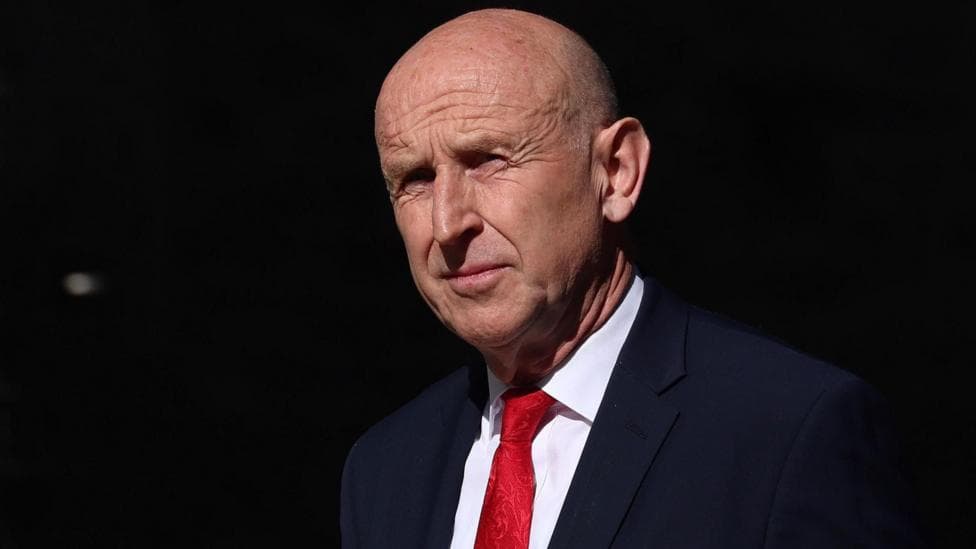
Andy Burnham's appointment of John Healey to the role of chancellor of the exchequer represented an unexpected choice at Westminster. The 66-year-old possessed substantial experience and credibility, yet he had not featured prominently in speculation about who would succeed Rachel Reeves, with commentators focusing instead on more visible political figures.
Healey had maintained a low profile since his dramatic resignation as Sir Keir Starmer's defence secretary in June 2026. According to BBC News, his assessment that the government's defence investment plan fell "well short of what is required for defence and the country at this dangerous time" proved devastating and contributed to Sir Keir's departure from Downing Street. His resignation letter also contained sharp criticism of Reeves's Treasury, which he accused of being "unwilling" to "commit the resources that the nation needs to defend the country at this time of rising threats".
The circumstances surrounding Healey's departure from the Defence Ministry were part of broader upheaval within the Starmer administration. The Conversation reported that his resignation came amid wider turmoil, including heavy local-election losses for Labour, Health Secretary Wes Streeting's resignation, and Andy Burnham's bid to return to Parliament. Armed Forces Minister Al Carns also departed on 11 June, stating the proposed funding plan was "not built for the threat we face", with Prime Minister Keir Starmer subsequently appointing Dan Jarvis as defence secretary.
The dispute over defence spending centred on a significant funding gap. According to AP News, the proposed defence plan would raise spending to 2.68% of GDP by 2030, compared with 2.6% the following year under existing plans. The Treasury reportedly offered £13.5 billion in additional investment, while Healey and the Ministry of Defence sought £18 billion.
What challenges does Healey face as chancellor?
Healey now confronts the difficult task of determining how to increase defence spending to 3% of national income while simultaneously reducing government borrowing costs and addressing the cost of living crisis. Like his predecessor, he must navigate the delicate balance of maintaining Labour MPs' support without unsettling financial markets, all while delivering on the government's core objectives.
His early statements as chancellor have emphasised fiscal discipline and welfare reform reduction, alongside promotion of Burnham's "reindustrialisation" strategy for Britain. Despite his understated public persona, he demonstrated a lighter touch in a social media video alongside the prime minister, with the pair exchanging banter about pub snacks.
"I will always stand by my political choices as chancellor, including pork scratchings as the best pub snack,"he stated on X.
Who is John Healey?
Born in Wakefield in 1960, Healey attended Lady Lumley's Academy in Pickering and St Peter's School in York before studying social and political science at Christ's College, Cambridge. Before entering Parliament, he worked as a journalist, briefly editing The House, Parliament's in-house magazine, before becoming a disability rights campaigner and trade union official.
He first entered Parliament in Tony Blair's 1997 landslide election as MP for Wentworth, a former mining area north of Sheffield. Following boundary changes, his constituency became Rawmarsh and Conisbrough in South Yorkshire. He retained the seat in the 2024 general election with a majority of 6,908, with a Reform UK candidate finishing second.
Healey has maintained an almost continuous presence on the Labour frontbench since 2001. During the Blair and Gordon Brown administrations in the early 2000s, he held various ministerial positions covering housing and local government. He spent five years at Brown's Treasury, where he oversaw policies including child trust funds and initiatives to regenerate and devolve power through the Regional Development Agencies, which the coalition government later scrapped.
Speaking to the BBC's Political Thinking with Nick Robinson, Healey characterised the Treasury as "a paradox".
"You have some of the very best and brightest officials in the Treasury, but you have too often a Treasury orthodox that's a dead hand on dynamic government."He emphasised that while maintaining financial stability remained a key Treasury function, the department "can and it has to drive economic growth, raise levels of productivity, support business competition, investment for the for the future".
Healey also criticised the Treasury's approach to defence commitments.
"The Treasury still often sees defence as a drain on public spending and not the driver of economic growth that we've demonstrated in two years,"he told Nick Robinson, noting that the department "was in denial about the commitment that the UK has rightly made to NATO and to our people" to increase defence spending to 3% of GDP, which would not occur until 2034/35 under existing plans.
What is Healey's background in defence and housing?
Housing represents another area of substantial expertise for Healey. He served as shadow housing secretary during Jeremy Corbyn's Labour leadership, despite supporting a failed attempt to remove Corbyn in 2016. When Sir Keir became Labour leader in 2020, he appointed Healey shadow defence secretary, a position that became defence secretary when Labour took office four years later.
Healey demonstrated strong support for Ukraine throughout its conflict with Russia, making multiple visits to the country to meet President Zelensky. At his first NATO allies meeting in September 2024, he stated he was "confident" Labour could honour its commitment to increase defence spending and "make the decisions that allow us to set out a long-term plan to make our forces better equipped to fight and to deter the threats we face".
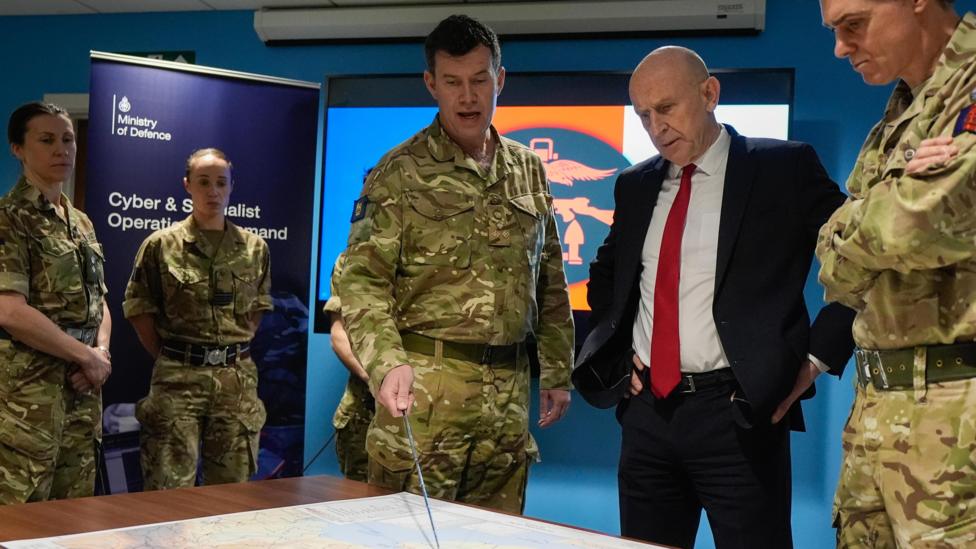
During his tenure as defence secretary, Healey drove investment in housing for armed forces families, implementing a £9 billion spending plan. Despite his measured public demeanour, he demonstrated capability in delivering stern warnings to adversaries. In April 2026, he issued a direct message to Russian President Vladimir Putin regarding "covert" operations by Russian submarines, stating:
"We see you. We see your activity over our cables and our pipelines, and you should know that any attempt to damage them will not be tolerated and will have serious consequences."
Following the announcement of the defence investment plan, Healey condemned what he termed "Treasury trickery" and the absence of clarity regarding new funding the Ministry of Defence would receive. He made explicit his desire for a clear strategy to increase UK defence spending to 3% of GDP by 2030.
What happens next for Healey's Budget?
Healey is not anticipated to implement the 3% defence spending increase in his first Budget. Key spending decisions are scheduled for announcement in 2027. However, the tax and spending measures he announces on 28 October 2026 will carry substantial consequences for the success or failure of the new Burnham administration.
Healey married Jackie Bate in 1993, and the couple have one son, Alex. His appointment as chancellor marked a significant shift from his previous role, positioning him at the centre of the government's economic strategy during a period of considerable fiscal and defence policy challenges.