The UK government is preparing to greenlight a contested new gas field in the North Sea off Aberdeen, with approval potentially arriving as early as mid-September, according to government and industry sources. The decision will rest with Energy Secretary Miatta Fahnbulleh following the close of public consultation on 10 August 2026. If approved, the Jackdaw project could begin supplying gas to British homes by winter, as construction work is nearly complete.
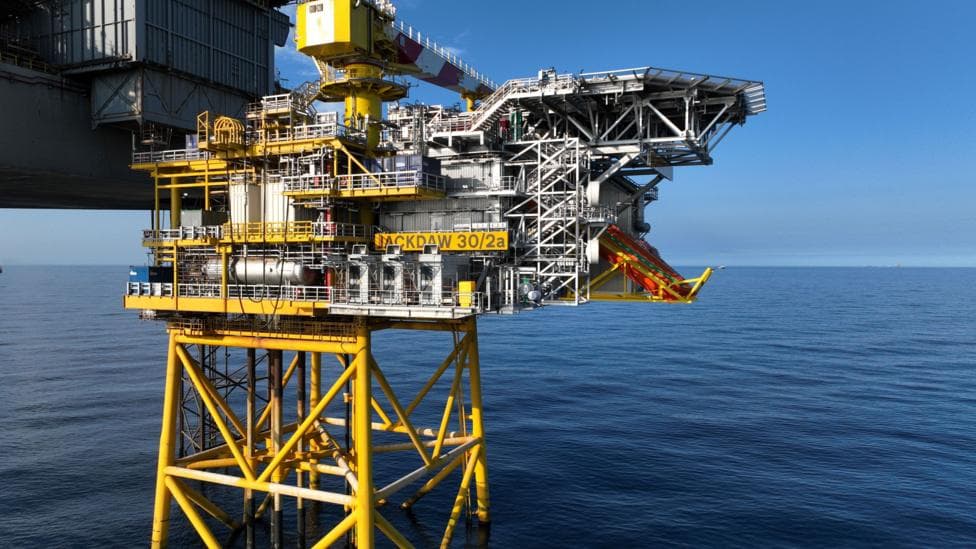
The Jackdaw platform and drilling rig stand east of Aberdeen in the North Sea.
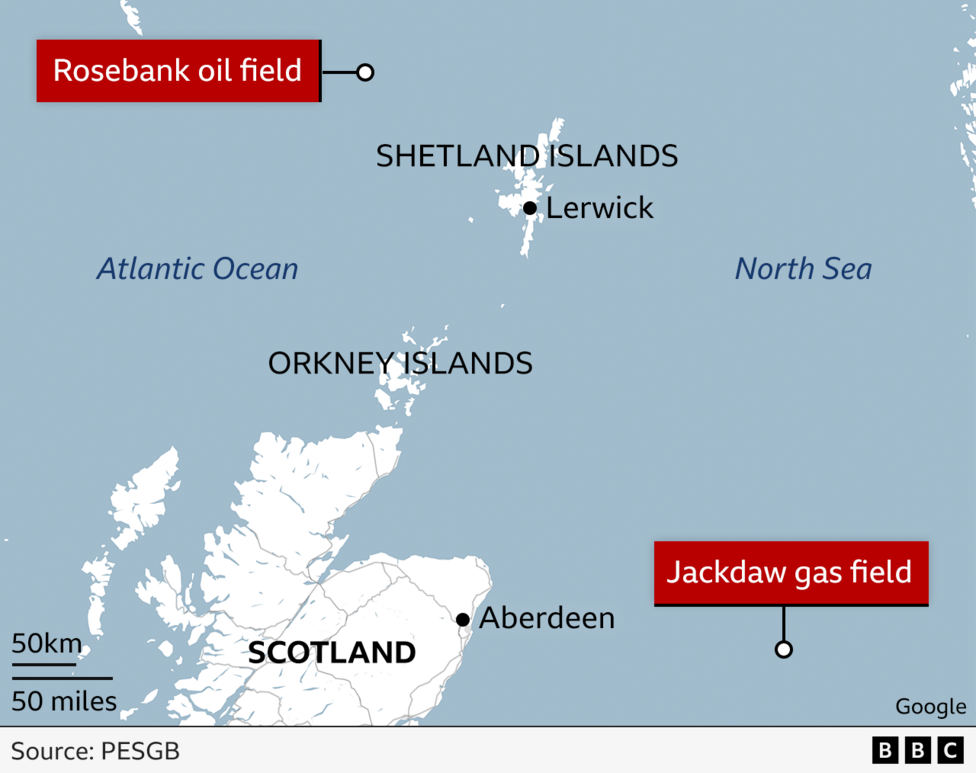
The project has become a flashpoint in the debate over Britain's energy future. Originally approved by the previous Conservative administration in 2022, Jackdaw faced a significant setback when Scotland's Court of Session ruled in 2025 that both Jackdaw and the separate Rosebank oil field had been unlawfully approved because the government had failed to properly assess the climate consequences of burning the extracted hydrocarbons. A judge ordered that more thorough climate evaluations be conducted and made public, leading to updated estimates released for consultation in July 2026.
The operator, Adura—a joint venture between Shell and Norway's Equinor, with Aberdeen-based Ithaca holding 20% of the related Rosebank field—has submitted conflicting figures on the project's carbon footprint. The company estimates Jackdaw will generate approximately 23.6 million tonnes of carbon over its 11-year operational life, equivalent to 60% of Scotland's 2023 emissions. Environmental groups cite a higher assessment of 35.8 million tonnes, representing 90% of Scotland's annual emissions from that year.
How much gas would Jackdaw supply to the UK?
Adura claims the field will deliver gas equivalent to 6% of peak UK demand, though environmental campaigners dispute this, arguing the true figure is closer to 2%. According to reporting from July 2026, the company stated that wells were already drilled and positioned for production readiness by early October if regulatory approval materialised. The field's output is described by industry advocates as essential to sustaining other North Sea infrastructure, particularly the Shearwater hub, a major offshore production facility that processes hydrocarbons before piping them to coastal refineries and terminals.
What do environmental groups say?
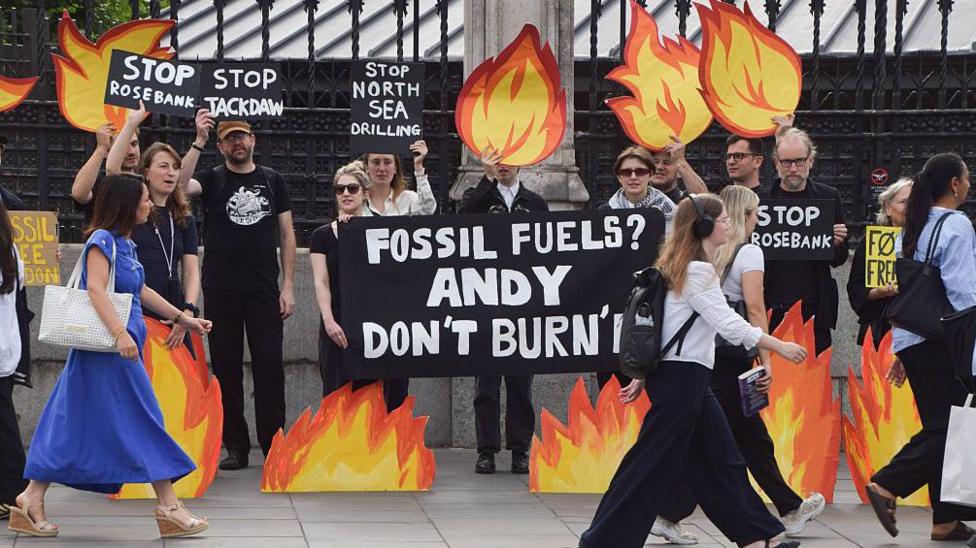
Campaigners argue that approving new drilling contradicts climate science and will not meaningfully improve energy security or household bills. Tessa Khan, executive director of environmental group Uplift, which brought the original legal challenge, stated that additional North Sea production would make
no meaningful difference to UK energy supplyand that
the science is clear that the world already has far more oil and gas than can ever be safely burned if we are to limit warming.
Khan urged the Prime Minister to consider the human cost of climate change, referencing
families who lost their homes to this summer's wildfires, the UK farmers struggling to grow our food in the drought, and the lives lost in the floods in Nepalrather than prioritising
the self-interested demands of the oil companies.
Environmentalists contend that transitioning rapidly to renewable energy would better protect jobs and energy security than extending fossil fuel extraction. They also note that wholesale natural gas prices are set internationally, meaning UK domestic production would not reduce consumer energy bills.

What is the government's position?
Prime Minister Andy Burnham has signalled support for a pragmatic approach to North Sea development.
We won't be able to stop using oil and gas for some time. That's just a fact,he said, adding that
the question is whether we can accelerate use of it so that we pay for the transition.
Energy Minister Kate White told Parliament on Thursday that the Energy Secretary would make separate decisions on Jackdaw and Rosebank, but declined to specify when those announcements would come.
The process ended in August, and the Secretary of State will be taking those decisions in due course,she stated.
The Department for Energy Security and Net Zero declined to comment on the timing of approval but said any decision would
take into account all relevant evidence, including environmental assessments and public representations received during the consultation process.The department added that
the North Sea remains a vital national asset and oil and gas will continue to play an important role in our energy system for decades to come - alongside transitioning to clean power to protect jobs and tackle the climate crisis.
Why does the UK government support the project?
Industry bodies and government officials argue that approving Jackdaw would strengthen energy security and create employment. The UK is heavily dependent on gas imports, with over 60% sourced from Norway and the United States. Wholesale natural gas prices have surged this year following the Iran conflict and are currently at a three-year high, raising concerns about winter supply and affordability.
Unlike North Sea oil, which is largely exported and then reimported in refined form, virtually all North Sea gas is consumed domestically. Extracting gas domestically generates lower greenhouse gas emissions than liquefying, shipping, and regasifying liquid natural gas imported from overseas, according to government analysis.
European gas storage levels are significantly below normal for this time of year after countries delayed stockpiling during summer in hopes the Iran conflict would resolve before winter and prices would decline. They now face the prospect of purchasing gas urgently or risking higher costs when cold weather arrives.
However, according to industry analysis, Jackdaw would create only 27 direct full-time jobs, a figure that environmental groups say does not justify the climate impact.
What is the timeline for the decision?
The consultation period closed on 10 August 2026, with regulators now reviewing responses before a ministerial decision. Government sources have indicated approval could arrive as soon as mid-September, potentially before Parliament breaks for party conference season. If greenlit at that time, Adura has stated the field could begin delivering gas to UK homes by winter.
Rosebank's consultation closed on 18 August 2026, and no timetable has yet been announced for the final decision on that separate project. Both fields will require individual sign-off from the Energy Secretary following regulatory review.
Key Facts
- Jackdaw would supply between 2% and 6% of UK gas demand at peak production, depending on whose estimate is used
- The field's carbon emissions are estimated between 23.6 and 35.8 million tonnes over 11 years, equivalent to 60–90% of Scotland's annual emissions
- Construction is 99% complete, allowing rapid production if approval is granted
- The UK imports over 60% of its gas from Norway and the United States, making domestic production a stated priority for energy security
- A Scottish court ruled the original 2022 approval unlawful for failing to assess climate impacts, requiring updated environmental assessments before a new decision could be made