
Two years ago, a school hall in Sunderland witnessed scenes of pride and surprise as teenagers opened their GCSE results envelopes on results day. The emotional moment captured something remarkable: outstanding examination outcomes in a school facing substantial challenges, where almost half the pupils receive free school meals due to their parents' low incomes. The results achieved in the ex-mining town of Hetton-le-Hole matched those of the most affluent regions of southern England.
This summer, Hetton Academy reached another milestone when 80% of its pupils achieved a pass of at least grade 4 in maths and English—a threshold roughly equivalent to a 'C' under the previous system and widely regarded as essential for accessing jobs and further education. According to BBC News, the school's pupil population is almost entirely from a white, working-class background, a demographic that has attracted significant policy scrutiny in recent months.
The timing of Hetton's success coincides with heightened national attention on educational outcomes for this group. This week saw the launch of the second phase of an independent inquiry led by former Cabinet minister Baroness Morris, examining why children from white working-class communities lag behind their peers at school. Education Secretary Lucy Powell stated that
right now, too many white, working-class children are falling behind at every stage of their education.
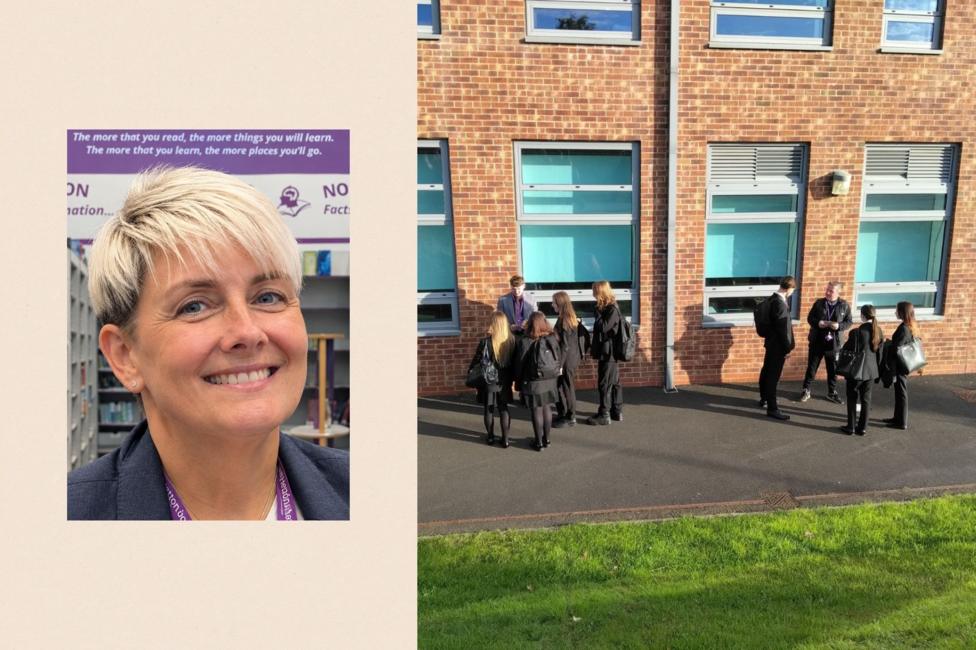
Yet Hetton Academy appears to have defied conventional expectations. The school's principal, Vicky Pinkney, rejects the notion that low family incomes should translate into poor academic performance.
I don't think we should be accepting less just because of the community you work in,she says.
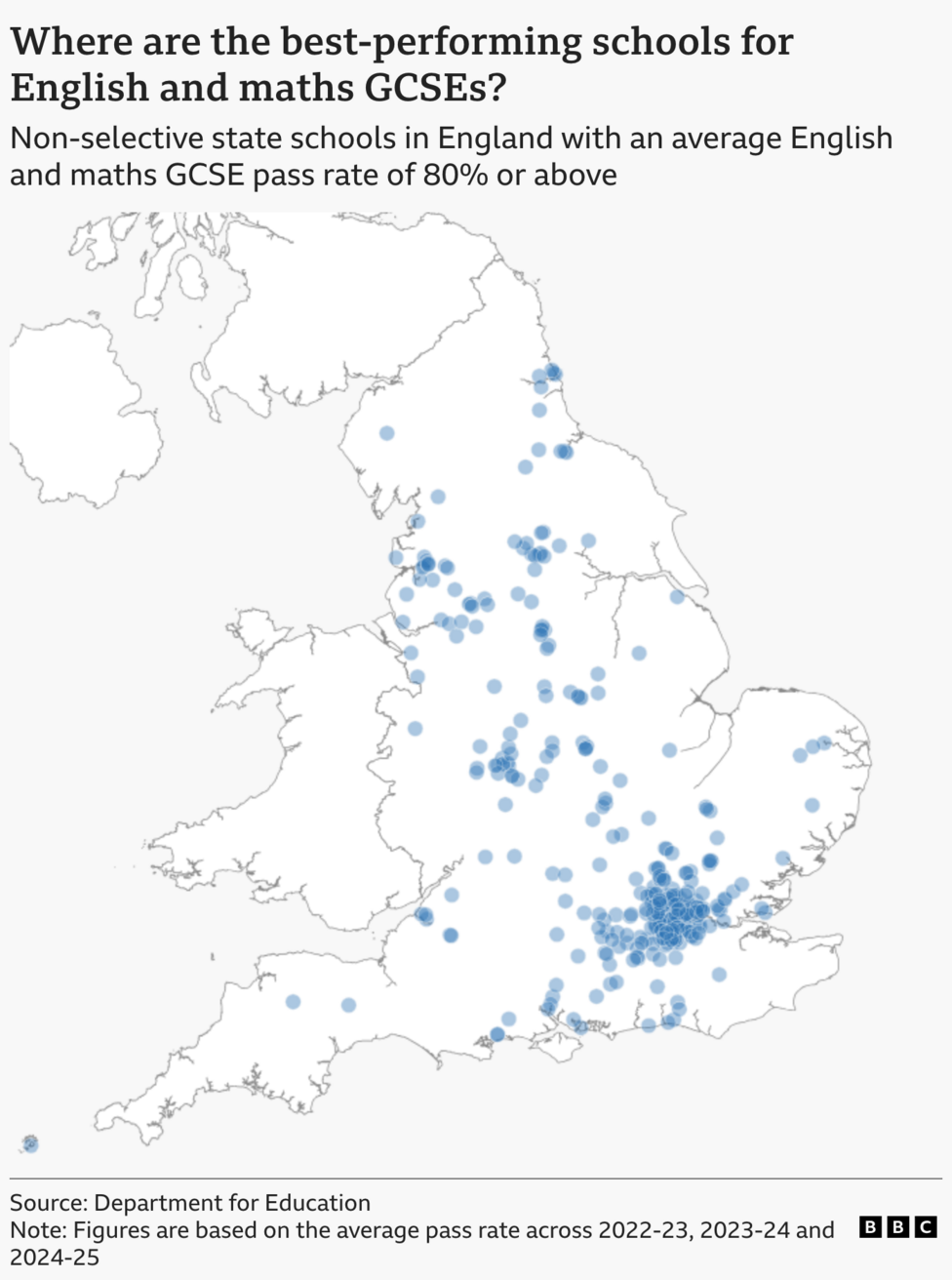
Hetton's stellar results have secured its place within an exclusive cohort of schools: mainstream secondary schools that do not select pupils based on academic ability, where 80% of students achieve that crucial grade 4 pass in maths and English. Across England, only 339 non-selective schools achieved an average 80% pass rate in these subjects over the three-year period to 2025, out of approximately 3,000 that published relevant data. This concentration has prompted political interest, with MPs from several parties arguing that high-achieving schools merit close examination to understand what drives their success and whether their approaches could be replicated elsewhere.
What separates high-achieving schools from the rest?
A closer examination of those 339 high-performing schools reveals that some of their success stems from factors largely beyond a school's direct control. Economic background emerges as particularly significant: schools hitting the 80% pass rate typically enrol fewer children from the lowest-income families than average, are less likely to be located in deprived areas, and have lower proportions of pupils with special educational needs.
Prof John Jerrim, an education researcher at University College London who studies education systems internationally, argues that England's system systematically fails poorer pupils. Since 2010, despite widespread recognition that GCSE reforms have raised overall standards, the proportion of children from the poorest families passing these key examinations has remained largely static.
It's really hard to move the dial,he observes.
Seamus Murphy, chief executive of Turner Schools, which operates schools in financially deprived areas, acknowledges that the emphasis on higher academic standards introduced by Michael Gove from 2010 brought
vision and challengeinto the system. However, he cautions that this approach does not benefit all pupils equally. In communities where families struggle with the cost of living, he notes, an 18-year-old earning the minimum wage represents a significant achievement, and some parents may feel inclined to encourage their children toward immediate employment rather than continued education.
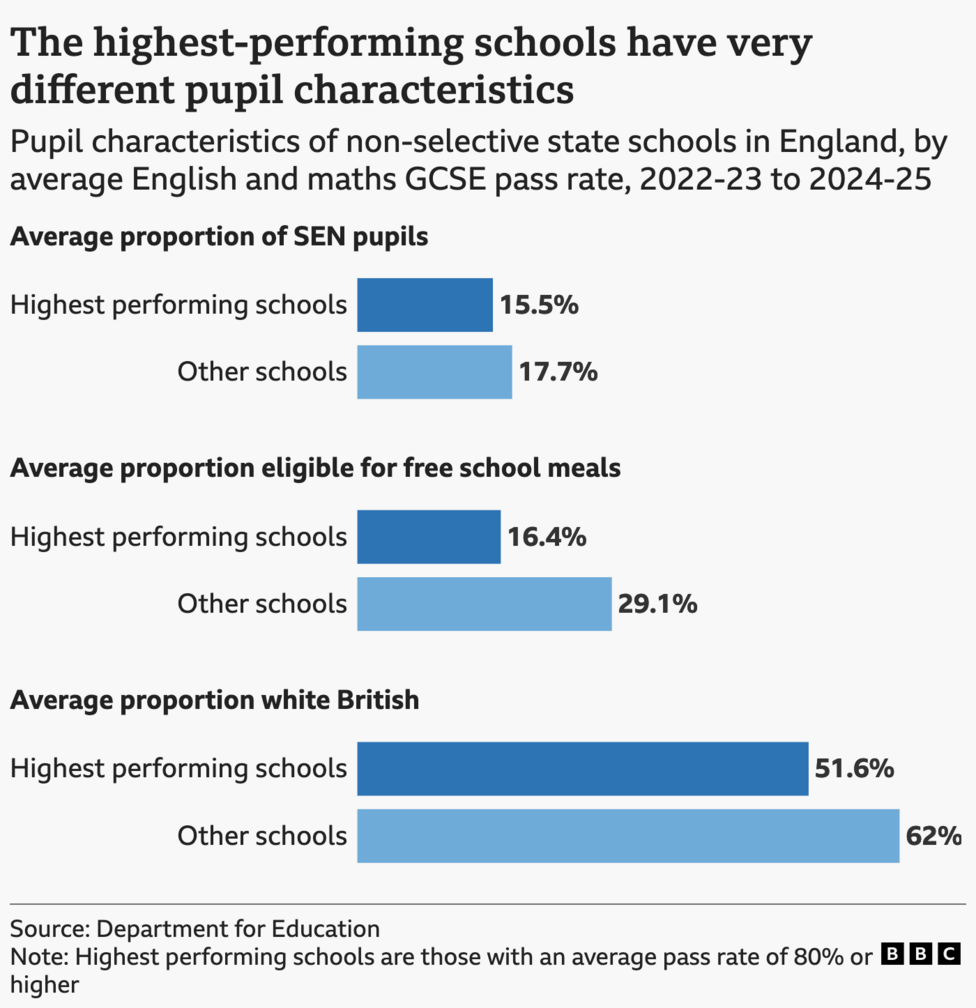
The high-performing schools identified also contain a lower proportion of pupils from a White British background than schools nationally. Earlier this year, Baroness Morris's inquiry found that many white, working-class families have lost confidence in the school system, increasingly believing it does not guarantee future success.
The inquiry's analysis of outcomes for 1.25 million white British pupils in England receiving free school meals revealed that 36% achieved grade 4 or above in English and maths, compared with 72% of pupils not receiving free school meals. The inquiry cautioned that the scale of disadvantage may be even larger, as low-income families not receiving free meals were not included in this analysis.
How does Hetton Academy achieve results against the odds?
Yet when examining individual schools, some institutions do appear capable of defying these demographic patterns, achieving strong results despite seemingly unfavourable circumstances. Hetton Academy exemplifies this exception: it serves a predominantly white, working-class population with substantial numbers of pupils from poor families. Notably, the North East region where Hetton is situated ranked lowest in England this year for the highest GCSE grades, with just 3% of GCSEs awarded the top mark of grade 9, compared with 8% in London, according to exam watchdog Ofqual. On other measures of GCSE performance, the North East ranked more favourably.
The school's trajectory reveals how institutional change can transform outcomes. After opening in the 1960s as Hetton School, the institution struggled with low performance for decades. The closure of the Eppleton mine in the 1980s devastated the local economy, prompting families to seek education elsewhere. An Ofsted inspection in 2021 rated the school as
requires improvement.This assessment preceded the school's conversion into an academy. By 2024, however, Ofsted reported the school was
rapidly improving.This year's 80% pass rate in maths and English ranks the school highly within Sunderland local authority and substantially above the England average, where 57% passed maths and 60% passed English. According to the latest data, Hetton Academy's 2026 GCSE results show 59.8% of pupils achieved grade 5 or above in English and maths, above Sunderland's 44.7% and England's 46.3% averages. Pinkney describes the school as now the
school of choicefor local families.
The school has deliberately cultivated a warm, welcoming atmosphere. For Year 11 pupils, a separate entrance corridor is staffed each morning by teachers who stop selected students for brief, informal quizzes about their subjects, working through problems together on whiteboards in a good-humoured manner. Decisions about which pupils to engage are discussed during regular review meetings, ensuring the intervention targets those most in need.
More structured support operates through an hour of additional study four days weekly after school, with pupils concentrating on their weakest subjects—for instance, spending two of these hours on maths if that is where they struggle most. As examinations approach, the school organises 'Revision Sundays', when Year 11 pupils can attend top-up sessions and share a roast lunch together. These initiatives aim to foster a sense of belonging in the classroom, which research suggests enhances examination performance. When Ofsted reviewed the school in 2024, inspectors praised the
positive relationshipsbetween pupils and staff.

A government-commissioned study published this year by the University of Cambridge found that pupils who report they
belongin school achieve
significantly higher attainmentin their GCSEs. Around this time of year, parents of Year 11 pupils who will sit examinations the following summer receive invitations to 'Fish and Tips' evenings at the school. These events provide guidance on how parents can support their children's learning and distribute tailored revision resources, including booklets and stationery customised for each pupil. Afterwards, Pinkney and staff share fish and chips with parents in the school canteen, paid for by the institution. Pinkney describes herself as
just another Mamto parents, wanting their children to succeed. She recognises that some parents may have experienced poor schooling themselves or entered work without formal qualifications.
The community, Pinkney notes, predominantly remains in the local area, and the school sees its role as
open their horizons.
Can other schools replicate this success?
Replicating Hetton's achievements will not prove straightforward for every school serving white, working-class communities. Prof Lindsey Macmillan, an expert in how education shapes life chances who participated in the recent inquiry into white working-class educational outcomes, explains that pupils from these backgrounds start school already behind, and this gap widens through secondary education due to increasing disengagement.

The inquiry uncovered
tellingevidence that the connection with school
falls off a clifffor white working-class families when pupils transition to secondary school, resulting in poor attendance. Parents frequently expressed views such as
I didn't need qualificationsto secure employment—a perspective Pinkney encounters among some Hetton-le-Hole parents. In reality, Macmillan notes, formal qualifications have become more important for employment than in previous decades, when industrial work offered more entry routes and on-the-job training was more prevalent.
Prof Jerrim supports this analysis, arguing that schools should secure family buy-in on education by clearly demonstrating to parents how qualifications improve their children's employment prospects. The inquiry also identified a pattern whereby white working-class parents resist their children leaving the area, valuing its strong sense of community. The inquiry concluded that England's education system operates out of step with the values of white working-class communities. While parents in these areas hold ambitious aspirations for their children, they frequently prioritise happiness and life-readiness alongside or above high academic grades.
Macmillan cautions, however, that high grades should not be presented as the sole pathway to successful adulthood. To do so, she suggests, sounds
demeaningto parents who did not achieve high grades themselves.
Why have we created a structure where getting those maths and English GCSEs is so important to your life chances?she asks. She advocates for government investment in entry-level apprenticeships and other on-the-job learning opportunities, enabling children with lower academic grades to still flourish in their careers.
What happens next for the inquiry?
The inquiry launched its second phase on 9 November 2026, shifting toward research and collaboration with education organisations to implement its recommendations. The next phase will examine early-years and primary school foundations, as well as education and career pathways for 14-to-19-year-olds, with plans to deliver practical recommendations for government, schools, colleges and other organisations.
Back in Sunderland, the approximately 700 pupils at Hetton Academy have recently returned to school following their half-term break. When asked whether other schools could replicate its success, Pinkney responds affirmatively. For her, the question carries personal significance: she was raised by a single mother with limited financial resources yet still achieved academic success.
I feel really strongly about that. My school helped me to be able to achieve.