

Once-in-a-generation reforms needed to support white working-class children
An independent inquiry has concluded that significant reforms are required to address an education system that "is not serving the interests of white working-class children." The inquiry was established last summer to investigate why this demographic remains the lowest-performing large group in England's school system.
Baroness Estelle Morris, co-chair of the inquiry, emphasized that responsibility "cannot sit with schools alone" and clarified that the issue is not due to a lack of aspiration or effort from young people.
"The communities in this report are my communities. I know what they've given this country and what this country has failed to give back," said Education Secretary Bridget Phillipson.
Phillipson further remarked that generations have been "robbed of opportunity." The Independent Inquiry into White Working Class Educational Outcomes was commissioned by the multi-academy trust Star Academies and is supported by the Department for Education.
The inquiry engaged with thousands of young people and their parents, as well as hundreds of teachers. It also analyzed education data concerning white working-class pupils, focusing on the 1.25 million young people in England who are white British and eligible for free school meals.
Findings reveal growing distrust in the education system
The inquiry identified a growing belief among white working-class families that the current education system does not guarantee future success. Baroness Morris, who served as education secretary under Tony Blair's Labour government from 2001 to 2002, stated that none of the initiatives implemented over the past 30 years have significantly or sustainably improved the performance of white working-class children in schools.
She highlighted a disconnect between the career aspirations of children and their parents and what schools are able to offer. While the education system often prioritizes academic progression to higher education, many families value the social experience of school and desire more high-quality vocational options, such as apprenticeships, available locally.

Recommendations for comprehensive changes
The inquiry calls for extensive reforms, including enhanced early years support, improved mental health services, and restrictions on smartphone use in schools. It presents 24 recommendations, among them:
- Free access to local public transport for all young people up to age 21 to improve access to education, training, and work
- Extension of 30 hours of free childcare to all disadvantaged families, not only those in employment
- Making reading fluency at primary school a national priority for white working-class children
- A major expansion of apprenticeships to ensure all young people who want one can access a high-quality apprenticeship locally
The inquiry identified the transition to secondary education as a critical point where students may begin to disengage from school.
Personal experience underscores need for vocational options
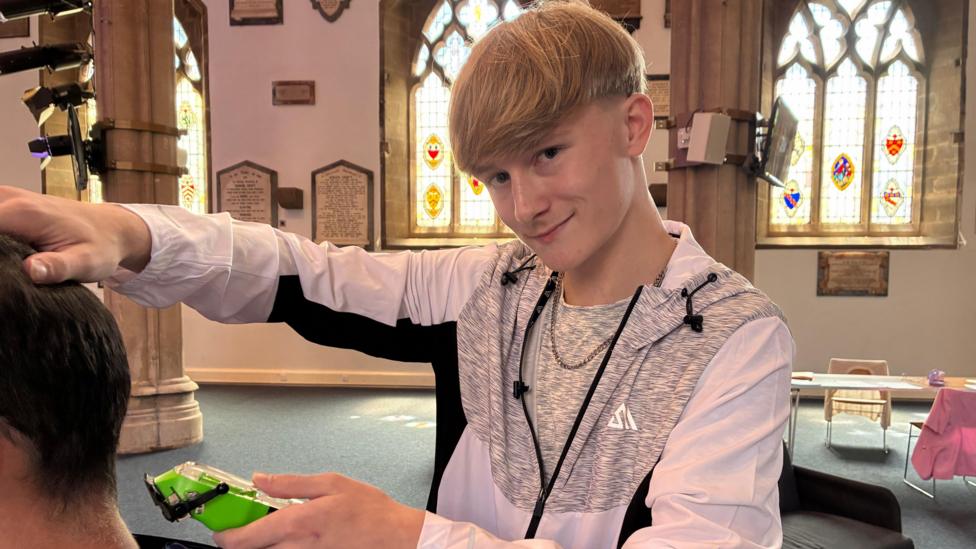
This was the case for Stephen, now 16, who left school three years ago and spent the subsequent years out of education. He expressed that a more vocationally focused system might have encouraged him to remain in school.
"I feel like schools need to engage in more practical work because, at least for me, the written work didn't work," he said. "So if they engaged in more practical work, that would help people who couldn't really complete school because it would help them learn actual skills that are useful for them."
Earlier this year, Stephen began a four-week course in Preston, organized by the charity Spear, which supports young people in returning to work or education and provides six months of mentoring. With this support, he is pursuing his ambition to become a barber and will start a college course in September.
Inquiry calls for broader definitions and recognition of community strengths
Baroness Morris noted that the inquiry's data does not include families on low incomes who do not receive free school meals, indicating a need for a broader definition of the demographic.
"Ironically some of the changes we'll bring in for this group will benefit all children," she said.
The inquiry also highlighted that children, families, and communities have spoken powerfully about the joy, pride, humour, identity, and sense of community associated with being white working class.
"The task is not to change these communities, but to build an education system that better recognises, values and builds upon the strengths already within them."
Government response and commitment
Education Secretary Bridget Phillipson acknowledged the report's exposure of the scale of the challenge but affirmed that "for the first time in a long time white working-class children have a government that will fight for them."
"From lifting the two-children limit, to more opportunities through sport and the arts, to breathing new life into family services, I'm changing things for these children and families."


