Home Secretary Shabana Mahmood has instructed police leadership that lessons must be extracted from their response to anti-migrant demonstrations held in Dover and Portsmouth over the weekend, emphasizing her expectation that officers deploy all available enforcement tools.
During a Thursday meeting, Mahmood sought assurances that police forces have developed comprehensive strategies to respond swiftly and decisively against far-right groups attempting to intimidate residents and disrupt communities.
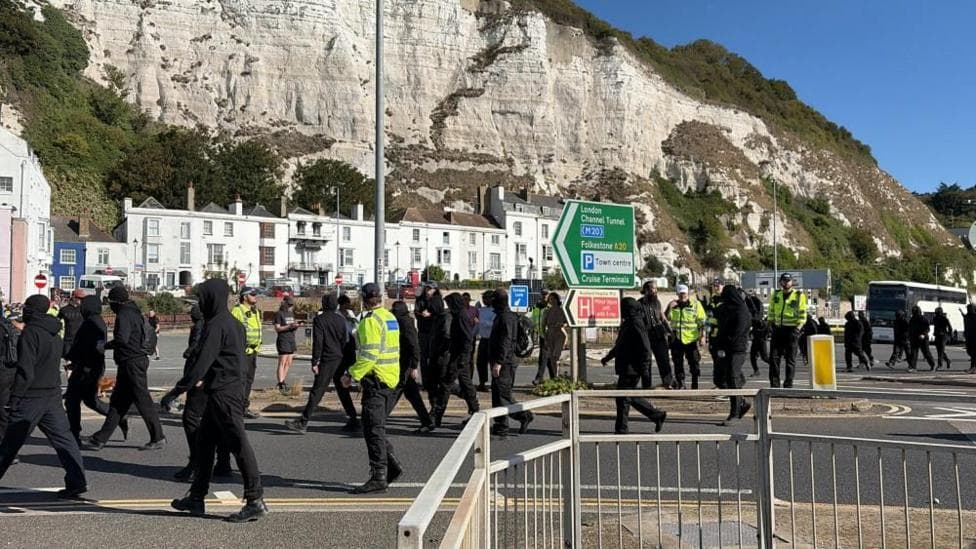
The directive follows weekend disturbances in which masked activists paralyzed Dover on Saturday, and approximately 200 protesters gathered in Portsmouth on Sunday in an attempt to obstruct the transport of migrants undergoing processing. According to police reports, several officers sustained injuries and vehicles were damaged during the Portsmouth disorder, prompting an investigation into assaults and criminal damage.
The Home Office characterized the demonstrations as representing
"unacceptable disorder."
Mahmood elaborated on the distinction between these protests and conventional demonstrations, stating:
"These scenes have caused disruption for people and, given that people are dressed in black wearing balaclavas, there is a fear factor and obvious malign intent being communicated to our residents. This makes it different from other protests, so we need to make sure we are learning lessons."
The scale of arrivals that prompted the protests was significant. According to Home Office figures, 625 people were brought ashore at Dover and Portsmouth on 7 September, representing an unusually large combined landing at those locations. The Portsmouth demonstration involved a small boat carrying 140 asylum seekers, with police later confirming that the gathering dispersed only after officers obtained a dispersal order and threatened arrests.
What powers are police considering?
Police leadership is now actively evaluating the deployment of recently-granted powers to impose complete bans on face coverings within designated areas, drawing on the Portsmouth demonstration as justification for this measure. These expanded enforcement capabilities, introduced over the past three years, permit officers to intervene more rapidly to terminate demonstrations that obstruct critical national infrastructure such as port access roads.
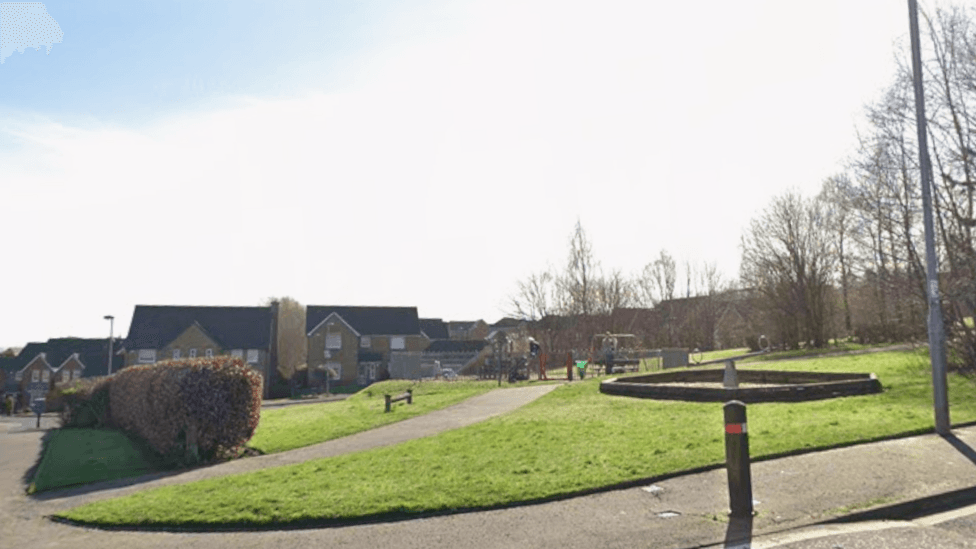
The Saturday protest in Dover resulted in a four-mile-long queue on the A20, which was closed in both directions, bringing the nationally significant port to a standstill. The following day, protesters blocked the only exit from Langstone Harbour near Portsmouth after the RNLI had brought 120 migrants ashore.

Who is organizing these demonstrations?
The meeting examined the emergence of Patriot Platform, which government ministers believe operates with the explicit aim of intimidating communities. Humanists UK identified the group as a "Christian patriotic army" organizing the demonstrations. In certain regions of England, local groups affiliated with the Patriot Platform umbrella organization have announced plans for additional demonstrations, though it remains uncertain whether these will materialize.
Kent Police previously acknowledged that it had received notification of a potential demonstration in Dover but had not
"fully assessed"the warning before the town's critical port road was blocked. This intelligence failure prompted Mahmood to direct police chiefs to strengthen their use of intelligence gathering to ensure superior preparation for upcoming weekends.
What operational changes are underway?
Police forces have initiated an
"enhanced and co-ordinated"intelligence-gathering operation in the days ahead to maximize information collection and improve preparedness. During the Thursday meeting, Mahmood made explicit that the government anticipated police to exercise all available powers and respond robustly to any criminal conduct.
Deputy Chief Constable Andy Mariner, serving as the National Police Chiefs Council lead for public order, stated following the meeting that forces remain
"continually assessing and preparing for protests and any potential impact on public safety."He emphasized that this encompasses collaboration with
"local forces, specialist teams, communities and partners"to guarantee assistance availability when required.
Mariner added:
"Our priority is to keep people safe, maintain public order and support the right to peaceful and lawful protest. While people are entitled to express their views, anyone committing criminal offences can and should expect police action."
What is the broader context?
These protests emerged amid a surge in small-boat crossings, with the weekend's arrivals forming part of a larger pattern of Channel crossings. The demonstrations have extended beyond direct protest activity, with volunteers facing serious consequences for their involvement in rescue operations. The RNLI is conducting a security review after volunteers experienced online harassment and physical threats following the anti-migrant protests, with staff names, addresses and photographs circulated online in posts viewed millions of times.
According to reporting, no arrests had been made following the Portsmouth protest as of the time police dispersed approximately 200 people in the early hours of Monday, though Hampshire and Isle of Wight Constabulary confirmed its investigation into Portsmouth offences remained ongoing.
What happens next?
Police forces are expected to implement enhanced intelligence protocols and consider deploying face-covering bans in designated areas ahead of this weekend's anticipated demonstrations. The government has signaled its expectation that law enforcement will respond with maximum available enforcement capacity to any further disturbances, with particular emphasis on preventing disruption to critical infrastructure and protecting communities from intimidation.