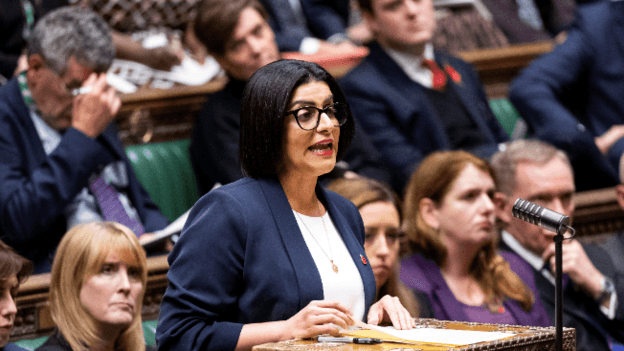
Home Secretary Shabana Mahmood has partially reversed her immigration settlement proposals following sustained pressure from within the Labour Party, though she has resisted calls to abandon the most controversial element of the reforms. The announcement, made in Parliament, represents a significant compromise after months of internal government debate over whether the original plans struck the right balance between immigration control and fairness to migrant workers.
According to BBC News, Mahmood has conceded on one major point: social care workers who arrived before May 2025 and earn at least £25,000 annually will now qualify for indefinite leave to remain after five years, rather than facing a 15-year wait under the original framework. However, she has maintained the retrospective nature of the changes—a provision that Housing Secretary Angela Rayner had previously condemned as shifting "the goalposts" and described as "un-British."
The decision to modify the social care provisions comes after Labour MPs threatened parliamentary action to expose party divisions over the migration reforms, with backbenchers and senior figures including Rayner voicing concerns about the fairness and practicality of the original proposals. The change of prime minister over the summer, when Andy Burnham took office, reinvigorated hopes among dissenting MPs that they could force the Home Office to reconsider its approach.
What prompted the backbench rebellion?
When Mahmood first announced her settlement system changes last year, numerous Labour MPs raised objections to the framework. Rayner, then outside government, was particularly vocal, and when she returned to the cabinet as housing secretary, she chose to reiterate her criticisms publicly during the Labour Party conference in September. This public intervention signalled that a substantive debate was occurring at the highest levels of government about whether to soften the proposals.
The original plans would have required many social care workers to wait 15 years before becoming eligible for settlement—a timeline that alarmed MPs representing constituencies with significant care sector employment. Additionally, the retrospective element troubled many backbenchers: the idea that someone could arrive in the UK expecting to qualify for settlement after five years, only to discover the rules had changed retroactively, struck many as unfair.
For all the Labour MPs seeking a reversal, others—particularly those representing Brexit-supporting areas—wanted Mahmood to maintain her original course. Some within government worried that watering down the proposals would provide ammunition to Reform and the Conservative Party, making this one of the more difficult decisions taken since Burnham entered Number 10.
What has actually changed?
Under the revised framework, social care workers and adult dependants who arrived before May 2025 and meet the £25,000 earnings threshold will qualify for settlement in five years. This modification significantly reduces the number of people affected by extended waiting periods. The Home Office estimates that 196,000 care workers and adult dependants could settle between 2026 and 2030, with a potential taxpayer cost of £9.5 billion—a figure that contrasts with the broader impact of the original proposals, which would have affected around 800,000 people.
The government's final framework, developed through consultation that opened in November 2025 and proposed that settlement be earned through conduct, contribution and integration rather than granted automatically after a fixed period, broadens which contributions count and adds stronger provisions for families and targeted protections for vulnerable groups. For applicants on the standard 10-year route, earnings of at least £12,571 must be demonstrated for five of the seven years before settlement, and the framework includes mandatory requirements on the Life in the UK Test.
However, the retrospective element that Rayner criticised remains in place. This means that individuals who arrived under previous rules expecting one timeline for settlement may find themselves subject to new, longer waiting periods—the very provision that prompted Rayner to accuse the government of shifting "the goalposts."
How did Labour MPs respond?
Despite their earlier concerns, the majority of Labour backbenchers pulled back from aggressive criticism when Mahmood made her statement in the Commons. The strongest pushback came from Rachael Maskell, who remains opposed to the retrospective element, but others on the left of the party, including John McDonnell and Diane Abbott, voiced criticism without being scathing. The muted response suggested that the concession on social care workers had taken much of the political sting out of the announcement for many MPs.
Outside Parliament, the mood among Labour figures was similarly restrained. One potential critic acknowledged that while they retained personal concerns about the plans, they believed Mahmood had successfully defused the political tension. This figure characterised the campaign by MPs and unions as having achieved a "big win" on social care worker settlement, though they anticipated continued complaints from constituents negatively affected by the new rules.
A Number 10 source praised Mahmood's parliamentary performance, arguing she had "found the right balance" and that the announcement had gone down as well as could be expected with Labour colleagues. The general view within government was that this represented a political hurdle successfully cleared.
What criticism has emerged from other parties?
Conservative immigration spokesperson Chris Philp accused Mahmood of a significant U-turn, highlighting a previous claim she had made that allowing care workers to reach settlement more quickly could cost the UK £10 billion. In an interview with the BBC, Mahmood declined to specify what financial burden her modifications would create, nor would she confirm whether Burnham had directly requested that she soften the proposals—questions she will need to navigate in the coming weeks.
What happens next?
The government has committed to publishing detailed rules, operational guidance and a full impact assessment before implementation. The framework is expected to be presented to Parliament in December 2026 and take effect from 2027, with the new B2 English requirement reported to apply from 26 March 2027. These timelines will allow Parliament and the public to scrutinise the full details of how the earned-settlement model will operate in practice.

The announcement marks a partial retreat from Mahmood's original position, though the government has stopped short of abandoning the framework entirely. The compromise reflects the political reality of governing with a substantial backbench, where concerns about fairness and practicality cannot be entirely ignored, even when ministers believe their core policy direction is sound.