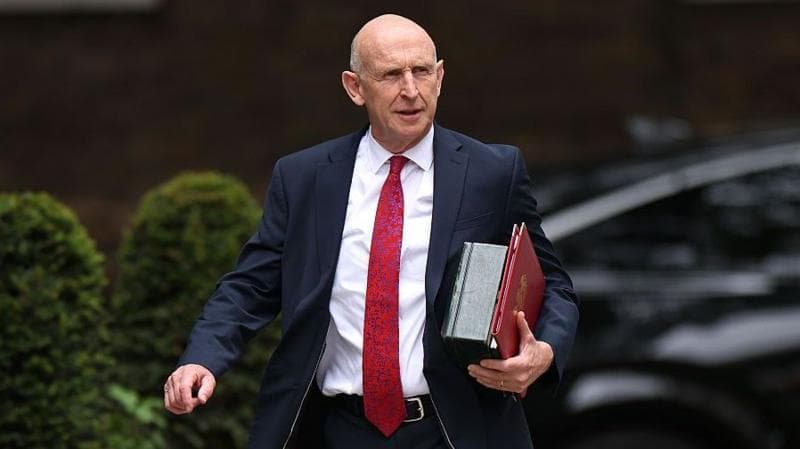
Chancellor John Healey confronts a potential shortfall of up to £35bn and must present "credible" spending plans when he delivers his first Budget on 28 October 2026, according to analysis from the Institute for Fiscal Studies, an influential independent research organisation.
The IFS has outlined a stark choice facing the government: if ministers want to raise defence spending to 3% of national income by 2030 while protecting health spending without cutting other departments, they will require substantial additional funding. According to the IFS, the £35bn–£36bn figure is equivalent to adding about three percentage points to the main rate of income tax.
The think tank has warned that elevated inflation, partly driven by geopolitical tensions in the Middle East and Eastern Europe, threatens to erode the purchasing power of public spending. This leaves Healey with three broad options: implement spending reductions, raise taxes, or pursue a combination of both approaches.
The Treasury declined to comment on the IFS analysis, describing it as "rumour and speculation".
What are the specific spending pressures?
The IFS estimates that higher inflation could create an additional £15bn shortfall for departments outside health and defence, on top of a £9bn cut implied by last year's spending review. Raising defence spending to 3% of GDP would cost a further £11bn, according to the think tank's calculations. The IFS's inflation assumptions stand at 3.1% in 2026 and 3.0% in 2027, compared with official March projections of 2.3% and 2.0%, respectively.
The institute has stressed that the government must avoid presenting spending plans it does not intend to deliver. Helen Miller, director of the IFS, said:
"A 'steady-as-she-goes' Budget is not an option available to the chancellor. Choosing to stay the course with the inherited tax and spending plans would mean allowing inflation to blow departments' spending plans off course. Simply pencilling in implicit cuts that he has no intention of delivering would make the Budget a work of fiction."
The IFS urged the government to ensure its spending plans are credible rather than proposing unrealistic future cuts designed merely to make the Budget figures balance.
How will borrowing costs affect the government's position?
The government faces mounting pressure to demonstrate financial discipline to markets as the cost of borrowing rises. Higher borrowing costs could add about £10bn to borrowing in 2029–30, while the IFS says the government's fiscal headroom could be around £20bn. This represents a reduction from the £24bn buffer predicted at the time of the Spring Statement by the Office for Budget Responsibility, the official forecaster.
The wars in the Middle East and Ukraine have contributed to rising energy prices globally, which have been passed to consumers through higher prices in shops and at petrol pumps. These conflicts have also increased the cost of UK government debt interest payments, adding to pressure on Healey's finances.
Although higher inflation will boost tax revenues, it will simultaneously reduce the real value of departments' cash budgets. Higher tax receipts from inflation and wage growth may offset much of that pressure, but the outlook remains uncertain.
Will the government meet its fiscal rules?
The government's fiscal rules require day-to-day spending to be funded by tax revenue and government debt to fall as a share of national income by the end of the Parliament. The IFS still expects the government to meet these self-imposed rules—that it will only borrow for investment projects by the financial year 2029-30 and also be reducing debt as a percentage of GDP—not least as inflation pushes up tax revenues.
However, the think tank expects those rules to be met with a smaller buffer of around £20bn. Recent indications suggest that financial markets would be comfortable with this degree of reduced headroom.
What flexibility does the chancellor have?
Healey does not have to address spending totals in the 28 October Budget and may choose to defer such decisions until future events—for example, next year's Spring Statement or a Spending Review—by which time the economic outlook could differ significantly.
The IFS expects any "breathing space" help for households to be temporary and limited in scale. However, the think tank warns that in such a volatile environment, its forecasts are exceptionally uncertain. The official forecast from the Office for Budget Responsibility, which the chancellor relies on when making his plans, may reach very different conclusions.
Previous chancellors have relied on a similar strategy of pencilling in unrealistic future spending plans to ensure they meet fiscal rules on the day, only to change the plans further down the line.
What has the chancellor said?
Speaking ahead of the annual International Monetary Fund meeting, Healey acknowledged the global economic pressures. He stated:
"The consequences of conflict in the Middle East and Europe are hitting countries worldwide, leading to higher prices at the pumps and more expensive mortgages at home. But Britain and our allies can face up to these challenges together."
The chancellor said his Budget "will build on this approach with fiscal discipline helping to deliver economic resilience" and give people "breathing space".
Key Facts
- The IFS estimates a funding gap of £35bn–£36bn, equivalent to raising the main income tax rate by three percentage points
- Defence spending commitments to reach 3% of GDP would cost an additional £11bn, while inflation creates a £15bn shortfall for non-health, non-defence departments
- The government's fiscal headroom is expected to narrow to around £20bn, down from £24bn previously forecast
- The Budget is scheduled for Wednesday 28 October 2026
- The IFS warns that unrealistic future spending cuts pencilled in to balance the Budget would undermine credibility with financial markets