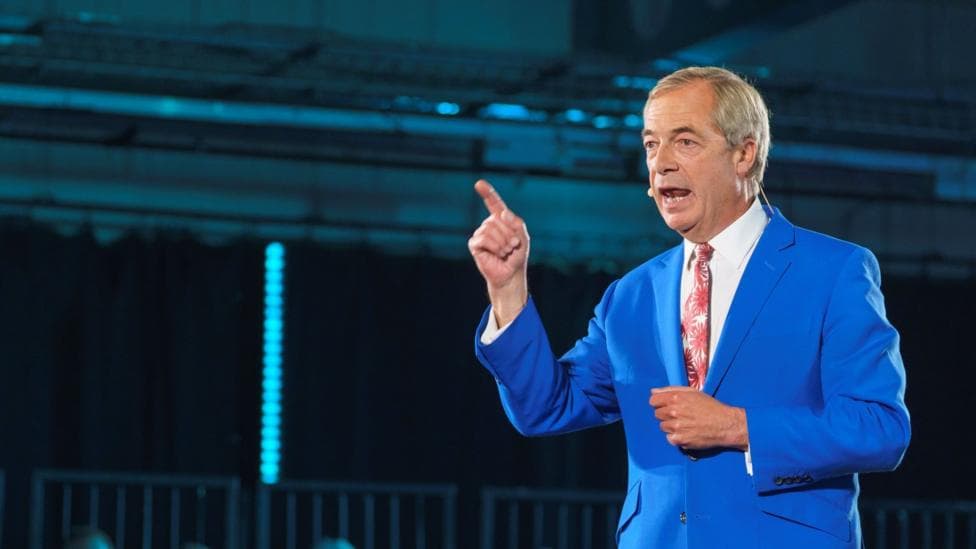
Reform UK has unveiled an ambitious plan to suspend the entire UK asylum system for a full parliamentary term—typically five years—should the party enter government, with party leader Nigel Farage declaring the nation faces a "national security emergency." Under the proposals, all new asylum applications would be rejected, existing cases voided, and every current claimant marked for deportation, while legal refugee routes and resettlement schemes would be terminated.
The party said it would scrap the asylum tribunal system and deport approximately 90,000 people currently pursuing appeal cases. Reform's existing eligibility rules—which would render migrants who entered illegally, overstayed visas, or originated from safe countries ineligible for asylum—would effectively prevent any current asylum seeker "from ever having their case heard," the party argued, making a full system suspension necessary.
On 12 October, Farage and Reform's home affairs spokesman Zia Yusuf were scheduled to formally present the proposals at a press conference in Dover.
"We've got to prioritise the British people,"Yusuf said, pointing to Britons
"dying totally avoidably waiting for emergency care"and young people
"being forced to stay at home with their parents well into their 30s and 40s because they can't afford to rent homes."He added:
"We will not be returning people into harm, but we have to be honest about the fact that fraud is rampant."
The initiative, called "Restoring Justice" according to reporting on the announcement, would also review refugee grants made during the five years preceding a Reform government. Farage claimed the millions of unauthorised immigrants deported under former US President Barack Obama's administration demonstrated
"precedent"for the party's plans.
What legal changes would Reform pursue?
To implement these policies, Reform said it would withdraw the UK from the European Convention on Human Rights (ECHR), repeal the Human Rights Act 1998, and disapply the 1951 Refugee Convention to prevent legal challenges. The party would also ban British visas for countries including Pakistan, Somalia, Eritrea, Syria, Afghanistan, and Sudan if they refuse to permit deportation flights to land. For nations without substantial legal foreign national populations in the UK, Reform indicated it would consider imposing tariffs on goods and services for non-compliance.
How would deportations be carried out?
Reform said it would establish a specialised agency dedicated to detention and deportation of those in the UK illegally, requiring between 24,000 and 28,000 detention spaces. According to reporting from the Economic Times, Reform said it could create a Deportation Command capable of removing up to 288,000 people annually. Home Office staff currently processing asylum claims would be reassigned to reviewing and overturning refugee grants made previously.
Under Reform's earlier pledge from April for an immediate review of all asylum claims from the preceding five years should the party win the next general election, approximately 400,000 people would potentially face deportation. The party's previous announcement suggested barring anyone arriving by small boat, which could result in 600,000 deportations over five years.
What are the current small boat crossing figures?
Between 1 January and 5 October 2026, a total of 20,478 people crossed the English Channel by small boat from France—a 40% decrease compared to the same period the previous year. These crossings have become the predominant method for detecting illegal entry into the UK since 2020. Nearly all small boat arrivals claim asylum, which under international law permits them to remain while their applications are assessed.
Small boat arrivals represented 40% of all asylum applications between July 2025 and June 2026. Vessels arriving between 6 October 2025 and 5 October 2026 carried an average of 68 people, more than double the 2021 average. Experts warn that overcrowding increases crossing risks; at least 84 people died attempting to cross the Channel in 2024, according to the United Nations.
When measured against total UK immigration from January to December 2025, small boat crossings account for approximately 5% of overall arrivals. People from Eritrea made up 18% of all small boat arrivals between July 2025 and June 2026. In figures covering January to December 2025, at least 2,335 small boat arrivals were identified as potential victims of human trafficking or modern slavery, according to the Home Office.
An additional 4,712 people were detected entering the UK without permission via other methods—including hiding in vehicles, travelling on ferries, or passing through airports—between July 2025 and June 2026, representing a 17% decrease from the previous year. The total number of people living in the UK illegally after arriving legally through work or study visas and then overstaying remains unknown.
How have other parties responded?
Labour chair Bridget Phillipson characterised the proposals as a
"clear sign of desperation and weakness,"accusing Farage of
"casting around for more and more extreme policies"while dealing with questions about party finances and rival faction Restore Britain. Phillipson stated that Labour is demonstrating
"we can control immigration and get numbers down with serious action, not by abandoning the asylum system altogether,"arguing the
"right approach"involves
"not giving up or caving to the most extreme voices, but ensuring that the rules we have are properly enforced."
Conservative shadow home secretary Chris Philp said the proposals
"largely copy"his party's policies, contending that
"Only the Conservatives have a serious and credible plan to fix our borders."The Tories have previously pledged to remove 750,000 illegal immigrants within five years under Trump-style deportation plans. Liberal Democrat home affairs spokesperson Max Wilkinson argued the
"UK can only restore order, control and fairness by joining the EU migration and asylum pact,"which increases returns of irregular migrants and distributes asylum responsibility across EU member states.
What is the government's current approach?
In March, Home Secretary Shabana Mahmood announced that any asylum seeker granted refugee status would receive only temporary protection, subject to review every 30 months. In September, she reopened the UK Resettlement Scheme, aiming to provide
"safe and legal"routes intended to deter small boat crossings. According to reporting on the resettlement scheme, approximately one in four referrals are intended for Afghan women and girls and Palestinian refugees. The government has pledged to
"smash the gangs"behind small boat crossings to reduce numbers.
What happens next?
The Home Office indicated that first arrivals under the reopened resettlement scheme are expected in autumn 2027. Reform's formal presentation of these asylum proposals is scheduled for 12 October in Dover, where Farage and Yusuf will detail the party's vision for border control should it enter government.