The government is planning to introduce stricter residency requirements for political donors, ensuring that those contributing significant sums maintain a genuine connection to the UK. The move follows controversy surrounding two record-breaking donations totalling £72 million to Reform UK from British cryptocurrency billionaires Ben Delo and Christopher Harborne, both of whom had recently lived overseas.
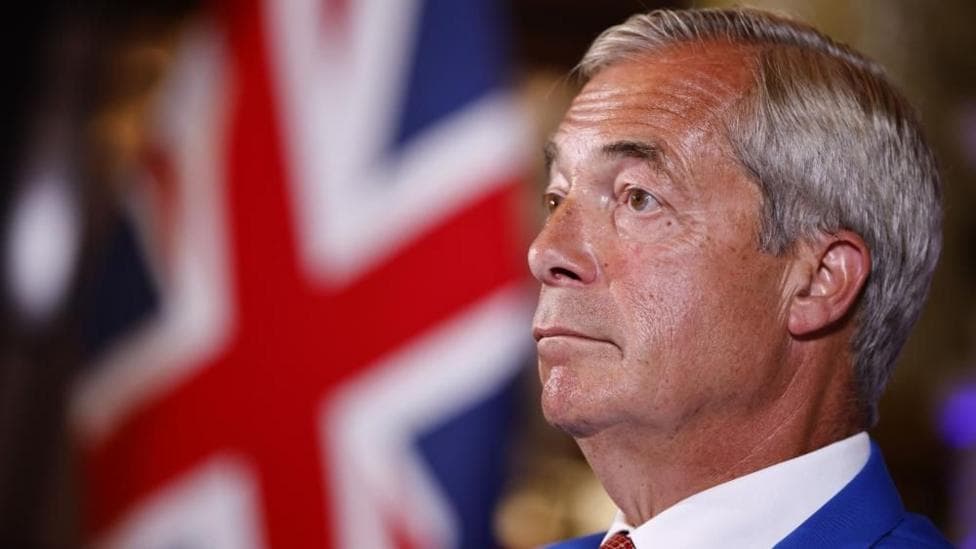
Reform leader Nigel Farage acknowledged that the donations from Delo and Harborne are
"100% compliant with the law today"but conceded he could not guarantee they would remain permissible under the government's proposed changes. The donations, each worth £36 million and made within 48 hours, represent the largest single contributions ever given to a UK political party.
Under existing legislation, foreign donations to UK political parties are prohibited, yet British citizens residing abroad face no restrictions on the amounts they can contribute. The government's reforms would alter this landscape significantly by introducing a £100,000 annual cap on donations from British voters living overseas, with the cap backdated to 25 March. Additionally, the government intends to establish a minimum residency period of at least 12 months, during which the cap would apply to those who relocate back to the UK.
The timing of Delo and Harborne's return to British residency remains unclear, complicating assessments of whether their donations would fall within the proposed framework.
What changes is the government proposing?
The proposed reforms would fundamentally reshape how donations from overseas British voters are regulated. Communities Minister Baroness Taylor of Stevenage outlined the government's approach while the Representation of the People Bill was debated in the House of Lords, stating:
"We are considering how we will strengthen the residency requirements, including ensuring that the length of time spent in the UK aligns with broader government policy."
Baroness Taylor added that the government would be
"introducing a robust regime that ensures that donors contributing above the £100,000 annual cap must demonstrate a genuine and ongoing connection"to the UK. The government has drawn parallels with tax residency rules, which already require individuals to have spent at least 183 days in the UK during a tax year to be classified as resident for tax purposes.
MPs have already supported the government's proposals by approving amendments to the Representation of the People Bill, which is currently undergoing scrutiny in the House of Lords.
Is this targeting Reform specifically?
Business Secretary Jonathan Reynolds rejected suggestions that the policy targets any particular party or donor. He told the Today programme:
"Fundamentally we need to make sure that people who want to influence British politics, who want a say in British politics have a stake in Britain. That should apply to everyone and will apply to everyone, so I wouldn't make it about any particular donations or anything that's been in the public domain."
However, the timing of the announcement—immediately following the Delo and Harborne donations—has drawn criticism from opposition parties. Liberal Democrat Cabinet Office spokeswoman Lisa Smart accused the government of
"playing whack-a-mole"and called for more comprehensive action, stating:
"We must urgently go further and introduce a universal donation cap to stop Trump's America becoming Farage's Britain."
The controversy has intensified following investigative reporting. The Metropolitan Police launched an inquiry into alleged overseas donations and polling linked to Reform UK after a broadcast on 3 September 2026, and Reform UK suspended two senior officials after an undercover investigation alleged they discussed ways to get around foreign-donation laws.

What are Farage's concerns about retrospective changes?
Farage has expressed alarm at the prospect of the government retroactively declaring donations illegal. He told the BBC:
"If the government was allowed to do this, you know what would happen? There would be a response the other way. We or the Conservatives would say 'if you're going to stop legitimate donors like this, we would say to the trade unions, you can't give money'."
Farage argued that such tit-for-tat measures would
"collapse"the political funding system and force taxpayers to finance political parties—a prospect he suggested the British public would oppose. Since 2020, Labour has received nearly £43 million from trade unions, who accumulate their funds through individual workers' membership contributions.
How do donations compare across parties?
Since the 2024 election, funding patterns have varied significantly across the political spectrum. The Conservative Party has raised £37 million, Reform has raised £35 million before the Delo and Harborne donations, Labour has raised £21 million, the Liberal Democrats £17 million, and the Green Party £1.9 million.
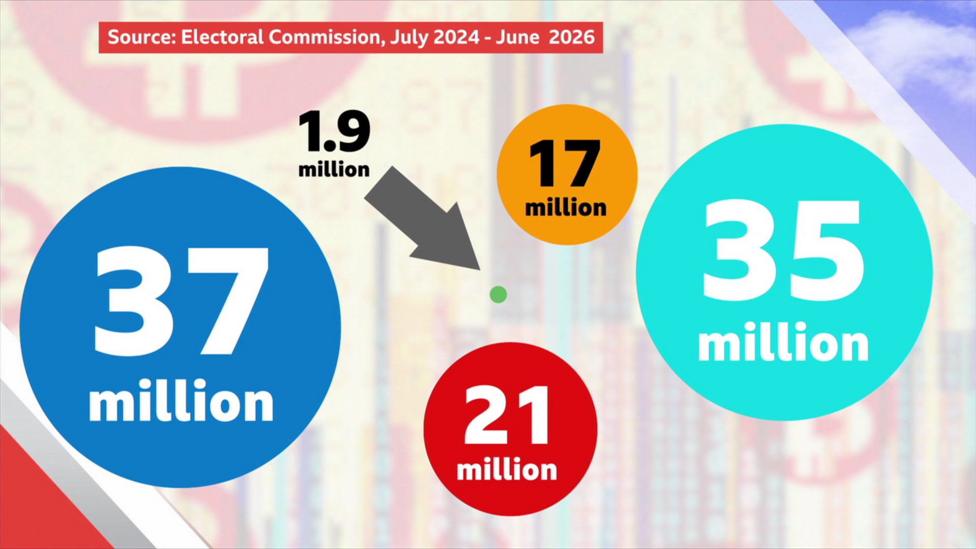
The scale of the Delo and Harborne contributions dwarfs typical party funding. Each man gave £36 million to Reform in consecutive days, and both had already donated millions of pounds to the party before announcing their record-breaking gifts.
However, recent data suggests the impact of new restrictions may already be visible. Reform UK's donations in the April-June 2026 quarter fell to £5.3 million, its lowest level in 12 months, after a cap on overseas funding took effect.
What is the trade union perspective?
Union leaders have sought to distinguish their funding model from large individual donations. Unite general secretary Sharon Graham told the Today programme:
"Individual donations from very, very wealthy people, from billionaires, the Americanisation of our democracy is very, very different from everyday people, workers putting 10p-a-week into a political fund that fights on a whole range of things."
Graham added:
"If there's an ick feeling, a yucky feeling about something then it's probably wrong. I think most people will think two crypto billionaires giving £72m to Reform in two days is a problem for British politics and if it's wrong then deal with it."
Union leaders issued a joint statement on Tuesday following discussions at the Trades Union Congress in Brighton, calling on the government to
"protect our democracy from being captured by the super-rich"and pledging to work with policymakers to
"clean up our politics."They argued that trade union funding represents the
"cleanest money in politics"because it is
"heavily regulated."
However, the statement contained no explicit call for a cap on individual donations. Unite, the country's second-largest union, has separately proposed a cap of between £500,000 and £1 million on individual donations, though this would exclude trade union contributions. Some smaller unions favour a universal cap across all donor types, while larger unions have expressed caution, concerned that such measures could threaten their own donations to Labour.
What happens next?
The Representation of the People Bill continues its passage through Parliament, with the House of Lords currently scrutinising the government's proposed amendments. The outcome of the ongoing Metropolitan Police inquiry into alleged overseas donations and polling arrangements linked to Reform UK remains uncertain, with investigators still assessing the allegations raised by the broadcast.
The government has established a new taskforce to address the issue of mega-donors and has previously stated its determination to tackle this challenge. Once new legislation takes effect, the residency requirements and donation caps will reshape the landscape for political funding in the UK, potentially affecting how parties raise money from British citizens living abroad.