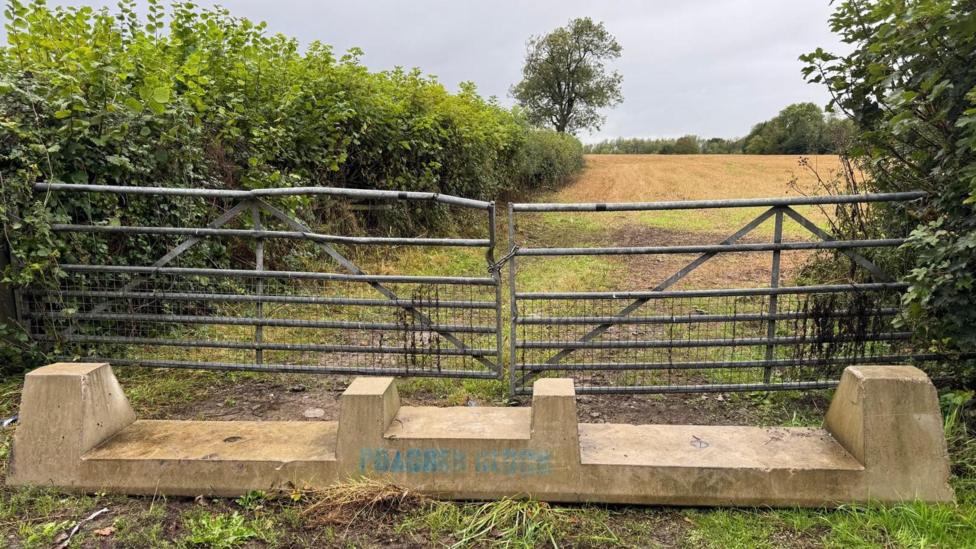
Farmers in the countryside west of Cardiff say they are facing growing disruption from gangs illegally hunting hares with dogs, with gates smashed, crops damaged and livestock put at risk. Chris Edwards, a beef and sheep farmer from Colwinston, said the problem has become so serious that he now blocks field entrances with large logs and other barriers to deter trespassers.
In the area, farmers use a WhatsApp group to warn each other about suspicious vehicles, and some have barricaded field entrances with concrete blocks and fallen trees. Edwards said the people involved appear to be monitoring the farms, adding that fields can be targeted again within hours of being harvested.
“They're watching us - which is probably the most disconcerting part about it,” said Chris Edwards.
“We harvest the field and within hours, they're there.”
He said he has seen gates “smashed off their hinges” and crops destroyed by trespassers illegally hunting hares with dogs. Neighbours have also faced threats, “verbal and physical”, when they tried to intervene.
South Wales Police confirmed the Vale of Glamorgan was seeing an increase in hare coursing, and said the force was taking action.
Hare coursing is the pursuit of a hare with the purpose of making money through gambling. 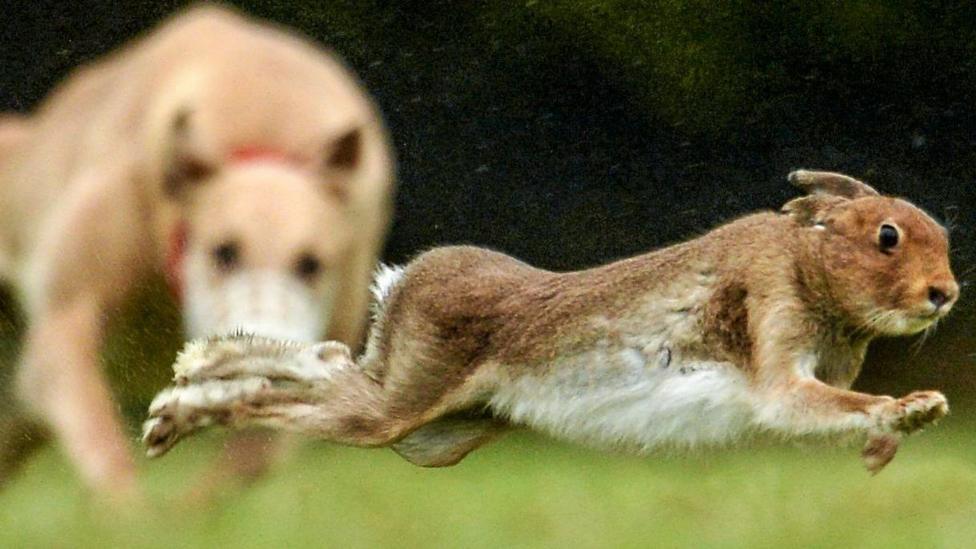
Edwards said the issue is particularly difficult because of the area’s location and transport links.
“It's a massive problem,” said Edwards, a beef and sheep farmer from Colwinston.
“We're close to Cardiff, Bridgend, Swansea - there are good links to the motorway and A roads so people can travel here.”
To reach his own fields, the 45-year-old now has to use a JCB to move giant logs he has placed in front of the gates. He said chains and padlocks have also been tried, but they are cut off.
“It's got to the stage now that if we don't put a log like that in the gateway they force access. We've tried chains and padlocks but they get cut off.
“We've had vehicles ram gates and smash [them] off their hinges, and then when they leave... we have animals out on the road”.
“Once we get into the autumn and we're planting for next year, they leave ruts in the ground and they're damaging the crops.”
Vehicle tracks are clearly seen in drone footage of one of Chris Edwards' fields. 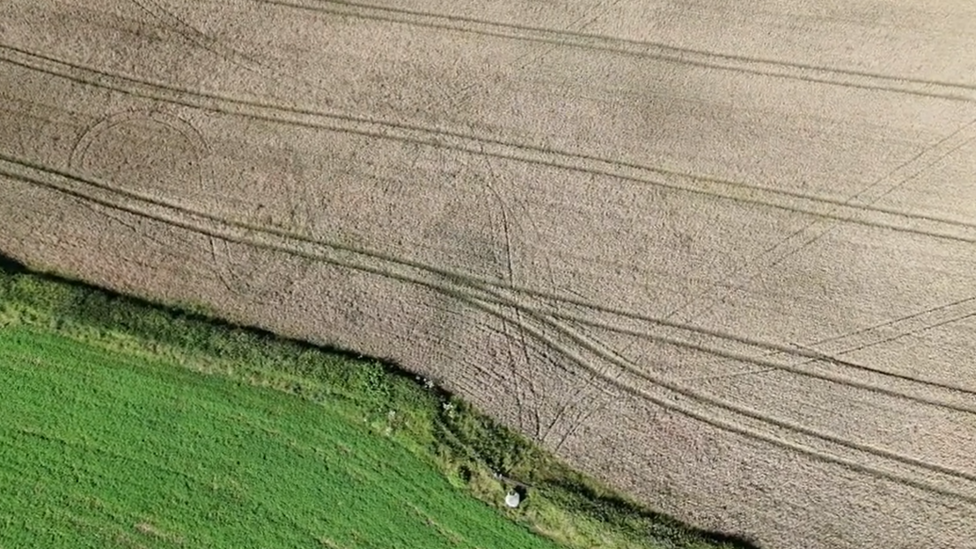
James Tudor of the local branch of farming union NFU Cymru said farmers had experienced incidents in which they were “physically threatened” after approaching hare coursers on their land.
“We've had property damaged, windows of vehicles have been smashed, intimidation, all sorts of problematic behaviour,” he said.
“Farming's in a tough place anyway at the moment and this is further strain.”
He said the farming community had “a good relationship” with local police teams, which he acknowledged were supportive.

“But we need a wider police presence... to get hold of these people as they're in the act.”
Tudor added that South Wales Police was “the only police force [in Wales] that doesn't have designated rural crime officers”.
What is hare coursing?
Hare coursing is the illegal pursuit of hares by dogs, which are judged by how closely they can follow the twists and turns of the animal as it tries to escape. It was banned under the Hunting Act 2004.
In recent years, a number of police forces have warned of a spike in cases, with reports of links to online gambling and organised crime. West Mercia Police issued an urgent notice regarding a “significant increase” in Shropshire in August 2025, followed by Warwickshire Police in November.
Welsh forces recently formed Operation Galileo Cymru, working with farming unions and other agencies to share intelligence and coordinate action on hare coursing and associated rural crimes.
South Wales Police said they are proactively patrolling farms to reassure the farming community and deter potential hare coursers. 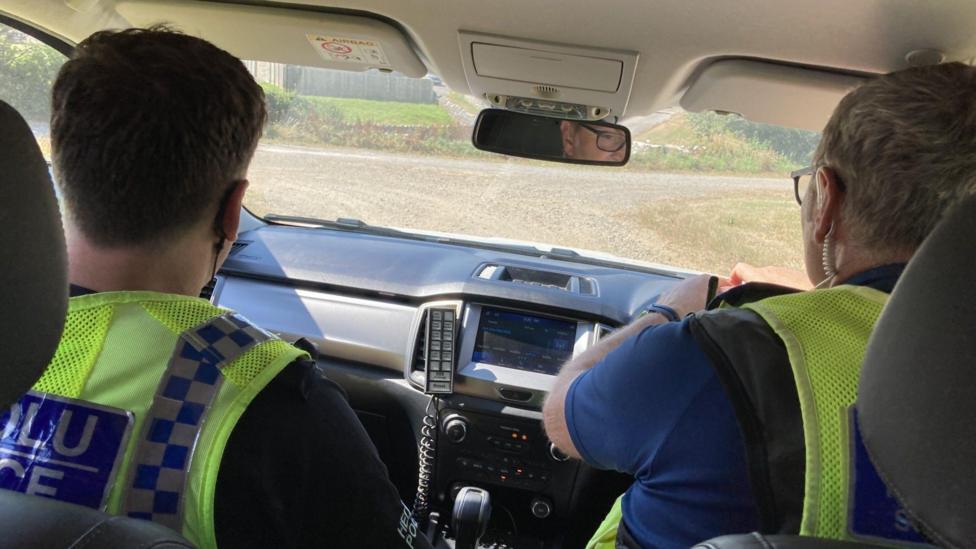
Inspector Huw Tyler of South Wales Police said the Vale of Glamorgan had “definitely seen an increase in hare coursing” and that it had come “with it an increase in intimidation and violence incidents”.
“We're looking to tackle that now with some more proactive policing,” he said, pointing to new funding for portable automatic number plate recognition technology and the use of drone operators.
He said introducing dedicated rural crime officers was also being considered, along with working with Natural Resources Wales on a potential secondment with the environment watchdog.
“The local community have been really engaging with us, we've built up a really good network with the farming community and we're encouraging them to report as much as possible so we can get a good intelligence picture and good information to really highlight how big an issue it is in the area,” Tyler said.
“Across the country we're aware that some hare coursing can be linked to organised crime and illegal gambling online - however we don't have that information locally at the moment.”
Det Con Richard Paskell, part of the neighbourhood policing team in the Vale of Glamorgan, said officers were working hard “to stamp out this blood sport” and had stepped up patrols of hare coursing hot spots.
Police teams were seeing “changes in the behaviour” of those carrying out the illegal activity, including an “increase in the damage [caused] and the cost [to farmers]”.
“Where previously they would have maybe parked outside the farm and taken dogs inside we're now seeing an increase in where they've rammed through the gates and the gate posts, rammed through the fences, destroying crops and allowing animals out onto the land,” Paskell explained.
Police teams attended the Royal Welsh Show in Llanelwedd and will attend the Vale of Glamorgan Show in August to speak to the farming community about the issue and encourage them to report any information they may have. Farmers have also had to resort to placing concrete barriers in front of their gates.