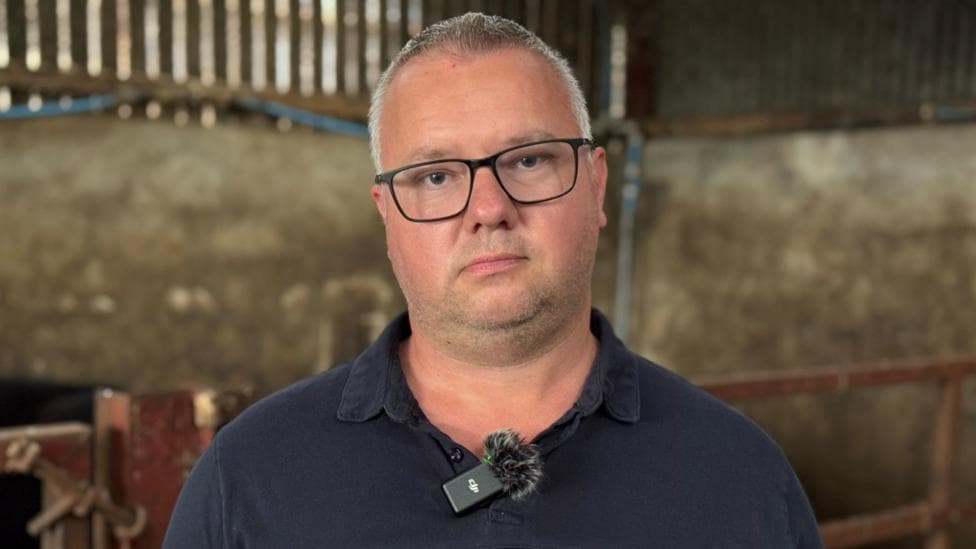
Richard Spence had been working at his family farm in County Tyrone when he fell through the roof of a cow shed, an incident that left him with a brain injury and a powerful message about workplace safety. The farmer from Ballymagorry spent months in hospital recovering from multiple fractures and head trauma, and now advocates for others to prioritize caution over risk during their working day.
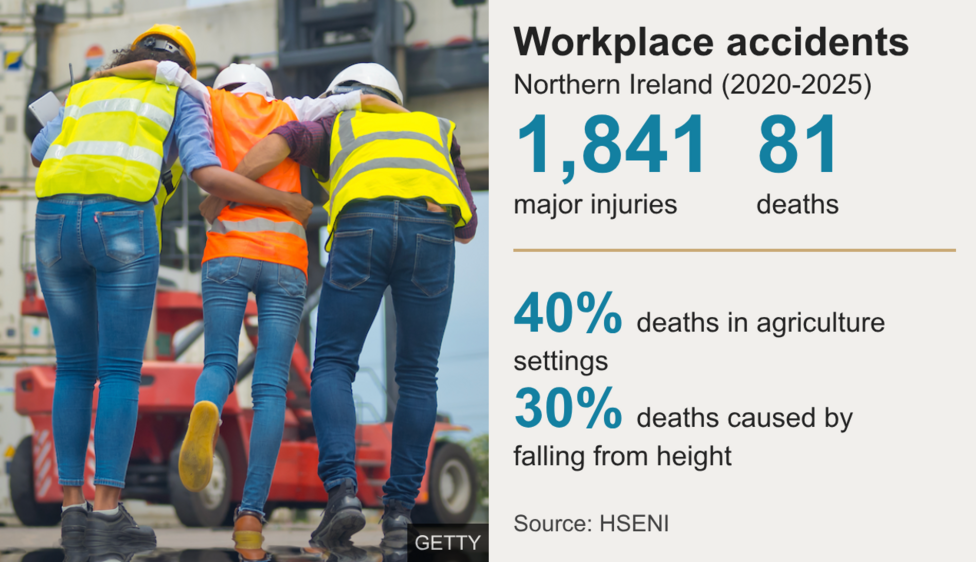
Spence's experience reflects a broader crisis in workplace safety across Northern Ireland. Since 2020, 81 people have died in workplace incidents, with over 1,800 suffering major injuries. The majority of these deaths resulted from falls from a height, followed by machinery-related incidents, with the agricultural and construction sectors accounting for most cases.
In 2024, Spence climbed onto the roof of a cow shed at his family farm to repair holes in the structure.
"There were holes in the roof, so I'd went up to fix them, and the roof just gave way and I fell down and hit a gate below,"he explained. The fall fractured multiple ribs and bones in his back, but the most serious consequence emerged later: a diagnosis of acquired brain injury stemming from the head trauma sustained during the incident.
The long-term effects of his accident have reshaped Spence's life.
"I'm just thankful to be here to be honest, but I've had a lot of memory loss since the accident, I don't' remember the week before it or the two to three weeks after it."He described ongoing fatigue and cognitive difficulties that extend beyond physical labour.
"I will always love farming, but I'm just not as active as I used to be, I get really tired and fatigued, and it's not just manual work, even when I talk for too long it can catch up on me."
Spence credits the emergency response with saving his life. Paramedics arrived at the scene, and the air ambulance crew transported him to hospital. The Helicopter Emergency Medical Service (HEMS) team in Northern Ireland operates as a joint partnership between the Northern Ireland Ambulance Service (NIAS) and the charity Air Ambulance Northern Ireland.
How common are workplace accidents in Northern Ireland?
Workplace accidents occur far more frequently than most people realize. In Northern Ireland, approximately 10% of calls to the air ambulance relate to workplace incidents—an average of 1 to 2 calls per week. According to recent data from farm safety sources, three fatal workplace accidents occurred on Northern Ireland farms in 2025, compared with five in 2024 and six in 2023, indicating a slight improvement but persistent danger in the agricultural sector.
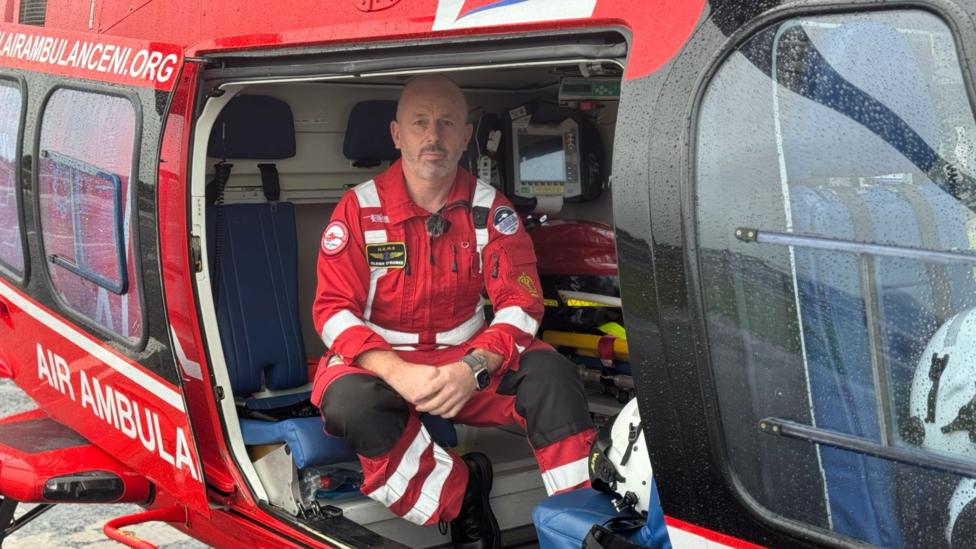
Glenn O'Rorke is Operational Lead Paramedic for the HEMS team. He described the range of environments from which emergency calls originate.
"When it comes to workplace accidents calls, they can come from a wide range of places, from a small garage to a large industrial factory."He noted that the team frequently responds to falls and machinery-related injuries.
"Whenever we arrive to a workplace accident it's not just the injured person you're thinking about, it's also their colleagues who have witnessed it and sometimes had to do first aid."
O'Rorke emphasized the psychological toll of workplace accidents on entire teams.
"When people get up in the morning and get ready for work, nobody ever thinks or imagines they'll be involved in an accident that day, but the figures show just how often it is happening. It's a very stressful situation for everyone involved, but we have highly trained paramedics and teams across the emergency service who are equipped to deal with it as quickly and as safely as possible."
Which areas and industries are most affected?
Workplace deaths in Northern Ireland are not distributed evenly across the region. The Fermanagh and Omagh Council area recorded the highest number of workplace deaths since 2020 with 15 fatalities, followed by Antrim and Newtownabbey with 12, Mid Ulster with 10, and Armagh, Banbridge and Craigavon council areas with 10 each. The agricultural and construction industries dominate the statistics, accounting for the majority of fatal and serious incidents.
According to safety data from the farming sector, tractors and farm machinery were involved in all three farm fatalities in 2025, with two of the deceased being over 60 years old. Over the longer term, falls from height caused 12 farm fatalities in Northern Ireland between 2015 and 2024, highlighting the persistent danger of working at elevation in rural settings.
What is being done to prevent workplace accidents?
The Health and Safety Executive for Northern Ireland (HSENI) regulates workplace safety and has confirmed that while the figures are alarming, most workplace accidents are preventable. Sean Keogh is acting deputy chief executive for HSENI.
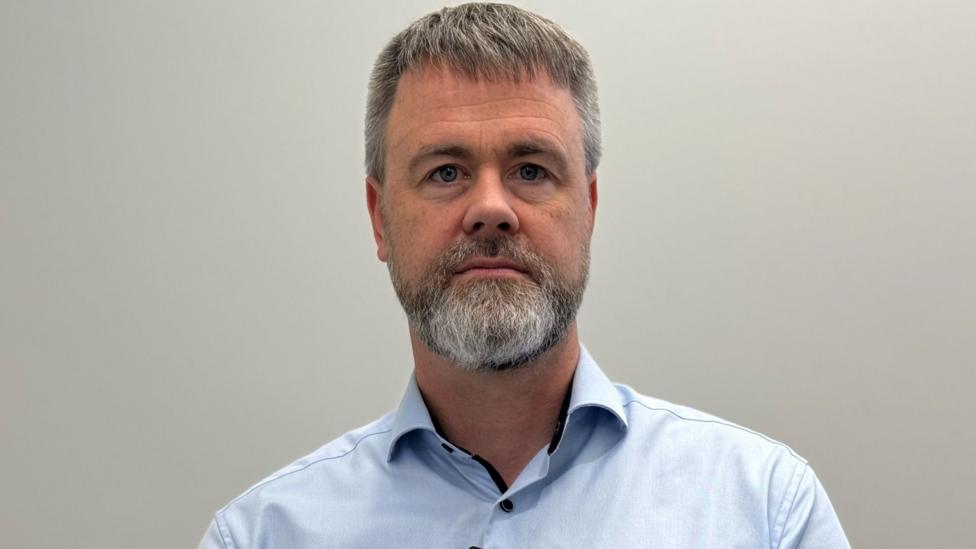
"No one should go to work to die, behind these figures are real people and families lives' changed forever, there's no job so urgent that it can't be done safely,"Keogh stated. He explained that agriculture and construction present particular hazards because workers may transition between multiple risk environments.
"Agriculture and construction tend to be high risk industries because you can go from working at heights, with machinery, to working with livestock and slurry, but these risks can be controlled."
HSENI's recommended approach centres on planning and prevention.
"Our advice is always to plan your work, use the right protections, work to safe procedures, for example when at a height have scaffolding in place, when using machinery make sure its inspected and you're trained to use it."Keogh emphasized that investigation of accidents and near-misses is essential.
"The injury figures are shocking, and the tragedy is that workplace accidents can be identified and controlled. Planning is essential, and we would urge employers to investigate all accidents and mistakes, because a near miss today could be a fatality tomorrow."
HSENI possesses enforcement powers to address workplace safety failures. Since 2019, the organization has pursued legal cases against 83 individuals and entities, resulting in £3.2 million in fines. HSENI recently launched an inspection programme that will run until the end of March 2027, during which inspectors will specifically examine the controls employers have implemented to manage risks associated with slips, trips and falls. Inspectors will also provide guidance to employers on reducing these hazards.
What lessons does Spence's experience offer?
Spence has become an advocate for workplace safety awareness following his recovery.
"I would say to anyone who is thinking of taking a risk like that during their working day, stop and really think about it,"he said. He stressed that the consequences of workplace accidents extend far beyond the injured individual.
"If you get or hurt or worse, it's not just you that's impacted, it is your whole family and friends so just take a minute, and don't take any risks."
His message aligns with broader concerns about farm safety in the region. Previous cases have highlighted the tragic consequences of inadequate workplace safety measures, underscoring the importance of proper planning, equipment maintenance, and staff training across all sectors.
Key Facts
- Since 2020, 81 people have died in workplace incidents in Northern Ireland, with over 1,800 suffering major injuries
- Falls from height are the leading cause of workplace deaths, followed by machinery-related incidents
- Agricultural and construction industries account for the majority of workplace fatalities and serious injuries
- The air ambulance responds to approximately 10% of its calls for workplace accidents—an average of 1 to 2 calls per week
- HSENI has collected £3.2 million in fines since 2019 through legal action against 83 individuals and entities for workplace safety violations