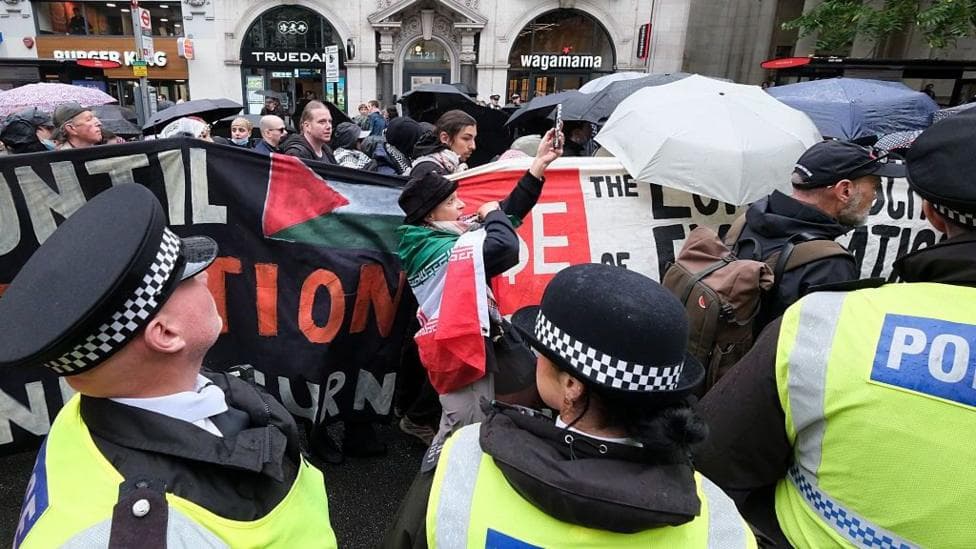
Eleven people were arrested during several pro-Palestinian demonstrations held across London on Wednesday, 7 October, as protests proceeded despite official requests to postpone them.
Five of those arrested faced suspicion of inciting racial hatred at a gathering outside the office of the Board of Deputies of British Jews in Camden, north London, according to the Metropolitan Police. The remaining six arrests occurred at student-led pro-Palestinian marches elsewhere in the capital.
The date marked three years since the 7 October attack on Israel by Hamas, in which approximately 1,200 people died and 251 others were taken hostage by the militant organisation. Israel's subsequent military response in Gaza has resulted in more than 74,000 Palestinian deaths, according to figures from the Hamas-run health ministry.
What happened at the Camden protest?
The demonstration outside the Board of Deputies' Camden office drew several dozen participants, many of whom wore face coverings. Footage showed a relatively small gathering, though slogans "calling for intifada" were chanted during the event, the Met reported. The five individuals arrested at this location remained in custody following the incident.
The term intifada originated during the Palestinian uprising against Israeli occupation of the West Bank and Gaza Strip beginning in 1987. Jewish community organisations have characterised the term as a call for violence against Jewish people, while pro-Palestinian groups argue it represents a call for peaceful resistance to Israel's occupation.
In response to the arrests, the Board of Deputies—the UK's largest Jewish community organisation—stated it "would not be threatened or intimidated" and commended police for their "swift" response. The organisation subsequently held a vigil in Richmond Terrace near Whitehall in central London later that day.
How did police manage the student march?
A pro-Palestinian march attended by approximately 100 demonstrators proceeded between Lincoln's Inn Fields and Russell Square despite calls for postponement. According to police statements, officers had imposed conditions on the march requiring participants to follow a prescribed route and conclude by 2pm. The march ended ahead of a police-enforced dispersal time that was imposed after organisers declined requests to relocate the event to a different date.
The Met had approached march organisers on four separate occasions requesting they move the demonstration to another day, according to available reports. Police determined that the risk of serious disorder was insufficient to warrant seeking a ban from the Home Secretary.
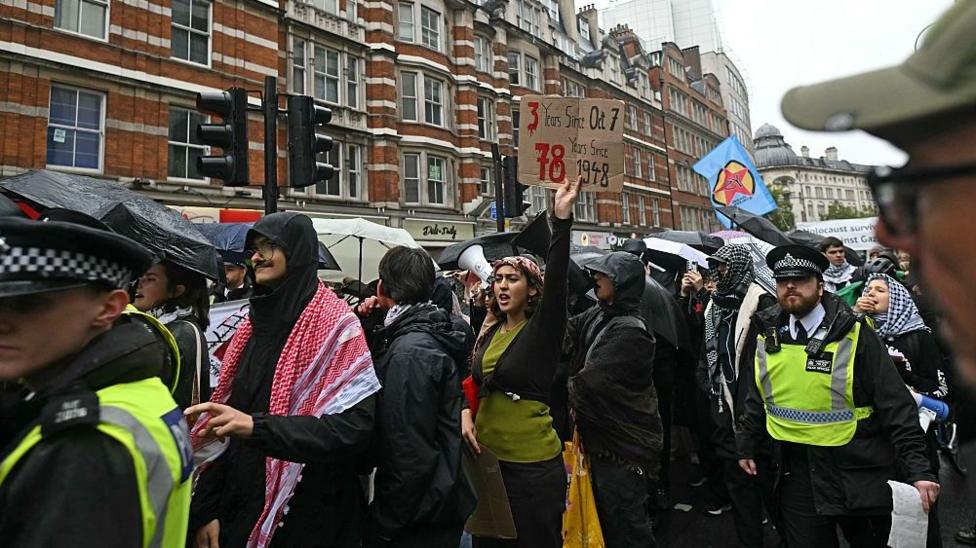
Counter-demonstrators carrying Israeli flags assembled in Russell Square, where minor scuffles broke out between the two groups. Pro-Palestinian protesters chanted slogans including "Zionists not welcome here" and "free Palestine from the river to the sea."
What does the "river to the sea" slogan mean?
The phrase "free Palestine from the river to the sea" refers to land between the Jordan River and the Mediterranean Sea, which encompasses the territory of Israel, the West Bank, and Gaza. Some use the chant to advocate for Palestinian control of this entire region, while critics interpret it as a call for the destruction of the state of Israel.
Pro-Palestinian activists dispute this characterisation, arguing that most people chanting the slogan are calling for an end to Israel's occupation of the West Bank and its blockade of Gaza rather than advocating for Israel's elimination.
What policing measures were in place?
The Metropolitan Police deployed significant resources to manage the demonstrations and related events. According to police statements, the force expected more than 600 officers to be involved in policing protests and events throughout the week. Officers remained on the ground in central London for the remainder of the afternoon following the demonstrations.
The scale of police deployment reflected broader concerns about managing rival demonstrations and maintaining public order during a sensitive anniversary period.
What happens next?
The Board of Deputies and Jewish Leadership Council organised a separate October 7 vigil at Victoria Embankment, featuring prayers, music, personal reflections, and the reading of names of British victims. This event provided an alternative gathering for those commemorating the anniversary and those affected by the 2023 attack.
Key Facts:
- Eleven arrests were made across multiple pro-Palestinian demonstrations in London on 7 October
- Five people were arrested on suspicion of inciting racial hatred at the Board of Deputies office in Camden
- A march of approximately 100 people proceeded from Lincoln's Inn Fields to Russell Square under police conditions
- Minor scuffles occurred between pro-Palestinian and counter-demonstrators carrying Israeli flags
- More than 600 Metropolitan Police officers were deployed to manage protests and events throughout the week