Riders operating e-bikes while intoxicated or recklessly—including those who run red lights—may receive on-the-spot fines under new enforcement measures designed to address anti-social behaviour. According to BBC News, the government has launched a consultation to establish national standards for e-bike use and improve safety for pedestrians and other road users.
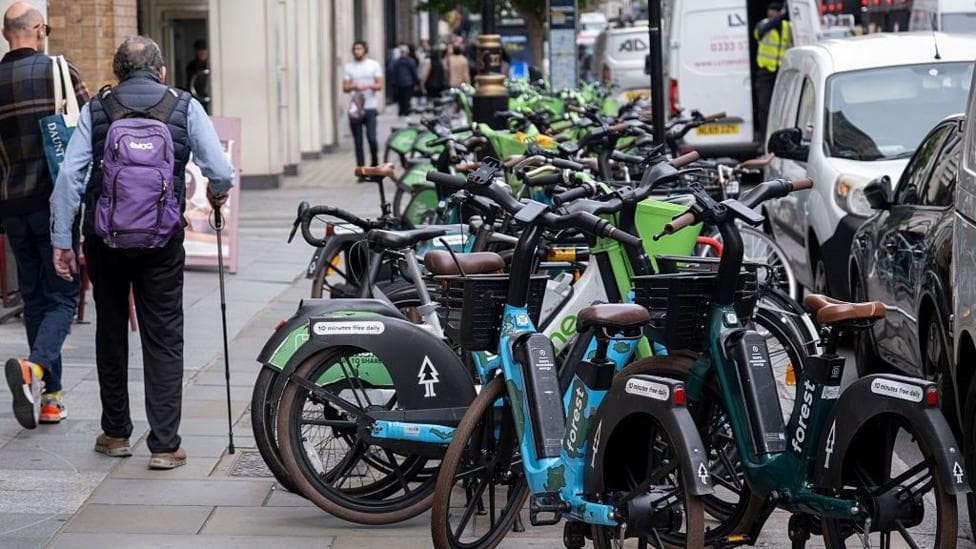
Operators of shared e-bike schemes will face stricter requirements to manage their fleets responsibly and establish designated parking zones to prevent pavement obstruction. The proposals also suggest that operators should obtain insurance coverage, enabling individuals injured by riders on shared bikes to seek compensation. These measures form part of a broader initiative to regulate what government officials characterised as the "wild west" of e-biking, where inconsistent rules across different regions have created hazardous conditions for pedestrians.
A consultation period beginning on Thursday outlines proposed standards intended to enhance safety for all road users and maintain clear pavements, with particular attention to wheelchair users and families with pushchairs. The growth of e-bike services has been substantial since the first schemes launched in Exeter in 2016 and subsequently expanded to London in 2017. Data from the Greater London Authority indicates that shared e-bikes facilitated 37 million journeys in the previous year—a 33 percent increase compared to the year before.
Popular shared e-bike operators including Lime, Voi, Beryl, Dott, Forest and Bolt have established themselves as convenient options for short-distance commuting. However, regulatory approaches vary significantly across regions. Some areas mandate that shared bikes be returned to specific locations, while others operate under more permissive frameworks.
How will licensing change e-bike operations?
The government's framework would grant local authorities the ability to license e-bike schemes within their jurisdictions, enabling them to enforce consistent standards and better integrate e-bikes into broader transport infrastructure. Licensing conditions could require operators to develop parking strategies, regulate fleet sizes and service areas to prevent excessive bike accumulation on streets, and comply with data-sharing requirements to support enforcement and journey planning.
Local leaders would gain additional powers under the proposals, including the authority to set licensing fees and mandate operator compliance with data disclosure obligations. These measures aim to create a more coordinated approach to e-bike management across the country.
What penalties will apply to dangerous riding?
The consultation will examine enforcement mechanisms for addressing anti-social and illegal riding behaviour, including intoxicated riding, underage operation and pavement use. Clear penalties, such as financial fines, would be established for violations. Transport Secretary Heidi Alexander acknowledged that while the government supports continued growth in e-bike popularity, schemes are "causing a little bit of nuisance at the moment." When questioned about enforcement of dangerous cycling penalties, Alexander noted that licensing frameworks could facilitate fines but cautioned that "what you can't do is legislate for every eventuality, you can't legislate for idiots." She added that police enforce traffic regulations to address reckless cycling, though "police have got a lot on their plate so individuals have to take some responsibility."
What do operators and safety advocates say?
Leadership teams at Lime, Voi and Bolt have expressed support for the proposals, noting that uniform national standards would provide clarity and certainty for operators, riders and the public. However, concerns about implementation remain. Mike Wordingham, representing the Royal National Institute for the Blind, reported that 92 percent of blind and partially sighted individuals have been forced to step into roads due to e-bikes obstructing pavements. While welcoming the government's initiative, Wordingham cautioned that modifying rider behaviour would prove "difficult" and warned against allowing a locally-led approach to result in "a patchwork of regulations and inconsistency in implementing them."
The broader context of e-bike regulation extends beyond the UK. Australia has experienced a surge in e-bike use linked to rising injuries and fatalities, prompting calls for stricter enforcement and public education. Additionally, illegal e-bikes and e-scooters pose growing risks across the UK, with police deploying specialist teams, drones and seizure powers to address the problem. In response to safety concerns, Paris has implemented mandatory helmet and high-visibility gear requirements for e-scooter riders following a near-doubling of deaths from e-scooter accidents in a single year.

What happens next?
The consultation period will extend for eight weeks, after which the government will develop legislation to implement the proposed changes. Prime Minister Andy Burnham characterised the e-bike crackdown as a "small but important everyday fix" that would enhance street safety. The government's approach seeks to balance support for the continued expansion of e-bike services with measures to protect public safety and accessibility.