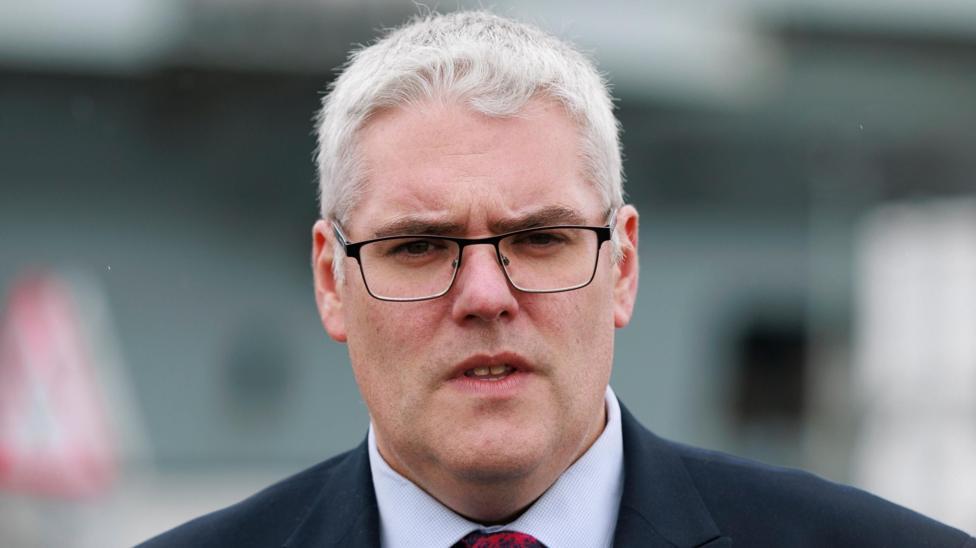
The Democratic Unionist Party has filed a petition of concern to prevent legislation requiring workforce planning for Irish-medium schools from advancing at the Northern Ireland Assembly. According to BBC News, DUP leader Gavin Robinson framed the move as part of his party's response to Sinn Féin's involvement in protests that blocked an Orange Order parade along the Garvaghy Road in Portadown, County Armagh. The private member's bill, introduced by Sinn Féin assembly member Pat Sheehan, faces a vote scheduled for Tuesday, 10 November 2026.
Robinson told reporters at Stormont on Monday that the DUP intended to "ensure the arrogance of Sinn Féin is kept in check" and would deploy "mechanisms at our disposal to thwart their agenda." He described the petition of concern as the latest manifestation of unionist frustration over the Drumcree parading dispute, in which First Minister Michelle O'Neill and other senior Sinn Féin figures were interviewed by police investigating the demonstrations.
The petition of concern mechanism requires signatures from 30 members of the Northern Ireland Assembly representing at least two parties. Once triggered, any vote on the matter demands cross-community support from a majority of both unionists and nationalists in the chamber. Robinson indicated the DUP had secured backing from other unionist parties for this approach.
What does the proposed Irish-medium education bill contain?
Sheehan's legislation would compel the Department of Education to develop a comprehensive workforce plan addressing the needs of schools teaching through the Irish language. The bill requires measurable targets and consultation with schools, teachers, pupils, parents and Irish-medium sector organisations, with the Department's estimated annual costs ranging from £26,200 to £43,700. The Assembly's Education Committee had previously agreed to an amendment designating the Education Authority as a statutory consultee and otherwise supported the bill following scrutiny.
Speaking in the assembly chamber, Sheehan accused the DUP of weaponising the petition of concern mechanism.
"The DUP talked about punishing Sinn Féin. It's not us you're punishing - it's children who wish to learn through the Irish language. It's their families and their schools who will bear the consequences,"he said. Sheehan characterised the DUP's action as a
"disgraceful abuse"of a safeguard intended to protect minorities, arguing that
"A safeguard intended to protect minorities is being turned against children educated through a minority language."
Which other unionist parties support the petition?
Ulster Unionist Party leader Jon Burrows indicated his party was likely to support the DUP's petition of concern. He told reporters he was "minded" to back the move, though he had not formally committed at that point. Burrows argued there was "no need" for the bill and contended it "gives preferential treatment to one education sector over the rest."
Tradition Unionist Voice leader Jim Allister confirmed his party would also sign the petition. Allister described the private member's bill as causing a "disproportionate tilting of funding in a very partisan and selective way", echoing concerns raised by other unionist representatives about the scope and cost of the proposed legislation.
What is the broader context of this dispute?
The petition of concern emerges from escalating tensions between the DUP and Sinn Féin over the Drumcree parading controversy. O'Neill faces mounting pressure from the DUP over her role in Garvaghy Road protests as the PSNI investigates suspected offences and the secretary of state bans the Orange Order march. Last month, the DUP announced it would block official engagements involving O'Neill in response to unionist anger over Sinn Féin's involvement in the demonstrations that prevented the contentious parade from proceeding along the mainly nationalist street.
The DUP's decision to use the petition mechanism on the Irish-medium education bill signals a broader strategy of obstruction. Robinson explicitly linked the two issues, stating that the party would use available parliamentary tools to counter what he characterised as Sinn Féin overreach. This represents an escalation in the use of cross-community veto powers, which are designed as safeguards for minority interests but have increasingly become weapons in inter-party disputes.
What happens next?
The bill's final Assembly stage is scheduled for Tuesday, 10 November 2026, when MLAs will vote on whether to pass the legislation. The outcome will depend on whether the petition of concern receives the required 30 signatures from at least two parties and whether sufficient cross-community support can be mustered to overcome the veto. If the petition succeeds, the bill would require backing from a majority of both unionist and nationalist members to proceed, making passage significantly more difficult despite Sinn Féin's numerical strength in the chamber.