
Around 650 additional prisoners in England and Wales are being released under the second phase of the government's early release scheme, which allows eligible offenders to leave custody after serving one-third of their sentence rather than the traditional 40% or 50%. According to BBC News, those convicted of manslaughter, rape, serious child sex offences and grooming are excluded from the programme. This represents the latest in a series of early release initiatives implemented by successive governments to manage England and Wales' severely overcrowded prison system.
The releases reflect a deepening capacity crisis that has forced policymakers to choose between releasing prisoners early or allowing facilities to exceed their operational limits. BBC Verify examined the underlying reasons why ministers contend this scheme has become unavoidable, revealing structural problems in sentencing policy, prison building and the management of released offenders.
How severe is the prison overcrowding problem?
The prison population in England and Wales reached 87,033 on 12 October, consuming 97.8% of useable capacity. The Ministry of Justice previously warned that the system would exceed capacity as soon as November without intervention. According to the Institute for Government, just over 1,100 spaces remained in adult men's prisons on 28 September, down more than 200 in a single week and representing a 67% decline from the end of April.
Justice Secretary Alex Norris has characterised the situation as a "prison capacity crisis" that necessitates the early release programme. In total, 4,500 prisoners are scheduled for early release by June 2027, with approximately 700 offenders already released on 1 October—all serving sentences of less than 19 months. The Ministry of Justice projects that the Sentencing Act 2026, which provides for earlier release, will keep the prisoner population below system capacity, rising only to around 96,000 by 2032, compared to a projected 104,000 if the Act did not come into force.
Why are more people being imprisoned for longer?
The prison population in England and Wales has grown substantially over recent decades, with a marked acceleration beginning in the 1990s and reaching record levels in 2024. The Institute for Government think tank attributes this partly to lengthening sentences imposed by courts. In 2023, the average custodial sentence at Crown Courts—which handle more serious offences—exceeded those handed down in 2012 by more than 25%. For specific crimes, the rise was steeper: robbery sentences in 2023 averaged 13 months longer than in 2012, representing a 36% increase.
Former Conservative Justice Secretary David Gauke, who conducted an independent sentencing review for the current government, argues that political parties have engaged in a "bidding war" since the 1990s to impose longer prison terms. Notably, this expansion has occurred while overall crime in England and Wales has declined according to the official Crime Survey, meaning more people are being incarcerated despite falling criminality.
A secondary driver of prison population growth is the rising number of people recalled to custody for breaching release conditions. Licence recalls in England and Wales totalled 51,419 in the year ending March 2026, up from 40,259 the previous year—a 28% increase. Cassia Rowland from the Institute for Government noted that
most recalls are for breaches of licence conditions, such as missed appointments, rather than offenders committing further offences or posing a serious risk to the public.She attributed this pattern to systemic strain:
The probation service is overwhelmed, with high caseloads and lots of vacancies putting often inexperienced staff under huge pressure.
Why has prison building failed to keep pace?
Successive governments have committed to expanding prison capacity, yet delivery has consistently lagged behind pledges. During the Conservative government's 14-year tenure from 2010 to 2024, approximately 13,000 new prison places were created. However, around 12,500 places—many dating from the Victorian era—were closed due to deterioration, resulting in a net gain of only roughly 500 places over 14 years.
The National Audit Office identified the Ministry of Justice's
unrealistic timelinesand poor coordination between government bodies as obstacles to faster delivery. The Ministry of Justice counters that around 6,500 net places were added between 2022 and 2025 after accounting for closures, including capacity created in three new prisons. However, the Prison Reform Trust reports that further expansion of existing facilities has been delayed after a major supplier entered administration.
Pia Sinha of the Prison Reform Trust explained to BBC Verify that
successive governments have found it difficult to increase prison capacity because new prisons take years to plan and build, often facing planning hurdles and local opposition.The Labour government has pledged to construct 14,000 new prison places by 2031.
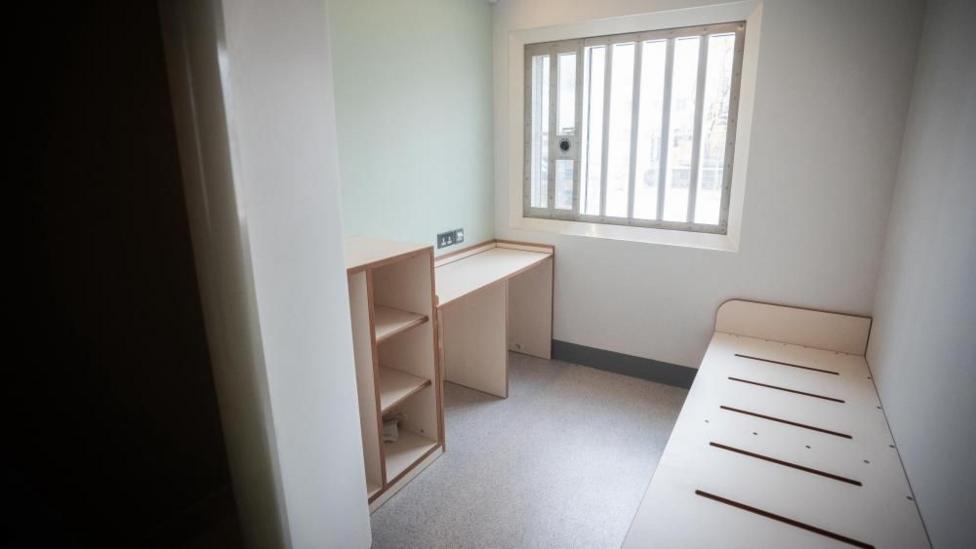
What happens to released prisoners?
Under the early release scheme, most eligible prisoners depart after serving one-third of their sentence and then face intensive community supervision. According to the Institute for Government, electronic monitoring is expected in most cases until offenders have served 40% of their original term. However, the system faces mounting strain on support services. Probation staff and charities have warned that housing options were already full following the October releases, raising concerns that people in subsequent tranches could face homelessness upon release.
In response to concerns raised by victims, authorities in Cambridgeshire have begun offering enhanced emotional support to those affected by the early-release scheme. The next scheduled release tranche is set for 10 November 2026, covering eligible prisoners serving sentences of up to three years and two months.
What is the long-term outlook?
Analysts contend that without fundamental shifts in how society views imprisonment as a punishment, or substantial sustained investment in prison construction, the system in England and Wales will remain perpetually near capacity. This structural constraint means future governments will face continuing pressure to implement early release schemes to prevent capacity breaches. The Sentencing Act 2026 introduced additional measures beyond early release, including a presumption to suspend sentences of 12 months or less and modifications to recall procedures, all designed to manage population growth. Yet without resolving the underlying drivers—lengthening sentences, rising recall rates, and insufficient building—the cycle of crisis management is likely to persist.