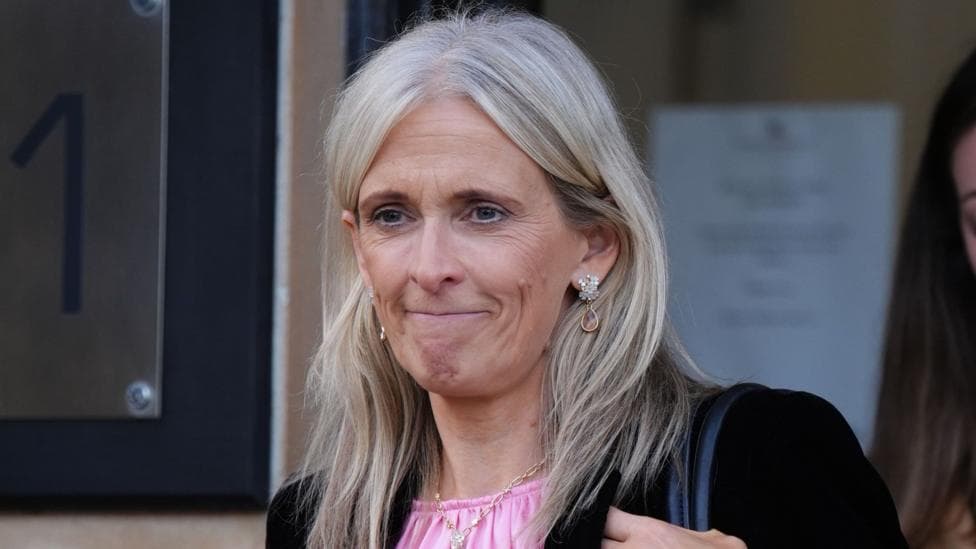
Scotland's top law officer has expressed alarm at a sharp rise in domestic abuse charges, warning that protecting women and girls from violent men must become a national priority. Ruth Charteris KC, who took office as Lord Advocate earlier this year, made the statement as new data revealed the scale of the problem facing the Scottish justice system.
According to the Crown Office and Procurator Fiscal Service (COPFS), prosecutors received 34,586 domestic abuse charges in the year ending March 2026—a 14% increase compared with the previous 12 months. Court action was pursued in 91% of these cases. The figures cover charges reported between April 2025 and March 2026 and are available in detailed data tables on COPFS's website.
The rise comes against a backdrop of high-profile cases that have intensified scrutiny of how the justice system handles domestic abuse perpetrators. Stacy Hunter was murdered by her husband Jim Mair in 2024 while he was released on bail pending trial for allegedly strangling her. Her family has since described how she was subjected to systematic manipulation and control in the months before her death, and they have called for GPS monitoring of high-risk domestic abuse suspects released on bail to prevent similar tragedies.
Charteris acknowledged the human cost behind each statistic.
I am acutely aware that every one of the 34,586 charges received by Copfs reflects the suffering of a victim – in the overwhelming majority of cases, a woman harmed by a man,she said.
It is concerning for all of us that the number of reports has increased, particularly those involving some of the most serious offending.
The Lord Advocate emphasised that cultural change was essential alongside legal enforcement.
Scotland must change. Ending domestic abuse in our communities is an issue for each of us to address every day, challenging harmful attitudes and behaviours wherever we see them.She pledged that prosecutors would
respond firmlyand hold perpetrators accountable through
robust prosecution that reflects the nature and seriousness of their offending.
She added that victims would receive proper support throughout the legal process.
Victims should be assured they will be listened to and taken seriously by prosecutors; their experiences will be recognised; they will be supported through the legal process,Charteris said.
What do the latest conviction figures show?
Convictions under the Domestic Abuse (Scotland) Act 2018 reached 897 in the year to March 2026, representing a 19% increase and the highest number since the legislation came into force in 2019. This suggests that while more cases are reaching court, the justice system is also securing more guilty verdicts, though the rising charge numbers indicate demand continues to outpace outcomes.

How is the Crown Office responding to victim concerns?
Dr Emma Forbes, the Crown Office's lead prosecutor for domestic abuse, said the service had worked to better understand the experiences of victims and their children. She urged anyone who had witnessed or endured abuse, or was worried about a friend or relative, to speak to someone they trusted or report it to Police Scotland.
Scotland has legislation which allows us to capture abuse as a course of conduct, which may have gone on for some time, not just an isolated incident,Forbes explained.
To anyone experiencing abuse; it is not your fault. You deserve safety, not fear.
What action is being taken on bail monitoring?
The Stacy Hunter case has intensified calls for electronic monitoring of domestic abuse suspects deemed high-risk. According to reporting from September 2026, the Scottish Government is looking to expand GPS technology and accelerate a full roll-out of bail monitoring for high-risk suspects. Her family has argued that such measures could have prevented her murder, though they have also cautioned that technology alone cannot address the systemic failures that allowed her abuser to remain free.
What are politicians saying about the figures?
Scottish Labour's justice spokeswoman Pauline McNeill described the statistics as
extremely concerningand said they showed violence against women was
reaching a crisis point.
Women are being failed even after abusers are known to the justice system,she added, highlighting concerns that known perpetrators continue to pose a threat despite contact with prosecutors and courts.
What is the broader context?
The rise in domestic abuse charges reflects wider trends in Scottish crime statistics. Earlier reporting showed that sexual crimes in Scotland reached their highest level since 1971 in 2025–26, with a 23% increase in domestic abuse offences. Prosecutors have also warned of a sharp rise in non-fatal strangulation cases, a particularly dangerous form of assault strongly linked to domestic abuse and often a precursor to more severe violence.
The appointment of Charteris as Lord Advocate in June 2026 marked a significant moment for Scotland's justice system. She succeeded Dorothy Bain and took on leadership of COPFS at a time when domestic abuse has become a defining challenge for prosecutors and policymakers alike.
What happens next?
The Scottish Government is working to strengthen bail conditions and expand GPS monitoring technology across the criminal justice system. COPFS has published the 2025–26 domestic abuse and stalking charge data, which will serve as a key reference point for ongoing scrutiny of how the justice system is responding to the crisis. Campaigners and victim advocates are continuing to press for both legislative reform and practical measures such as electronic monitoring to prevent high-risk offenders from causing further harm.
Key Facts:
- 34,586 domestic abuse charges were reported to COPFS in 2025–26, a 14% increase year-on-year
- Court action was pursued in 91% of cases
- Convictions under the Domestic Abuse (Scotland) Act 2018 rose 19% to 897, the highest since the law came into force
- The Scottish Government is expanding GPS monitoring for high-risk domestic abuse suspects on bail
- Lord Advocate Ruth Charteris has made ending domestic abuse a clear priority for her tenure