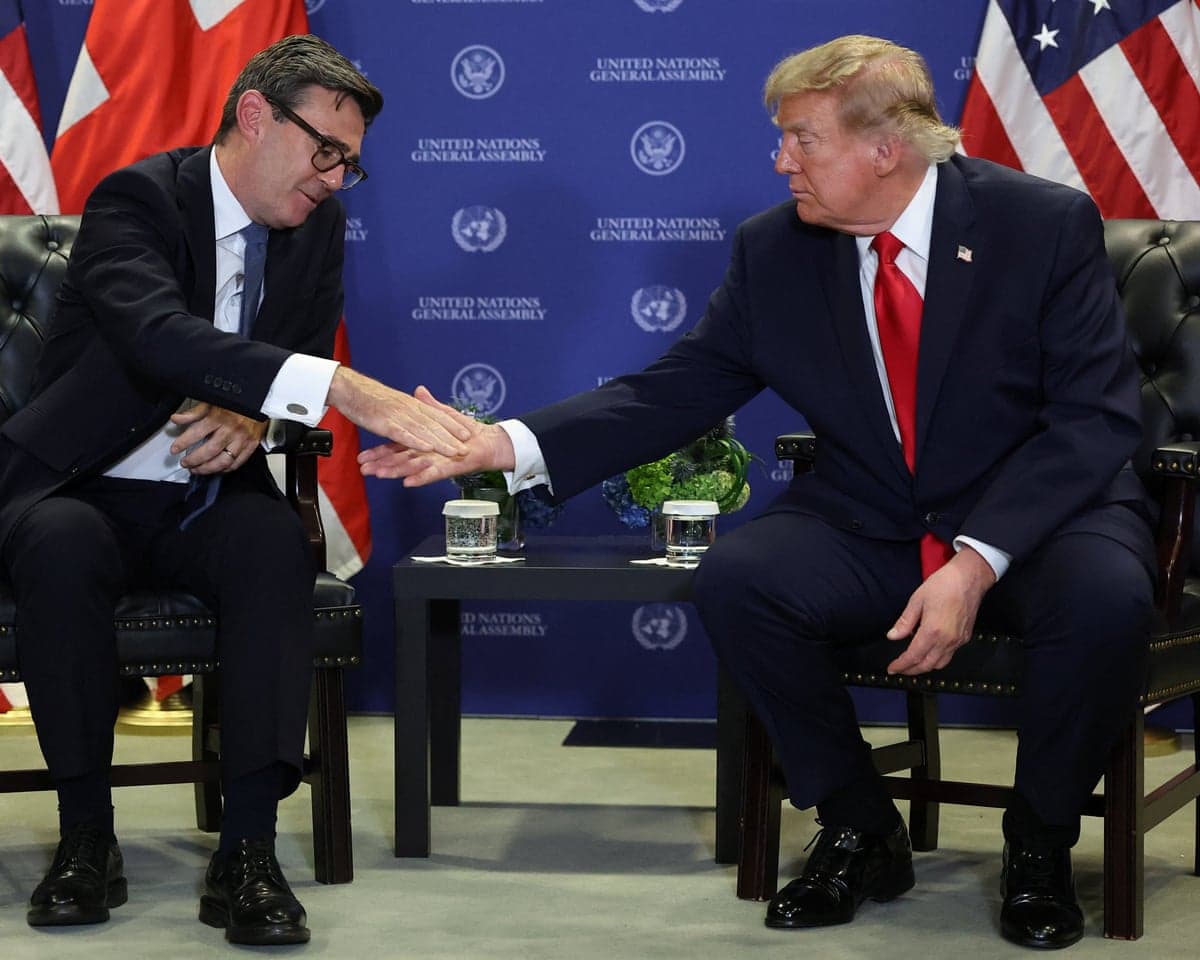
US President Donald Trump has offered warm praise for Prime Minister Andy Burnham following their first face-to-face encounter at the United Nations General Assembly in New York, describing him as a "natural businessman" with "a lot of assets on his side" and predicting he would make a "great prime minister". The meeting marked a striking reversal from Trump's earlier criticism of Burnham, whom he had previously dismissed as "extremely liberal" and "the mayor of a town".
At a joint press conference after their talks, Trump suggested the UK-US relationship had strengthened under Burnham's leadership. "I think you're up. Well, they're more now than they were with your last prime minister, let me put it that way," he said. "I think right now, based on my relationship with your prime minister, Andy, I think we're doing very well."
Burnham, who became prime minister in July, had travelled to New York for his first major international diplomatic engagement. According to reporting from the region, his visit was being framed as a test of his commitment to pursue British interests even when they diverge from Trump's preferences. The prime minister told reporters at the press conference that he and the president had "established a good connection in our early discussions and we've taken that further today".
The encounter had been a source of some concern for UK officials beforehand. Trump had previously called Burnham "extremely liberal" during the UK leadership race earlier in the year. However, the meeting proceeded smoothly, with both leaders emphasizing areas of agreement. Burnham had already established what he described as a "connection" with Trump through two phone calls since taking office, and the pair had previously discussed Ukraine, the Middle East, and Iran during an earlier conversation on 7 September.
During their New York discussion, the leaders covered an expansive agenda.
"We talked about everything from Rolls-Royce to energy to immigration – we covered a lot,"Trump said. Burnham's UN visit also focused on the opportunities and dangers of artificial intelligence, an issue expected to feature prominently in follow-up discussions between the two governments.
What did Trump say about the Chagos Islands deal?
Trump was notably critical of the UK's agreement to transfer sovereignty of the Chagos Islands to Mauritius while retaining a lease on the military base of Diego Garcia. He expressed strong opposition to the arrangement, calling it strategically damaging to Western interests.
"I don't support it. I think it's terrible. It was a terrible deal. They [Mauritius] all of a sudden say they have ownership. Somebody has ownership that never showed up before after decades and centuries. I think it's ridiculous."

Trump emphasized the strategic importance of the islands to US military operations.
"No, we were talking about that, and [the islands are] strategically very important. Very important. You know, we had to send our B-2 bombers … back home to Missouri, as opposed to flying for a short period of time. It's amazing how strategic it is, and I think the prime minister is going to be looking at it."The president's remarks suggested he expected Burnham to reconsider the arrangement, though no immediate policy shift was announced.
What other issues did Trump address?
When questioned about the conflict with Iran and its impact on living costs, Trump claimed that resolution of the conflict would lead to significant price reductions.
"As soon as the war is over the prices are going to come way down,"he stated, linking geopolitical stability to domestic economic conditions.
Trump also responded defensively to questions about his decision to ban certain journalists from the White House, a move that has prompted a broader media boycott. He defended his actions by asserting he had a
"right to clean out fake news."
How does this meeting fit into Burnham's broader UN agenda?
Burnham's encounter with Trump was one of several bilateral meetings the US president held during the UN General Assembly. According to White House scheduling information, Trump met with leaders including Japan's prime minister and Venezuela's acting president as part of his wider UNGA bilateral programme. Burnham's first global-diplomacy trip as prime minister placed significant emphasis on Ukraine and the Middle East alongside his discussions with Trump, reflecting the breadth of international challenges facing the UK government.
What is the significance of this diplomatic shift?
Burnham had addressed the UN General Assembly earlier, rejecting claims that Britain was in decline, setting the tone for his bilateral engagement with the US president. The warm reception from Trump contrasted sharply with his earlier dismissals and suggested a willingness on both sides to establish a working relationship based on pragmatism rather than ideological alignment. Burnham had previously indicated he would take a pragmatic approach to North Sea oil and gas development, an area where his position appeared to align more closely with Trump's energy priorities than his predecessor's stance.
The prime minister has stated he would challenge Trump when necessary to protect British interests, and his handling of the Chagos Islands disagreement during their first meeting appeared to test that commitment. While Trump expressed disapproval of the arrangement, Burnham did not immediately capitulate, suggesting the relationship would be characterized by both cooperation and selective disagreement on key policy matters.