
Amanda Young's family home in Newport now overlooks a sprawling data centre campus, transforming the character of her neighbourhood. Whichever window she looks from, the large facility dominates her view, raising concerns about noise, visual impact and potential effects on property values in an area that was once peaceful and quiet.
Data centres are buildings housing powerful computers that run digital services ranging from online banking to movie streaming. The UK's stock of these facilities is expanding rapidly as artificial intelligence development drives demand for processing capacity. The government classifies data centres as critical national infrastructure, and according to recent Senedd research, the majority of jobs across the UK now depend on them in some form.
Yet this expansion is creating tension between economic opportunity and community wellbeing. Residents in Newport and Cardiff are raising alarms about the resources these facilities consume—electricity, water and grid capacity—and the disruption their construction and operation bring to local areas.
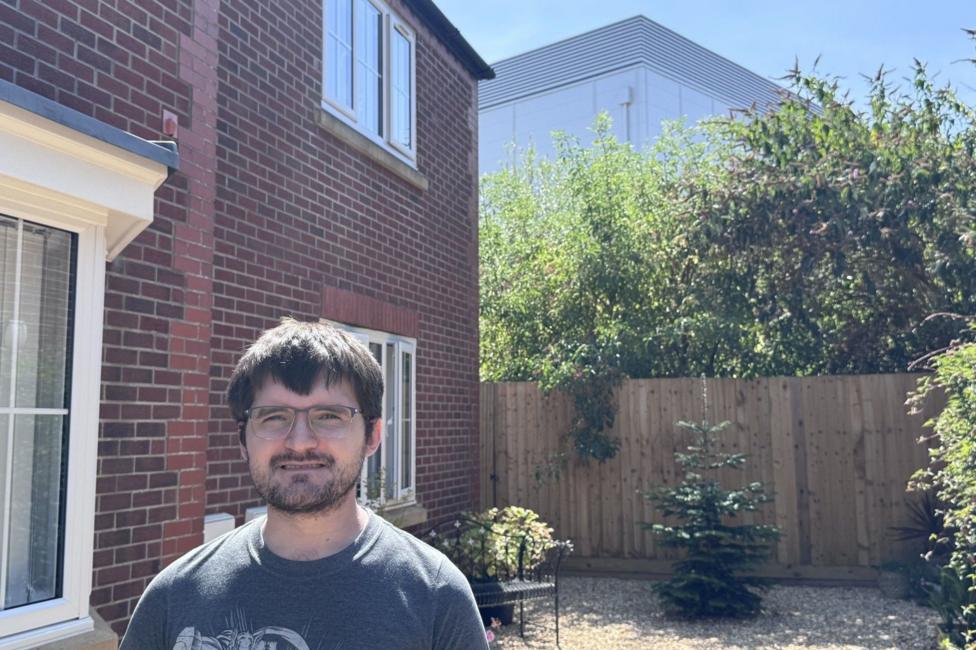
Anthony, who lives near Amanda, describes how the ongoing construction work has diminished neighbourhood tranquility through persistent noise and increased traffic. Amanda's concerns centre on three issues: the constant auditory disturbance, the visual dominance of the structure, and uncertainty about whether the development will depress local house values.
"Whichever window you look out, you can see it. When you're sitting in the lounge, you can actually see it there."Amanda said of the facility's prominence in her daily life.
Vantage Data Center, the operator, stated it remains
"committed to being a good neighbour"and works with local authorities to
"manage construction activity, including traffic, noise and lighting"while incorporating
"measures designed to protect the local environment". Newport City Council confirmed it assesses planning applications to
"ensure that the impacts are considered acceptable in terms of biodiversity, light, noise and construction traffic".
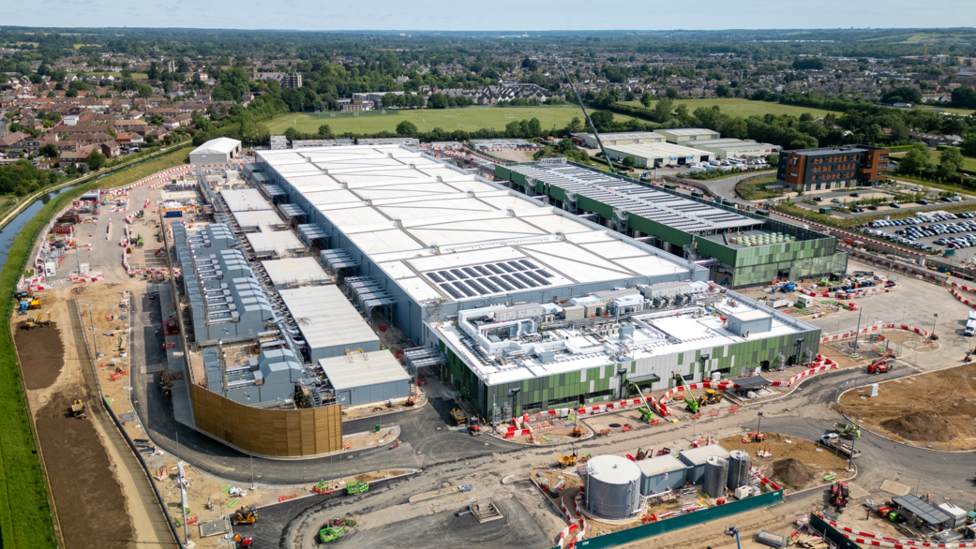
Once fully operational, the Vantage Data Center Campus in Newport will comprise three centres spread across 46 acres. According to Senedd research, this South Wales facility, known as CWL1, will deliver 148MW of capacity when complete, making it one of Europe's largest data centre campuses. Beyond Newport, Vantage's broader South Wales strategy could deliver more than 1GW of AI-ready capacity across Newport, Bridgend and Bro Tathan, representing a significant concentration of computing infrastructure in the region.
What is driving data centre growth across the UK?
The UK currently hosts 568 data centres, a figure expected to rise by almost a fifth as nine new facilities are proposed in Wales alone. This expansion reflects the computational demands of artificial intelligence. Ofgem reported that electricity requests from data centre projects seeking grid connections surged from 41GW to 125GW within a single year, demonstrating the scale of demand growth.
By some measures, the UK ranks as the world's third-largest nation for data centre capacity, behind only the United States and Germany. The government has recognised this strategic importance by designating large data centres as Nationally Significant Infrastructure Projects, a classification that came into force on 8 January 2026 and changes how certain qualifying schemes may be determined through a development consent order process.
What environmental and resource concerns do data centres raise?
A Senedd Research document outlined both opportunities and challenges. While data centres promise jobs, investment, skills development and innovation support, they also raise
"significant resource and policy questions"including electricity demand, grid capacity, water use, land requirements, biodiversity protection and impacts on local communities.
Water consumption presents a particular concern. Water UK, the trade association for the UK's water industry, estimated that data centres use approximately 6.6 million litres of water daily—equivalent to the consumption of 20,000 average homes. The UK government responded by noting that many newer data centres employ
"advanced cooling systems that significantly reduce water consumption"and operate under a Climate Change Agreement to encourage energy efficiency.
The Welsh government acknowledged that data centres are
"energy intensive"and stressed the importance of new developments adopting technologies to minimise energy and resource consumption. It added that
"any proposed data centre development remains subject to the existing planning system and environmental regulation, with robust checks and balances in place to ensure that environmental and community impacts are properly considered before consent is granted".
What is happening in Cardiff?
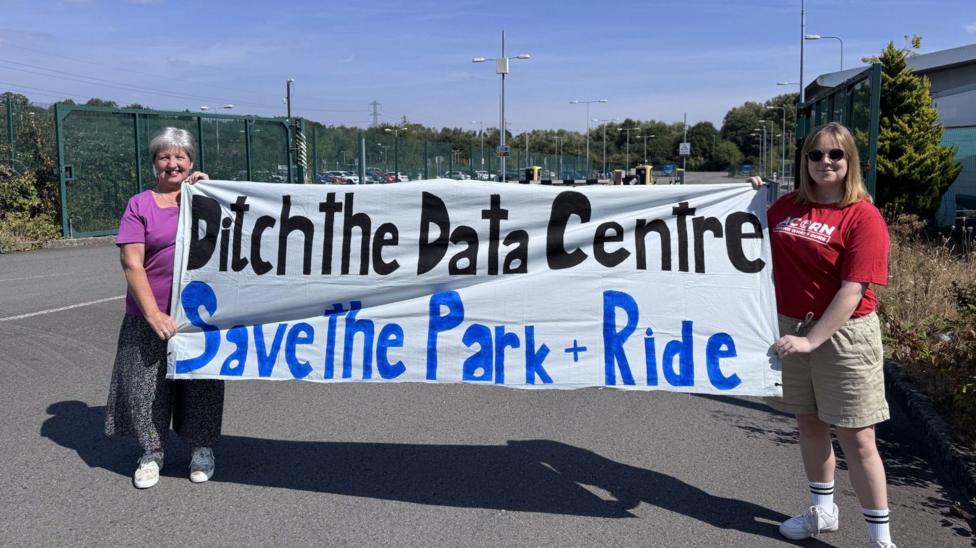
In Cardiff, campaigners are opposing proposals for a data centre campus in Llanrumney, on the site of the Cardiff East Park & Ride, which serves passengers travelling to the University Hospital of Wales. The proposal was formally submitted to Cardiff Council on 21 June 2026, designed to replace the transport facility with infrastructure supporting AI and cloud computing.
Sue Elias, who uses the park-and-ride and campaigns against the proposal through the residents' union Acorn, acknowledged the necessity of data centre development but argued there should be
"a pause"to identify the most responsible locations.
"They shouldn't just be put up and then worry about the consequences afterwards,"she said.
Cardiff and Vale University Health Board described the Cardiff East Park & Ride as an
"essential transport link"and stated it was
"committed to identifying a suitable and convenient alternative location"should the proposal proceed.
Lizzie Bailey, a local resident, expressed alarm about environmental consequences, describing the planned facility as
"an environmental nightmare both for the wildlife and the local residents."She highlighted concerns about permanent disruption from
"diesel generators, the noises, the cooling fans, things like that"beyond the temporary construction phase.
Curtis Hall Ltd, the company behind the Cardiff proposal, countered that the development would
"not put a strain on the energy grid or water infrastructure."The company stated that
"the data centre's water and drainage requirements have been developed in consultation with Welsh Water and any connection to the public network requires their agreement."It added:
"This ensures our data centre can be accommodated without impacting the supply of water to residents' homes."
Curtis Hall also said a
"detailed noise impact assessment"concluded the site
"won't have adverse impact on the nearest homes in terms of noise, including at night."Cardiff Council confirmed the proposal was under consideration and would be
"assessed against relevant planning policies and material planning considerations."The council encouraged people to submit comments through the consultation process.
What do experts say about balancing growth with community concerns?
Prof Alan Brown from the University of Exeter, author of Making AI Work for Britain, argued that authorities should be
"a lot more engaged"with communities about data centre construction.
"If that gets bypassed, then of course local residents are going to worry that they're getting all of the pain and none of the benefit."
He suggested that when residents understood the implications and personal significance of a data centre,
"they're more willing to be more flexible."However, he identified a fundamental problem:
"I think right now, there's a lack of communication around that."
The environmental group Friends of the Earth is calling for a UK-wide pause on all new data centres. Kierra Box from the organisation stated:
"We're asking for that pause until there are clear rules set out on how much energy and water data centres can use, to make sure they're not sucking up our much-needed renewables and our clean water."She added:
"We need an idea of how now, and in the future governments are going to determine the individual and the joint impact of all these data centres on the environment, on communities, on nature."

What is the case for data centre development?
Tech founder Mark John, co-founder of Tramshed Tech, presented a contrasting perspective, describing data centre and AI infrastructure development as
"an opportunity for Wales"to
"reimagine itself."He positioned the sector within a historical narrative:
"AI, data and data centres are going to be at the forefront of the new Industrial Revolution. This could be the new frontier technology, in the same way that coal and steel were at the forefront of industrial transformation."
John recounted a conversation with a senior technology industry figure in Seattle who suggested that
"because of AI, the whole way we live our lives is going to change more in the next six months than it has in the previous 10 years."He reflected:
"That sort of brought it home to me—like it or loathe it, we have to live with it and come to terms with it."
He emphasised that data centres would unlock AI capability in Wales, stating that
"if we haven't got data centres, we haven't got access to that AI."While acknowledging their necessity, he described them as
"a means to an end, if you like."
The Welsh government echoed this economic perspective, noting that
"investment in data centres has the potential to create new economic opportunities and support skilled employment, while strengthening Wales' attractiveness as a leading destination for advanced digital investment."
What planning framework governs data centre development in Wales?
A notable gap exists in Welsh planning policy. According to Senedd research, Wales's planning framework does not explicitly reference data centres, unlike planning systems in England and Scotland. This absence creates uncertainty about how developments should be assessed and what standards should apply.
The UK government stated it would
"enable the development of data centres by building unprecedented amounts of clean power, while our AI Growth Zones support data centre development in areas with access to clean energy."
What happens next?
The Newport campus continues to advance. On 13 August 2026, Vantage and Nebius announced an agreement to deploy high-density AI infrastructure at the CWL1 campus in Newport, marking the first announced commercial capacity commitment in the South Wales AI Growth Zone.
In Cardiff, residents and campaigners await a council decision on the Llanrumney proposal following its June 2026 submission. The outcome will determine whether the park-and-ride facility is replaced with data centre infrastructure, a decision that will affect transport access to the University Hospital of Wales and set a precedent for similar proposals across Wales.
The tension between Amanda Young's desire for a quiet neighbourhood and the region's positioning as a data centre hub reflects a broader national challenge: how to harness the economic and technological benefits of AI infrastructure while protecting community wellbeing and environmental sustainability.