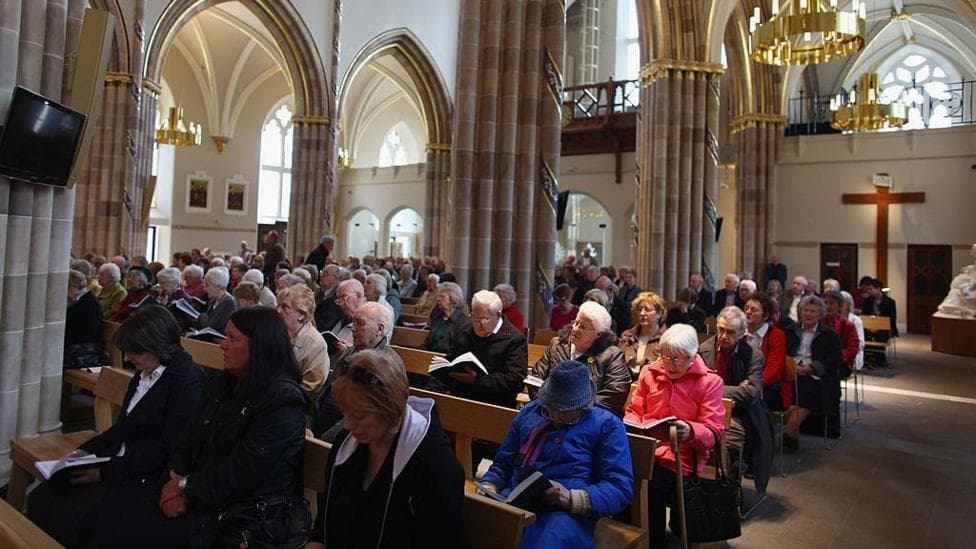
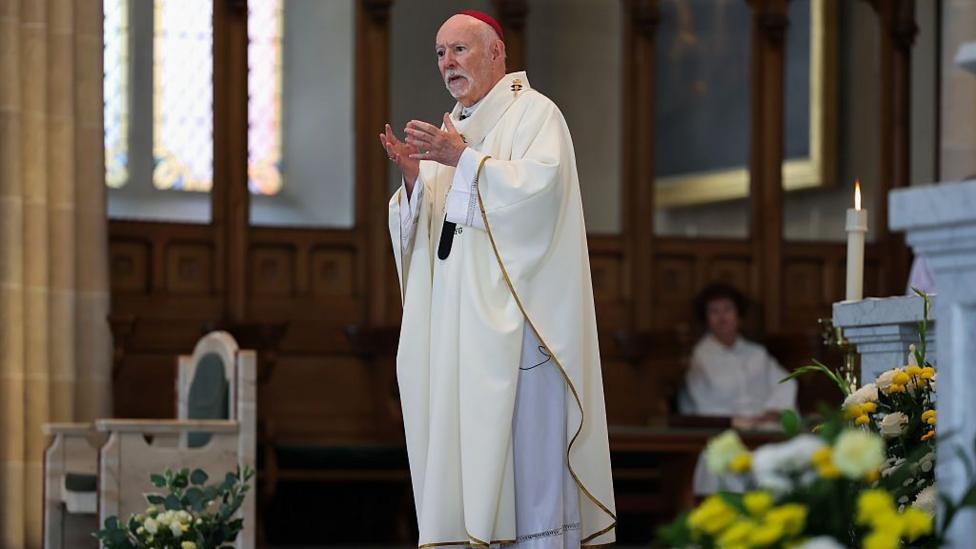
The Catholic Church is to reduce the number of parishes it operates in Glasgow and Dunbartonshire by half, closing 24 churches as part of a sweeping restructuring driven by declining congregations and a severe shortage of clergy. Archbishop William Nolan announced the plan in a letter to congregations, describing it as a response to a fundamental mismatch: too many parishes serving too few worshippers, and too many buildings but too few priests to staff them.
The restructuring will leave approximately 40 parishes across the region, down from the current 80. According to reporting on the archdiocese's published plan, the mergers and closures will take place over five to 10 years rather than as a single round, with each case subject to canon law procedures. The proposals also include merging Scotland's current eight dioceses, representing a broader consolidation of the church's structure.
Ronnie Convery, director of communications at the Archdiocese of Glasgow, outlined the scale of the crisis facing the church. He told Drivetime that the number of active priests in the archdiocese has fallen by a third in the last five years, and warned that within 20 years, Glasgow could have as few as eight priests remaining.
At the moment Glasgow has around 80 parishes - in 20 years' time we reckon there will only be eight priests left working. Something has to be done to make things workable.
The shortage is particularly acute because the majority of current priests are over 60 years old, meaning retirements will accelerate the decline. Convery identified three interconnected problems driving the restructuring: many churches were built in areas that have since been depopulated; fewer people are attending Mass; and a vocations crisis has left the church without enough priests to serve existing parishes.
Why are so many churches closing?
The closures reflect a broader decline in religious observance across Scotland. The 2022 census revealed that for the first time, a majority of Scots identified as non-religious. Among those who do identify with a faith, Catholic numbers have fallen sharply: 20.74% of Glaswegians are Catholic according to the census, while 13.3% of Scotland's overall population said they were Catholic. Over the past decade, the number of people identifying as Catholic dropped by more than 117,000 nationally.
Archbishop Nolan acknowledged the emotional weight of the decision in his letter to congregations.
There are too many parishes but too few people, too many churches but too few priests. Compared to when these parishes were formed and our churches built, there are significantly fewer people coming to Mass. Some of our largest churches are in places where there are the fewest people.
He continued:
Our parishes and our churches hold great memories for us and are dear to our hearts, so any reduction in parishes and any closure of churches will be a painful experience. We cannot avoid that pain, though, by not facing up to reality. Just as the vinedresser cuts back the vine so that it may grow, so we too must trim and prune in order to stay healthy, in order to grow.
Which churches are affected and what happens to them?
The merger proposals cover five areas: Dunbartonshire East, Dunbartonshire West, Glasgow South, Glasgow West, and Glasgow East & North. According to the archdiocese's detailed plan, specific churches have been named with different timelines. For example, St Andrew's in Bearsden and St Joseph's in Milngavie are to merge within five years, with both buildings remaining open. Other closures are scheduled within five to 10 years.
Many of the changes will see two parishes begin sharing a single building rather than operating separately. The mergers and closures will not happen simultaneously but will be staggered, with each case going through the required canonical process. A campaign group opposing the proposed closure of St Patrick's in Anderston called the announcement
troubling, highlighting the distress the plan has caused in affected communities.
The proposals have been approved in principle by Archbishop Nolan and the Council of Priests. The official journal of the archdiocese, Flourish, stated that the moves will now be discussed locally across parish and deanery pastoral councils. Archbishop Nolan's letter was due to be read in churches that weekend, beginning the consultation process with congregations.
How does this fit into a wider pattern?
The Catholic Church's restructuring is part of a much larger decline in organised religion across Scotland. In recent years, the Church of Scotland has sold off numerous buildings across the country. Dr DJ Johnston-Smith, director of Scotland's Churches Trust, told Drivetime that the closures were inevitable given broader secularisation trends.
There was an inevitability to this. It will be very hard to hear for many people. Since 2020, 456 church buildings have closed across Scotland, so more than one a week, and we predict another 400 to 500 closures before the end of the decade.
Johnston-Smith emphasised that the loss extends beyond religious function.
The country is undoubtedly secularising, but that's not just the sole purpose of these buildings - they have been places of community, places of sanctuary and can sit as an anchor in any community, even for people who do not cross the threshold.
Heritage experts acknowledged that while the news was expected, it represents a significant blow to local communities. Historic church buildings, many with architectural and cultural significance, will fall into disuse or be repurposed, removing landmarks that have served as focal points for neighbourhoods for generations.
What happens next?
The archdiocese will now enter a period of local consultation. Parishes, deanery pastoral councils, and congregations will discuss the proposals in their areas. Each merger or closure will follow canon law procedures, ensuring no mass closure occurs on a single date. The changes are envisaged to take place gradually over the next five to 10 years, allowing time for communities to adjust and for the church to manage the transition carefully.
Key Facts:
- The number of active priests in the archdiocese fell by a third in the past five years, with projections suggesting only eight priests will remain in 20 years
- The restructuring will reduce Glasgow and Dunbartonshire parishes from 80 to approximately 40, with 24 churches closing
- The 2022 census showed that for the first time, a majority of Scots identified as non-religious, with Catholic numbers falling by more than 117,000 over the past decade
- Since 2020, 456 church buildings have closed across Scotland, with predictions of another 400 to 500 closures before 2030
- Changes will be staggered over five to 10 years, with each case subject to canon law procedures rather than a single round of closures