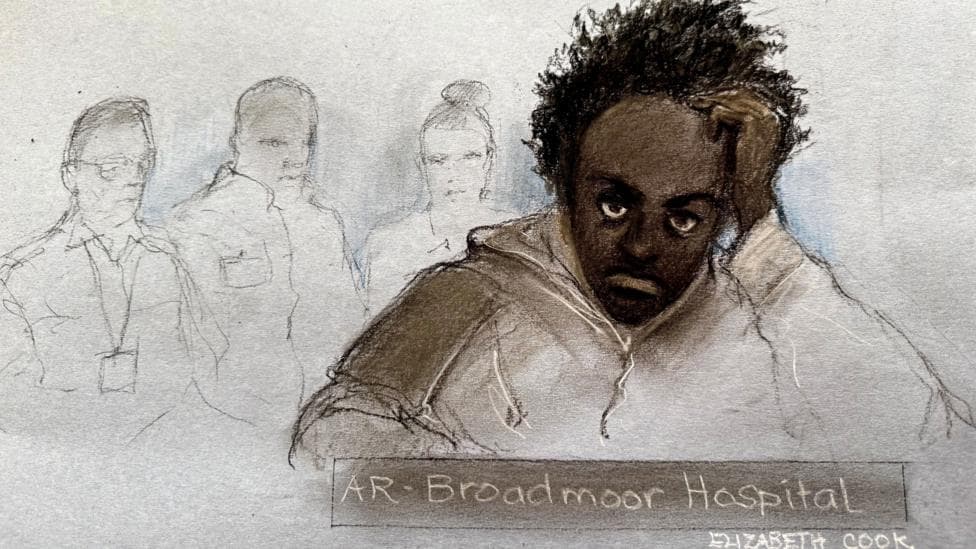
Prof Jason Arday resigned from the University of Cambridge with immediate effect on Wednesday after the university launched an investigation into new information about his academic qualifications and honorary appointments. The row over plagiarism allegations and questions about his record has since widened, with academics now calling for an independent inquiry into how he was appointed and how Cambridge handled the concerns.
Why did Arday resign?
Arday said he concluded that “the only way to bring this chapter to an end is to step away”, after the university opened an inquiry “following new information” about his “academic qualifications and honorary appointments”. His resignation came amid accusations from another academic, self-described “race realist” Nathan Cofnas, who was sacked from his Cambridge role in 2024, that he had found numerous instances of plagiarism in Arday’s work and had questioned some of Arday’s stated achievements.
Arday has admitted errors in his work, but has insisted he is not “a liar”. The claims have raised wider questions about Cambridge’s appointment processes and the extent to which the university’s push for diversity influenced its response to concerns about his record.
What did Arday say in his statement?
In a statement posted by the Good Law Project on Wednesday, Arday said that being appointed professor had been “without question, the greatest professional privilege of my life”.
The years since my appointment have also been marked by an unrelenting level of public scrutiny and personal attack
He added that “there comes a point when the personal cost becomes too great”.
for my own wellbeing, for my family, and for those who have stood by me throughout this difficult period, I have concluded that the only way to bring this chapter to an end is to step away
Arday also said that “this is not the end of my work” and that he needed “time to heal”.
When that time comes, I will return
He thanked his students and colleagues, and said the decision was made for his own wellbeing and for his family.
Arday also said his resignation should not “be mistaken for an acceptance of the narratives that have surrounded me”, which he has previously described as “racially motivated”.
What is Cambridge doing?
Earlier on Wednesday, the University of Cambridge said its inquiry had begun “following new information” about Arday’s “academic qualifications and honorary appointments”. It added that there remained “a number of ongoing complaints regarding academic misconduct”.
In its statement, the University of Cambridge said:
While we are fully aware of the public commentary and concerns around this matter, it remains vital that any process is thorough and adheres to both university policies and employment law.
We also fully recognise that there is a person at the centre of this situation, and we continue to provide support to him.
Jesus College, where Arday is a fellow, has said it is launching its own process “parallel” to the university’s investigation.
The case has also prompted criticism of Cambridge’s institutional culture. The university is facing questions over whether it failed to properly check Arday’s credentials when appointing him, and whether it defended that decision because of a broader effort to present itself as more diverse. The plagiarism allegations, which Arday denies, are seen by critics as particularly serious because they go to the heart of academic standards.
Why are academics calling for an independent inquiry?
A group of academics says Cambridge should not investigate itself and has called for an independent probe into Arday’s appointment. Priyamvada Gopal, professor of postcolonial studies at Cambridge and among those calling for an inquiry, said the university was facing “massive reputational damage” over the affair.
She told BBC Radio 4’s Today programme on Friday:
This is reputational damage that has upset colleagues across disciplines, across the political spectrum
I've been quite struck by the number of people who are very upset by what has happened. So I don't think it is an option for Cambridge to just sweep this under the carpet and not take any action at all.
Gopal said the university should not be “marking its own homework”, adding that the group had suggested a mix of senior academics at Cambridge and elsewhere should conduct the investigation.
She also said any inquiry should review “whether the university was involved in any way or any level with efforts to deter journalists from reporting on the allegations”.
Gopal and other academics said they found it “unusual” that Arday had been appointed to a “very senior, very prestigious” post early in his career and had been presented in the media with “frankly a bit of a target on his back”.
They also argued that universities were being pulled into a “lazy and false division between academic excellence and diversity and equality on campus” that was part of culture wars rather than university life.
Who is Jason Arday?
In 2023, the then 37-year-old sociologist became the youngest ever black professor at Cambridge. The allegations of plagiarism in Arday’s work were first voiced by Cofnas, a US researcher whose role at a Cambridge college was terminated after backlash to his view that under a true meritocracy black people would “disappear from almost all high-profile positions outside of sports and entertainment”.
Cofnas claimed on Substack that he had put Arday’s work through a plagiarism detection software, which found that “many passages are lifted with minimal editing, sometimes retaining copy-editing mistakes from the original source”.
Arday’s academic route has also been examined in the wake of the row. He has a degree from the University of Surrey in education studies and physical education, a master's from St Mary's University in London, and a PhD in education awarded by Liverpool John Moores University. He later became an associate professor at Durham University and professor of sociology of education at the University of Glasgow.

That background has drawn attention because the PhD is the first major piece of original research required for an academic career. Critics say his work relied on copying other academics without proper acknowledgement from the outset, which he denies.
What has Arday said about the allegations?
On Saturday, Arday told the Times in an interview that he was accountable for those mistakes, but that “what I am not is a liar”.
There has been, since I arrived at Cambridge, a very well orchestrated and co-ordinated campaign to unseat me from my position.
He suggested that this was “racially motivated” and that he had become a “lightning rod” for criticism of diversity, equity and inclusion (DEI) policy.
Arday said some errors in his early academic work were because of his autism, as he relied on using mimicry to make sense of information, and that similar scrutiny would find similar errors in work by other academics.
We're talking about academia here. I didn't murder somebody. I think the cruelty that I've experienced and the positioning of me as this kind of liar and fantasist is totally unacceptable
He said the scrutiny and criticism had been cruel and unacceptable.
Arday has also denied lying about his achievements and said his autism and a lack of adequate supervision early in his academic career may have contributed to mistakes in his work.
What other claims have been made?
Beyond the plagiarism allegations, Arday has also faced accusations of fabricating or exaggerating elements of his CV. Those claims have drawn further attention to several universities at which Arday said he had held academic roles, with some of those institutions later denying that he held those posts.
Cofnas also said a retired professor had previously raised concerns about Arday’s later academic articles, leading to two journals issuing correction notes. He further questioned some of Arday’s claimed achievements, including extensive marathon running and raising millions for charity.
Liverpool John Moores University, which awarded Arday’s PhD, said it investigated the plagiarism allegations last year and dismissed them, saying they were likely the result of “honest and reasonable error”.
The differing accounts have left Cambridge under pressure to explain what it knew, when it knew it, and how it responded to earlier concerns.
Why has the case become so controversial?
The university’s response has become part of a broader debate about standards, diversity and reputation in higher education. Cambridge uses the common definition of plagiarism as “passing off someone else's work as if it were your own without appropriate acknowledgement”, and the allegations now under investigation have been described as among the most serious that can be made against an academic.
For one of the world’s leading universities, the case has raised questions about whether institutional support for a high-profile appointment may have delayed or complicated scrutiny. The issue has also widened into a discussion about how black academics are represented in Cambridge and across the UK’s higher education sector.
In the last academic year, only 75 of Cambridge's 6,180 academics at all levels were identified as black, according to the Higher Education Statistics Authority (HESA). Across the UK, 270 professors are identified as black out of more than 26,000, according to HESA definitions - around 1%.
The University and College Union has previously highlighted an ethnicity pay gap and called for it to be redressed. It declined to comment on this case.
Both Cambridge and Oxford have faced sustained scrutiny over their whiteness as institutions, with vocal critics over the last 15 years including the MP David Lammy.
In 2018, Cambridge said it needed help to attract more talented black students, and unexpectedly the rapper Stormzy answered the call by setting up a scholarship to encourage students to apply. Although the support was for a handful of students, it was a reputational coup for the university - allowing it to position itself as a more open and inclusive institution.
Now, the university must balance the potential reputational fallout from the Arday case for its academic credibility with how the row may be perceived by future talented black students and academics.
Was the media coverage itself investigated?
The row has also drawn attention to the treatment of journalists covering the allegations. Gopal said any independent inquiry should examine whether Cambridge was involved in efforts to deter reporting on the case.
That concern emerged after the Metropolitan Police investigated Times Higher Education reporter Jack Grove over a harassment complaint after he contacted Arday about plagiarism allegations last year. The Met later closed the case, and Commissioner Sir Mark Rowley apologised, telling LBC on Thursday that the complaint should have been “screened out earlier on as not requiring investigation”.
The Telegraph also reported that Arday hired law firm Carter-Ruck to send a letter to Times Higher Education concerning an “apparent attack”.
The BBC has approached the University of Cambridge and Liverpool John Moores University for comment.
Key Facts
- Prof Jason Arday resigned from Cambridge “with immediate effect”.
- The university said it had launched an investigation “following new information” about his “academic qualifications and honorary appointments”.
- Jesus College said it would launch its own process “parallel” to the university’s inquiry.
- Arday became the youngest ever black professor at Cambridge in 2023, aged 37.
- Mentions of plagiarism, CV concerns and media reporting have all become part of the wider controversy.