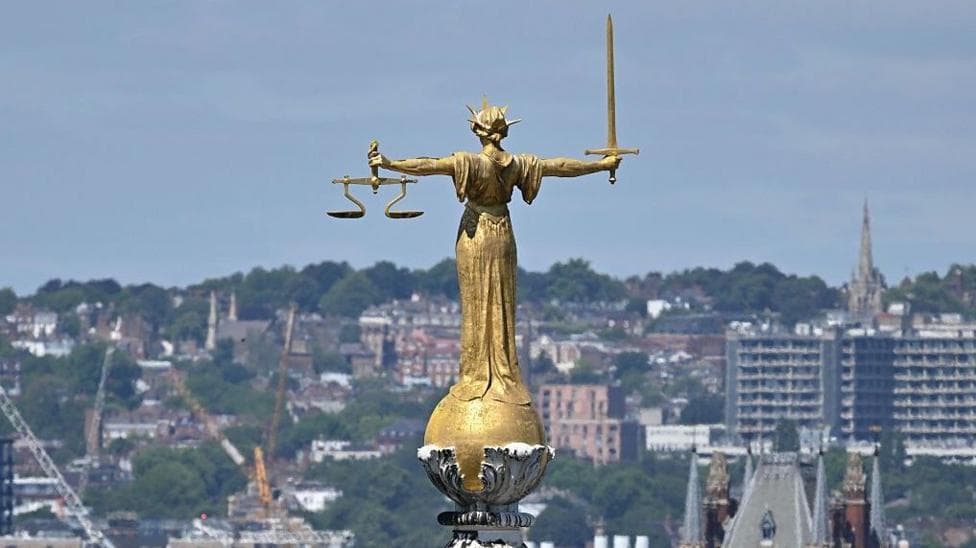
The Prime Minister has announced plans to establish dedicated courtrooms for rape and sexual assault cases in every Crown Court across England and Wales over the next two years, alongside a package of measures designed to improve support for victims and reduce trial delays.
Each Crown Court will operate at least one courtroom specifically designated for sexual offence cases. Alleged victims will be permitted to watch proceedings remotely and deliver their testimony from a separate room using video technology, removing the need to be physically present in the courtroom with the defendant.
Victims will also gain access to private entrances and dedicated waiting areas to minimise contact with defendants, though implementation will depend on the physical layout of individual court buildings. According to reporting on the reforms, campaigners have noted that victims already possess the right to request such facilities, but their availability has been inconsistent across the court estate.
Rape Crisis England and Wales characterised the announcement as a "significant step forward" that would deliver reforms the organisation had advocated for over many years.
Taken together, they reflect the urgency of ensuring that courts are fit for purpose and properly meet the needs of victims and survivors, which is crucial to securing justice,said the charity's chief executive, Ciara Bergman.
The initiative responds to longstanding concerns from victim support organisations about prosecution rates and court delays. In the year ending March 2024, just 2.8% of rape offences recorded by police resulted in prosecutions, and rape cases took longer to investigate than any other crime category. An earlier study by the Office for National Statistics found that only one in six victims of rape and attempted rape had reported their assault to police, with more than a third citing a belief that officers could not help or that the process would be humiliating.
Why are specialist courts needed?
Crown Court backlogs have created significant obstacles to justice for sexual assault survivors. At the end of March, the backlog stood at 80,098 cases, of which 15,373—representing 19%—involved sexual offences. These delays have discouraged victims from pursuing cases and contributed to case withdrawals, with charities reporting that extended waiting periods damage survivors' mental health.
The announcement follows earlier pressure from within Parliament. Labour MP Charlotte Nichols waived her automatic right to anonymity in March to deliver a Commons speech describing her own experience of rape and the impact of a 1,088-day wait for her case to reach trial.
It is because I have endured every indignity that our broken criminal justice system could mete out that I care what kind of reform will actually deliver justice for survivors and victims of crime more widely,she said at the time.
What support will victims receive?
Court staff will undergo "trauma-informed training" to better understand the needs of sexual assault survivors. Each victim will be assigned a single point of contact throughout their case, providing continuity and reducing the need to repeat their account to multiple officials.

The government has allocated approximately £23 million from the Ministry of Justice budget to fund these changes. Beyond the courtroom reforms, the government is also investing £43 million in the national rape and sexual abuse support fund over the next two years, which will cover counselling, therapy, outreach and group activities for survivors.
A new rape justice taskforce, comprising figures from across the criminal justice system, will be established to tackle postponed rape trials and victim withdrawal.
How will trial scheduling change?
From October, rape and sexual assault trials will be assigned fixed dates rather than placed on floating lists that can be postponed at short notice. This change aims to provide victims with certainty about when their case will be heard and reduce the psychological strain of indefinite waiting periods.
Victims Minister Alex Davies-Jones acknowledged that specialist courtrooms alone would not resolve the backlog, emphasising the importance of the Courts and Tribunals Bill in improving "timeliness, effectiveness and also prevention". The government has committed to prioritising rape and serious sexual offence cases more widely across the court system.
What is the political context?
The Conservative opposition has welcomed the specialist courts initiative as "long overdue" but has raised concerns about other elements of the government's justice reform agenda. Shadow Justice Secretary Nick Timothy stated that
The fact that victims have been withdrawing their cases because they have taken too long has been a disgrace,and called on the government to commit to maintaining jury trials and clearing backlogs through increased court sitting time rather than restricting defendants' rights.
The reforms align with Labour's 2024 manifesto commitment to halve violence against women and girls within a decade. Prime Minister Andy Burnham described the changes as overdue, stating that
For too long, victims of rape and serious sexual offences have felt let down by our justice system. Prosecution rates for rape remain shamefully low, with many victims waiting years for justice. This is not good enough.
Nichols had criticised the Courts and Tribunals Bill's proposals to limit jury trials to cases with a likely prison sentence of three years or more, accusing the then-Justice Secretary David Lammy of using victims as a "cudgel" to advance his broader legal reforms. Her case exemplified the system's failures: despite waiting over 1,000 days for trial, her attacker was acquitted in criminal court but subsequently ordered to pay compensation after she pursued a civil claim.
What happens next?
Fixed-date trial listing will commence from October. Every Crown Court is expected to have at least one dedicated courtroom within two years. The government has also accelerated the rollout of specialist rape and sexual offence teams in every police force in England and Wales, with completion now targeted for December 2027.
Key Facts
- Only 2.8% of rape offences recorded by police led to prosecutions in the year ending March 2024
- Sexual offence cases represent 19% of the Crown Court backlog, which stood at 80,098 cases in March
- Victims will be able to give evidence remotely and access private entrances and waiting areas
- Court staff will receive trauma-informed training and each survivor will have a dedicated point of contact
- £43 million has been allocated to the national rape and sexual abuse support fund over two years