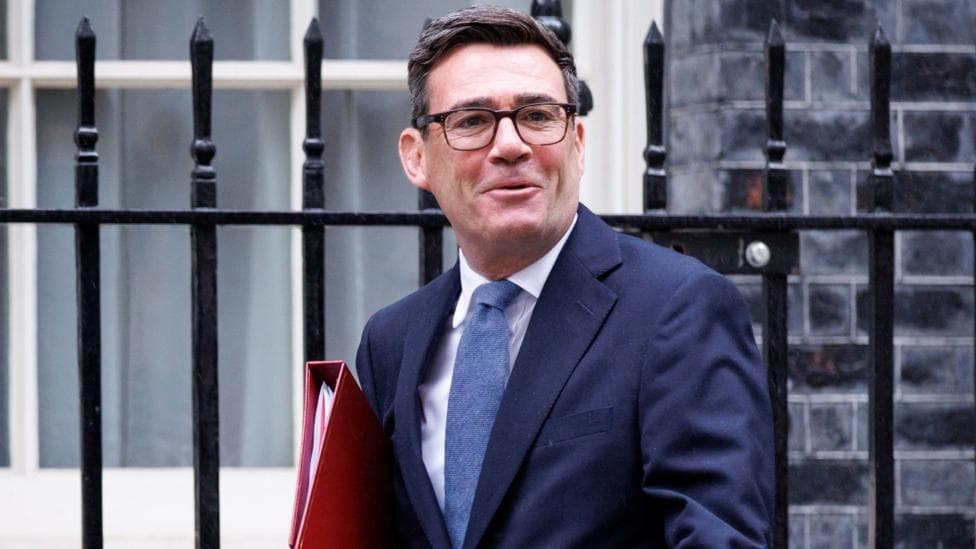
Prime Minister Andy Burnham has committed to restoring a functioning Stormont government with an agreed budget, empowering Northern Ireland Secretary Sir Chris Bryant to lead negotiations with the devolved administration's parties.
At his first Prime Minister's Questions, Burnham told MPs that he had instructed Bryant to enter talks aimed at breaking the deadlock that has left the Northern Ireland Executive without a budget since the financial year began in April. Stormont departments have been operating under emergency budgeting arrangements, with legal authority to spend only up to 95% of the previous year's funding.
The commitment comes as Burnham recently visited Northern Ireland for his first trip as prime minister, where he met with devolved leaders amid mounting pressure over a significant funding shortfall affecting public services. Stormont's first and deputy first ministers had previously written to Burnham demanding urgent talks over the funding gap.
Alliance MP for Lagan Valley Sorcha Eastwood pressed the prime minister on the issue, describing the situation as leaving people of Northern Ireland "absolutely scundered." She highlighted the combination of unresolved governance challenges alongside the absence of an agreed budget.
"At the moment, we have poisonous parading disputes and border poll spats. Meanwhile, the Northern Ireland Assembly has no budget," Eastwood said.
She urged Burnham to use the opportunity to reform Stormont's system of government, arguing that the Executive cannot simultaneously maintain its current structure and deliver sound public finances.
"Alliance have led the way on calls for changing our broken system of government in Northern Ireland. This is your chance to leave a legacy of functioning government in Northern Ireland. Will he act?"
Burnham responded by committing to work with Eastwood and her colleagues on both the immediate budget crisis and broader governance reform. He outlined his priorities clearly.
"Our first responsibility is to get Stormont government up and running and functioning properly with a budget. I've empowered the Northern Ireland secretary to go into talks to resolve that issue and the broader issues about reform, we can continue that conversation once we've got that in place."
Why has Stormont failed to agree a budget?
The Executive has been unable to reach consensus on a draft budget since Finance Minister John O'Dowd published his proposal in January. The failure represents a significant setback after hopes emerged that Stormont could secure a multi-year budget for the first time in over a decade.
Deputy First Minister Emma Little Pengelly of the Democratic Unionist Party rejected the draft, describing it as "deeply flawed." Attempts to agree even a single-year budget also collapsed, leaving the administration without formal spending authority.

Since the financial year began on 1 April, departments have relied on contingency spending arrangements. According to reporting from early August, contingency provisions were triggered when no Budget Act was in place by 1 August, forcing continued reliance on emergency measures.
Sinn Féin subsequently reached consensus with other parties that additional funding from Westminster would be necessary before any budget could be passed. The absence of an agreed budget has been described as "catastrophic" for public services, with departments continuing to operate under constraints that limit their ability to plan and deliver services effectively.
The NI Fiscal Council has cautioned that even if parties eventually agree on a budget, Stormont will continue facing structural financial problems that require longer-term solutions.
What progress has been made on negotiations?
Stormont parties and UK ministers held fresh talks at Hillsborough Castle in early July, where a programme of work was agreed to examine pressures on Executive finances. The agreed work included officials from the Treasury, the Northern Ireland Office and the Northern Ireland Civil Service, with the process set to begin immediately after the meeting.
Bryant indicated on 24 August that he would hold further discussions "later on this week and then again next week" to attempt reaching a multi-year budget agreement. The Northern Ireland Finance Minister had written to the Chancellor on 12 August seeking an urgent meeting specifically focused on the Executive's 2026-27 budget and what he described as "fair and sustainable funding" for the devolved administration.
What happens next?
Further talks between Bryant and the parties were expected to take place in the week following his 24 August statement. Burnham is also scheduled to convene the first ministers of Wales, Scotland and Northern Ireland for a summit in October at the National Economic Council to discuss economic growth and investment across the UK, which may provide an additional opportunity to address Stormont's funding challenges at a broader level.
The outcome of these negotiations will be critical for Stormont's ability to move beyond emergency spending arrangements and restore normal budgeting processes for the remainder of the financial year.
Key Facts
- Stormont departments have operated under emergency budgeting since 1 April 2026, with authority to spend only 95% of previous year's funding
- The Executive failed to agree on either a multi-year or single-year budget following Finance Minister John O'Dowd's January proposal
- Parties have indicated that additional Westminster funding is required before a budget can be passed
- A programme of work examining Executive financial pressures was agreed at Hillsborough Castle talks in early July
- Secretary of State Chris Bryant is leading negotiations aimed at resolving the deadlock