

Prime Minister Andy Burnham has announced that every person sleeping rough in England will be offered accommodation before Christmas, as part of a £442m government package aimed at ending street homelessness. The plan combines emergency shelter with health and addiction support, and follows Burnham's earlier commitment to make tackling rough sleeping his first priority in office.
Burnham made ending rough sleeping his opening pledge when he entered Downing Street in July, and has now set out fresh detail on how the government intends to deliver it. As previously reported, the initial commitment was backed by £340m in funding; Wednesday's announcement adds a further £102m, bringing the total to £442m since Burnham became prime minister.
What will the money actually pay for?
The funding is intended to cover three main areas: immediate emergency accommodation to get people off the streets this winter, practical support for health and addiction issues, and longer-term housing. Officials say the package will deliver more than 1,000 homes over the next three years to give former rough sleepers permanent places to live, alongside what is described as "intensive wraparound support" - typically psychiatric care and drug and alcohol services designed to help people rebuild their lives.
According to a report from a national broadcaster, the scheme has since been described as a five-year programme that will provide 1,200 homes and intensive support for at least 3,000 people across England, with the first phase targeting those who have been sleeping rough for the longest periods. Separate reporting from a broadcast news outlet indicates the £340m element of the funding is being drawn from existing, uncommitted housing budgets rather than new Treasury money - a detail that may feed into opposition questions about how the wider package is financed.
The government has also pointed to research suggesting there is a financial case for early intervention. Officials have cited estimates, reported by a national broadcaster, that preventing 40,000 people from becoming homeless for a year could save the public purse around £370m.
How bad is the current rough sleeping problem?
Official figures put the number of people sleeping rough on a single night in England at an estimated 4,793 in autumn 2025, a rise of 96% over five years. Campaigners say the annual snapshot significantly understates the true scale of the problem, because of strict rules governing how the data is collected. A national broadcaster's reporting also notes that the estimate has climbed sharply since 2010, when the equivalent figure stood at around 1,800.
The previous Conservative government had pledged to eliminate rough sleeping entirely by 2024, a target that was not met.
What are people who have slept rough saying?
Chloe, 27, from London, became a rough sleeper last year after growing up in contact with care and foster services. She slept in parks away from the city centre in an effort to stay hidden, and says she does not believe any rough sleeper would refuse a bed if it came with the right support attached.
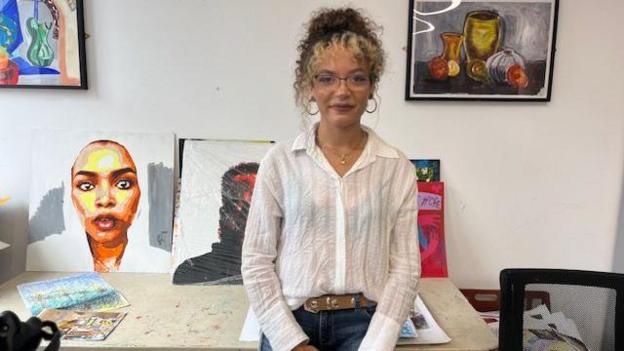
"The possibility of ending homelessness is amazing. [But] things like hidden homelessness have been normalised, with people sofa surfing and living paycheck to paycheck, I think there are certain foundational things that need to be addressed first to make sure the scope of help is there."
Chloe was subsequently helped by the charity Crisis, which placed her in temporary accommodation. She now has a place to study at film school, and believes most people currently sleeping rough would welcome the new scheme.
"In general, people on the street want a home. People usually end up coming back to homelessness for mental health or financial reasons. So if that could also be addressed, there is no person sleeping on the street right now who wouldn't want some type of security."
Meron has spent roughly two months living in a tent inside a tunnel in central London. He says he lost his home after a three-month contract at an Amazon warehouse came to an end.
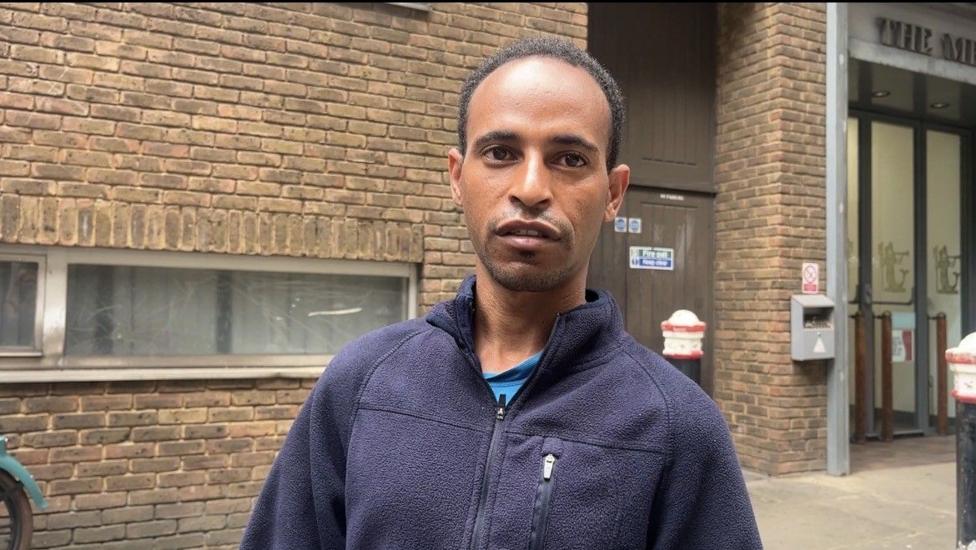
"People leave their rubbish out. There are cars, loud music, it's not dangerous but I can't sleep. I keep applying for jobs but I can't find one."
Originally from Eritrea, Meron travelled to the UK alone three years ago. He says he is now looking further afield for work because of the cost of living in the capital.
"I'm looking for any job and when I get a job I'll get a house. But I'm applying for jobs outside of London because it's too expensive."
What did Burnham say?
Burnham argued that rough sleeping has been tolerated for too long by those in power, and said he intends to break with that pattern.

"No-one should have to bed down in a doorway or outside a station. But we've seen it for so long that it feels like Westminster has started to accept it. I won't accept it."
He said the new package builds on the success of Everyone In, the Covid-era scheme that placed thousands of rough sleepers into hotels and temporary accommodation after its launch in March 2020. Around 37,000 people were helped through that programme, and the charity Shelter found that roughly a quarter of them went on to secure settled accommodation - defined as housing lasting at least six months.
Is there a model this is based on?
Burnham's approach draws heavily on Greater Manchester's "A Bed Every Night" scheme, which he has previously championed as mayor. Figures reported by the Telegraph show that programme reduced rough sleeping in the city region from 268 people in 2017 to 90 in 2021. Separately, the government's national homelessness plan, published in December, committed to halving the proportion of offenders on probation who become homeless on their very first night after leaving prison, according to reporting on the plan.
The announcement also fits a wider pattern in Burnham's early policy agenda. Alongside the rough sleeping pledge, he has moved to cut VAT on household electricity bills, and commentators have suggested that his choice of early priorities offers clues to the broader economic approach he intends to take as prime minister.
How have opponents and charities responded?
Homelessness charity Crisis called the announcement "really significant".
"It marks a turning point in our country that we're not going to tolerate people being forced to sleep on the streets."
Jasmine Basran, head of policy at Crisis, said the charity welcomed the move and believed ending rough sleeping altogether was achievable, though she called for further action to stop people ending up on the streets in the first place.
"What we also want to see in the longer term is interventions to prevent people from being forced to sleep rough in the first place."
Basran also urged government departments to coordinate more closely, warning that too many people are ending up homeless immediately after being discharged from hospital or leaving the care system.
Sarah Elliott, chief executive of Shelter, described Burnham's pledge as a "game-changing move", saying tackling the most visible form of homelessness marks a strong start, while pressing the prime minister to follow through on his promise to build more council housing for people currently stuck in temporary accommodation.
Shadow housing secretary James Cleverly was more critical, saying there was "little detail" on how the initiative would be funded or delivered. He also argued that Burnham had previously promised to end rough sleeping while serving as mayor of Manchester and had fallen short.
"[Burnham] promised to end rough sleeping while Manchester mayor and failed because he didn't do the hard work necessary."
Cleverly added that households would worry about potential tax rises unless Labour set out clearly which other programmes might be cut to cover the cost of the scheme.
Liberal Democrat housing spokesperson Gideon Amos called for Burnham to commit to his party's target of building 150,000 social homes a year, warning that short-term measures would not be enough on their own.
"Sticking plasters won't fix the homelessness crisis. Without a proper long-term plan, people could simply find themselves back on the streets once the festive headlines fade."
Deputy Reform UK leader Richard Tice was sharply critical of Burnham's record on homelessness in Manchester, dismissing the government's announcement as lacking substance.
"Yet another vague announcement with no substances which uses our most vulnerable for political point-scoring."
What happens next?
Burnham has said he will convene a special conference in the autumn, bringing together businesses, charities and faith groups to discuss how they can contribute to tackling rough sleeping. Councils and regional mayors are expected to take a leading role in shaping local responses, with areas facing the biggest problems receiving the greatest share of support.
Further policy detail is expected later this year. According to the Telegraph, Burnham is due to set out how he intends to tackle rough sleeping as part of a broader ten-year plan for Britain, suggesting that significant elements of the strategy have yet to be finalised. No firm implementation date for the full national scheme had been published at the time of writing.
Key Facts
- Burnham has committed £442m to tackling rough sleeping since becoming prime minister in July, including a newly announced £102m.
- An estimated 4,793 people slept rough on a single night in England in autumn 2025, a 96% rise over five years.
- The scheme aims to deliver more than 1,000 homes over three years, with separate reporting citing a five-year target of 1,200 homes and support for at least 3,000 people.
- The Everyone In scheme during the Covid pandemic helped around 37,000 people, with roughly a quarter achieving settled accommodation.
- Greater Manchester's "A Bed Every Night" programme, cited as a model, cut rough sleeping in the region from 268 people in 2017 to 90 in 2021.


