

The Northern Ireland exams body CCEA has confirmed it will stop offering a number of GCSE and A-level qualifications, including Economics, German and Engineering, by the end of the decade. The final GCSE courses in the affected subjects will begin in schools in 2028, with the last certificates awarded in 2030, while final A-level courses will start in 2029 and be completed by 2031.
CCEA said the move followed a review of how many pupils were taking the qualifications and whether they could be sustained in the long run.
As with all changes to our qualifications offer, we are engaging directly with schools and colleges to ensure they have sufficient notice and are supported through the transition.
A spokesperson for the board added that schools wishing to keep teaching the withdrawn subjects would need to switch to qualifications offered by exam boards in England or Wales instead.
Which subjects are being withdrawn?
Alongside Economics, German and Engineering, CCEA is dropping the GCSEs in Leisure Travel and Tourism, Learning for Life and Work, and Contemporary Crafts, as well as the A-level in Professional Business Services. Several of these courses have seen only small numbers of candidates in recent years: 369 students sat the Professional Business Services A-level in 2026, and 206 took GCSE Engineering and Manufacturing in 2025. German shows a similar pattern, with 587 pupils taking the GCSE in 2025 compared with just 49 who progressed to A-level.
Why is CCEA making this change now?
The board says the decision reflects declining or low candidate numbers combined with the cost and practicality of maintaining specifications that few schools use. The changes form part of a wider overhaul of CCEA's qualifications framework. A public consultation on the future shape of CCEA GCSEs, AS levels and A-levels ran from 18 September 2025 to 13 November 2025, according to the Department of Education. A subsequent report on that consultation stated that findings would help shape a new qualifications policy framework for future pupils, as detailed in the official consultation report.

What does this mean for language learning?
Dr Ian Collen of Queen's University Belfast warned that removing GCSE and A-level German from CCEA's offer risks discouraging pupils from continuing with languages.
Employers constantly tell us that languages matter.
This decision means that German will be the only school subject that pupils can begin at age 11 as part of statutory language learning but cannot continue to GCSE through a CCEA qualification.
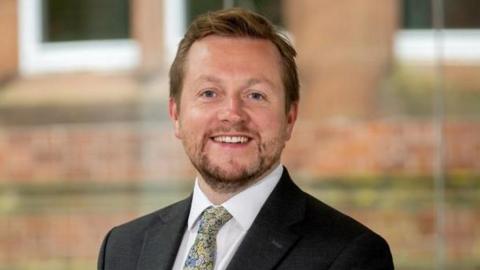
Adam Flanagan, 25, who studied German through to A-level and now works in information technology, said the language had proved useful for his career and for developing analytical skills.
In things like engineering and the technology industry, the sorts of industries you associate with Germany, it just seemed a very useful language to have familiarity with.
There is definitely an argument that learning a language, especially something like German, which has such a formalised, logical rigour to the language, does help you develop logical, analytical thinking.
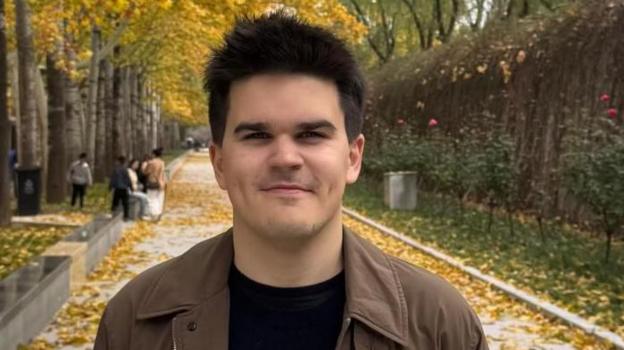
Dr Syamala Roberts, a former Methodist College Belfast pupil who studied GCSE and A-level German and is now a post-doctoral researcher in German at the University of Oxford, said she was troubled by the decision.
I first learned German at school in Belfast and it quickly became one of my favourite subjects, preparing me for a life of travel, study, teaching and working with other cultures.
She described the withdrawal as a "short-sighted move" that would narrow pupils' horizons, adding that German offers access to study and work opportunities in Europe's largest economy, which maintains close trade ties with Ireland and the United Kingdom. She said she was urging CCEA to reconsider.

The subject changes come against a backdrop of strong recent exam performance in Northern Ireland. More than 26,000 students received A-level and AS-level results on 13 August 2026, with provisional figures showing a record 44% achieving A*-A grades, as reported in our coverage of this year's results. That result day was part of a wider release of A-level, T-level and BTec outcomes across England, Wales and Northern Ireland, which also saw a record number of university acceptances alongside widening regional and gender attainment gaps, as detailed in our report on this year's results across the three nations.
What happens next?
Beyond the withdrawal of individual subjects, CCEA is preparing a more fundamental restructuring of its A-level system. According to a national broadcaster's report, AS levels are to be phased out entirely and replaced with a new two-year modular A-level structure, with first teaching due to begin in September 2029. The Department of Education's oral statement on 3 March 2026 confirmed the reform sits within a broader new qualifications framework covering CCEA GCSEs, AS levels and A-levels, according to the department's statement. Separately, the consultation report indicates that new GCSE and A-level specifications will be rolled out on a phased basis, with first teaching likely from September 2028, according to the consultation findings.
- CCEA will stop offering GCSEs in Economics, German, Engineering and Manufacturing, Leisure Travel and Tourism, Learning for Life and Work, and Contemporary Crafts.
- The A-level in Professional Business Services is also being withdrawn.
- Final GCSE courses begin in 2028 with last awards in 2030; final A-level courses begin in 2029 with last awards in 2031.
- AS levels are being scrapped entirely in favour of a new two-year modular A-level model starting September 2029.
- New specifications for remaining CCEA GCSEs and A-levels are expected to be phased in from September 2028.


