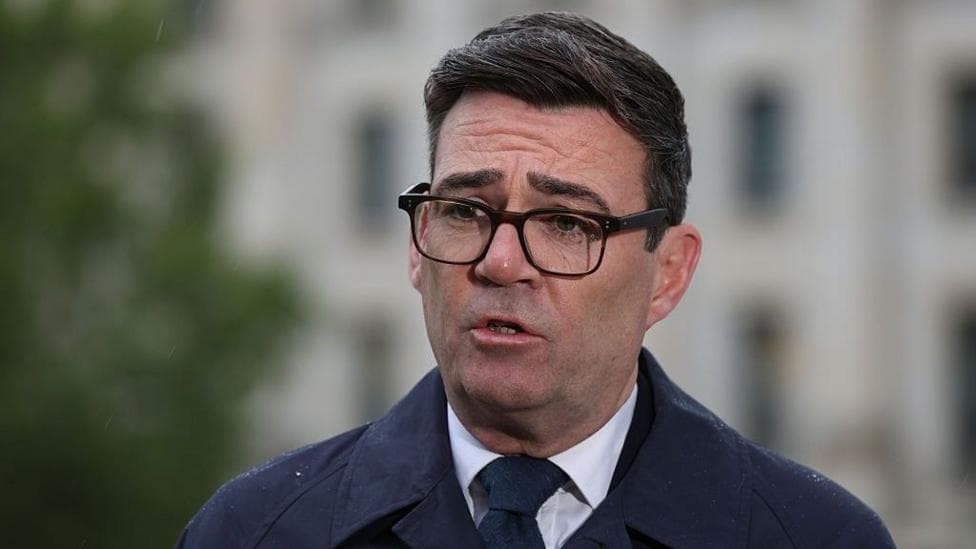
Prime Minister Andy Burnham has called on Green Party leader Zack Polanski to reverse a motion passed by party members declaring Zionism a form of racism, describing the decision as "completely wrong" and demonstrating "terrible judgement".
The motion, approved on Sunday at the party's conference in Brighton, defined Zionism as an ideology supporting "an ethnonationalist Jewish state" and endorsed a "single democratic Palestinian state in all of historic Palestine", a formulation that encompasses modern-day Israel. According to reporting on the vote, the motion passed with 1,022 votes to 813.
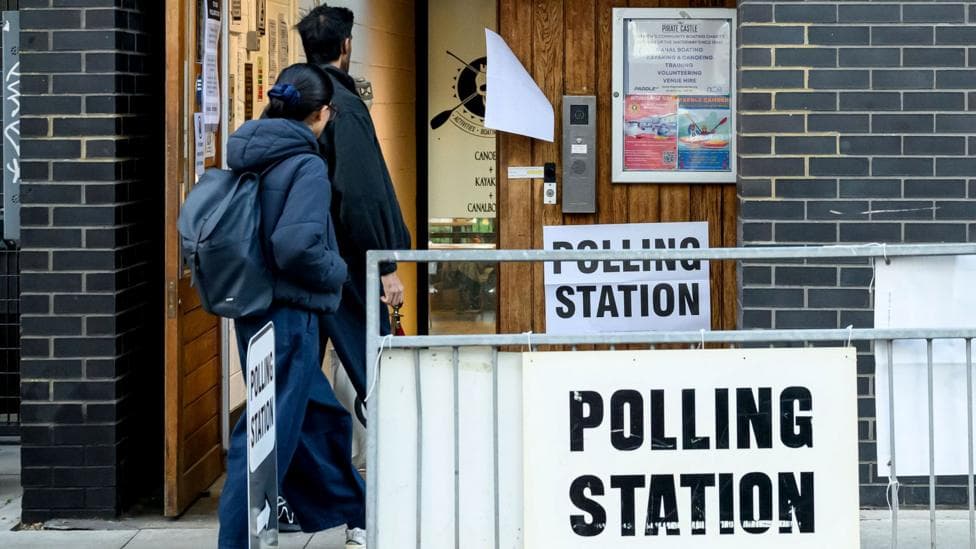
Burnham's intervention came as polling stations closed on Thursday in the Holborn and St Pancras by-election, where Polanski is standing as a candidate. The timing has intensified scrutiny of the party leadership during a crucial campaign to overturn a substantial Labour majority in the seat vacated by former Prime Minister Sir Keir Starmer, who secured 18,884 votes (48.9 per cent) in the 2024 general election.
What has Polanski said about the motion?
Polanski has stated he would not accept anyone being excluded from the Green Party "because of the religious or communal body they are part of", but has declined to specify whether he personally supports the motion passed by members. The Green leader did not vote on the Zionism motion, having departed the conference early to return to London for by-election campaigning.
Before the vote took place, Polanski had backed an amendment to specify that the motion should not be used to discipline Jewish members attending synagogues that consider themselves Zionist. That amendment was voted down by members. He had also sought to change the reference to a single Palestinian state, arguing: "I don't believe we as a Green Party of England and Wales, or even the British government, should be deciding what the future settlement looks like."
Polanski declined media interviews following the motion's passage and did not respond to questions from reporters about the vote ahead of Burnham's comments.
How has the party reacted internally?
The motion has triggered significant internal division within the Greens. Four of the party's five MPs have opposed it, its co-deputy leaders are split on the issue, and the Green deputy leader in Wales resigned in protest. The decision has also drawn condemnation from party members and Green counterparts across Europe.
The Green Party operates under an internal democracy model in which official policy is decided by members through conference votes. However, such positions are not necessarily incorporated into the party's general election manifestos. According to the party's statement on the motion, it also reaffirmed support for Palestinian right of return, Boycott, Divestment and Sanctions, and a full arms embargo against Israel.
What is the government's position?
In his first public intervention on Thursday, Burnham told reporters while visiting Berlin that he believed the motion effectively ruled out a two-state solution between Israel and Palestine.
"For that reason, it shouldn't be supported in any way, shape or form,"he said.
"I would call on the leadership of the Green Party to say that it will be reversed and it won't be Green Party policy."
When pressed on whether he would rule out entering into coalition with the Greens, Burnham declined to comment on "any business about what might or might not happen in the future".
What has Israel said?
Israel's foreign ministry responded to the motion by announcing it had barred Polanski from entering the country, according to official reports of the decision. This action underscores the diplomatic sensitivity surrounding the party's position.
How have the Greens defended the motion?
A Green Party spokesperson said on Thursday:
"This has been an emotive issue and is complex. It has rightly caused much discussion, and needs to be taken in the context that Israel's behaviour has had. Israel has been responsible for a genocide, ethnic cleansing and the killing of children, and we've had a political establishment which has not only turned a blind eye but provided support."
The International Court of Justice is currently hearing a case brought by South Africa accusing Israeli forces of genocide, though a conclusion could take years. Israel has rejected the case as "wholly unfounded" and based on "biased and false claims".
What is the political context?
The motion has significantly complicated the final stages of Polanski's by-election campaign. In the 2024 general election, Labour's Keir Starmer won the Holborn and St Pancras seat with a commanding majority, securing 48.9 per cent of the vote. The Greens received just 10.4 per cent, with independent candidate Andrew Feinstein finishing second on 18.9 per cent. The party has been attempting to overturn this substantial Labour lead in the by-election triggered by Starmer's move to Number 10.
The controversy has exposed tensions within the party's leadership and membership over how to balance support for Palestinian causes with concerns about antisemitism and party inclusivity. The decision to define Zionism as racism has proven particularly divisive, with significant portions of the party's parliamentary representation and senior figures expressing reservations about the motion's framing and implications.

What happens next?
The by-election count was expected to produce a result between 03:00 and 04:00 on Friday 9 October. The outcome will determine whether the Greens have made significant progress in the seat or whether Labour has retained control despite the party's internal difficulties.
Burnham's call for the motion to be reversed suggests the government may use the issue as a pressure point in future negotiations with the Greens, should coalition discussions become necessary. The party leadership faces a decision about whether to seek to overturn or modify the motion at a future conference, or to accept it as binding party policy despite the internal and external criticism it has generated.