The BBC's director general has indicated that financial pressures and shifting audience behaviour could force the closure of some television channels and radio stations as the corporation redirects resources toward streaming and on-demand platforms.
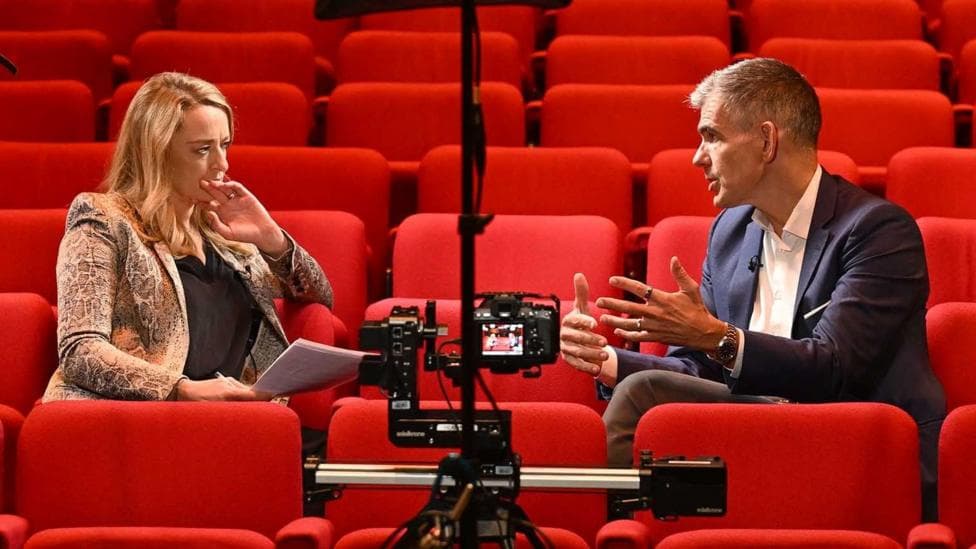
Matt Brittin, who took over the role in May after a decade leading Google's operations across Europe, the Middle East and Africa, told a national broadcaster's programme that the corporation cannot promise the permanence of any existing service. Speaking on 27 September, he outlined how the BBC must adapt to changing consumption patterns while pursuing £500m in savings.
We can't guarantee any programme or channel forever
Brittin explained that the financial constraints facing the organisation mean difficult decisions about channel and service viability must be made sooner than previously anticipated. He pointed to the divergence between traditional broadcast audiences and those accessing content through on-demand platforms as a key factor in these assessments.
The tight financial situation means that we're having to look at some of those decisions a bit sooner than we might like.
How are audience habits changing?
Viewing and listening patterns have shifted dramatically, with audiences increasingly consuming programmes outside scheduled broadcast windows. Brittin illustrated this with a concrete example: some services attract 100,000 viewers through traditional broadcast but reach 500,000 people via the BBC's on-demand platform.
If most of an audience is getting things on demand, we have to look the value and the cost of all of those different services.
He framed the corporation's challenge as determining the optimal moment to transition services entirely to on-demand delivery, balancing audience reach against operational costs and value for licence fee payers.
What specific programmes and services have already been affected?
The BBC has already announced the closure of several established programmes in recent months, including Blankety Blank, Celebrity Mastermind, Live At The Apollo and Football Focus. According to the corporation's news service, the first phase of savings has included 550 job cuts across news, nations, and television and radio content divisions, with a comprehensive review of broadcast channels and radio networks underway as audiences migrate online.
The scale of the restructuring extends beyond individual programmes. BBC Wales has announced 45 job cuts, with 20 hours of television programming ending and several radio shows being dropped as part of the wider savings initiative. Additionally, BBC sources indicate that 350 to 400 hours of audio content will be cut by the end of the next financial year.

What is the director general's vision for the BBC's future?
Brittin argued that the corporation remains locked into outdated models of content distribution while audiences have already moved toward tomorrow's consumption habits. He emphasised that the BBC must explore different pathways to reach people where they actually engage with media.
We might have some channels and services where maybe 100,000 people are watching the broadcast service but 500,000 are getting those programmes on . When's the right time to migrate that service fully to being on-demand? And part of my job is to safeguard value for money for the licence fee payer.
When asked about the potential use of artificial intelligence in BBC content creation, Brittin indicated openness to experimentation within appropriate boundaries. He stressed that while AI could help extend the value of the licence fee and support creative decision-making, it should not replace human creativity.
I would do, within guardrails. We want to experiment with this technology and understand what it can and can't do, but I'm here because I believe in human creativity. I don't think anything we do should be replaced by AI. I think there are lots of places where AI can help us make the licence fee go further, but also help us in our decision-making and creativity. But it's not a substitute for humans.
What concerns has the director general raised about the media landscape?
Brittin warned of a potential concentration of power among a small number of technology companies that could control information access and creation in the coming years. He expressed particular concern about the dominance of non-European firms in shaping how people encounter news and information.
We're also in this moment where AI is in takeoff. So I think there's a danger that six companies will control access to information in future and the creation of information and misinformation. Six companies, none of them European, let alone British. In that world, here's the BBC. It's the most trusted organisation by over half a billion people.
When pressed on whether he trusts major technology platforms, Brittin declined to express blanket confidence in any single company. Instead, he advocated for continuous scrutiny of how platforms operate and whether BBC content appears appropriately within their systems.
There's a lot of platforms out there, so I wouldn't trust any platform innately. And I think what you do is you keep under review how those things work and whether your content can show up in the right place and fulfil its mission. I think the BBC and our apps and services should be the antidote to the algorithm. Everywhere else you go is driven by some commercial interest.
What is the scale of the BBC's financial challenge?
The corporation faces a substantial deficit. The BBC's annual plan for 2026-27 projects a group deficit of £329m, with a public service broadcasting operating deficit of £64m before exceptional items. The overall savings programme targets approximately £500m and may result in headcount reductions of between 1,800 and 2,000 positions across the organisation.
The financial pressures have already prompted earlier decisions. In June, the BBC announced reductions including the end of the Sunday morning edition of BBC Breakfast and cuts to 5 Live Weekend Breakfast programming.
What further closures are anticipated?
Staff within the corporation are expecting announcements regarding additional programme and service closures early in the following week. Speculation suggests that BBC Three could face closure again, along with reductions to BBC radio output. BBC Three was moved entirely online in 2016 before being restored to linear television in 2022, making it a candidate for reconsideration under the current review.
The corporation's savings plan indicates that 100 to 150 hours of originated programmes will be reduced by the end of the 2027-28 financial year. Additionally, 5 Live Weekend Breakfast is scheduled to transition to a two-hour format from April.
Key Facts
- The BBC is pursuing £500m in savings, potentially resulting in 1,800 to 2,000 job losses across the organisation
- 550 job cuts have already been implemented in news, nations, and television and radio content divisions, with 350 to 400 hours of audio content scheduled for removal by the end of the next financial year
- The corporation projects a group deficit of £329m for 2026-27, prompting a comprehensive review of broadcast channels and radio networks as audiences shift to on-demand consumption
- BBC Wales has announced 45 job cuts with 20 hours of television programming ending and several radio shows being discontinued
- Further closure announcements are expected early in the following week, with BBC Three and additional radio services under consideration