Kemi Badenoch, leader of the Conservative Party, has declared she would prefer to call another general election rather than form a coalition with Reform UK if no party secures an overall majority in the next poll. Speaking to the BBC, she characterised Nigel Farage's party as mired in controversy, warning that any partnership would create endless difficulties.
Current polling indicates a hung parliament is likely, with Labour projected to emerge as the largest party, followed by Reform and the Conservatives in third place. Badenoch has been reshaping the Conservative Party's image following its devastating loss in the 2024 general election, positioning it as a renewed force under her leadership.
During an interview with BBC Political Editor Chris Mason, Badenoch outlined her vision for a party returning to its roots. She stated:
"we are going back to the authentic Conservative Party, that people knew and loved"after unveiling a comprehensive policy document titled The Right Way. According to parliamentary sources, this 95-page manifesto establishes five core principles, including the concept that wealth creation must precede redistribution and that government should exercise authority only where the state possesses unique capability, while remaining restrained elsewhere.
Despite acknowledging the challenging electoral landscape, Badenoch expressed confidence in the party's prospects. She remarked:
"politics is volatile"and noted that
"we're the only credible alternative to Labour, the only ones with a plan."She predicted that if the next election produces a hung parliament with no party winning an outright majority,
"there would be another election immediately after."
Why won't Badenoch work with Reform?
When presented with a hypothetical scenario in which the Conservatives would be the largest party alongside a substantial Reform presence in a hung parliament, Badenoch firmly rejected any possibility of collaboration. She declared:
"If you want Conservative, you have to vote Conservative. I have said we'd have another election if there was no overall majority."
Badenoch's refusal centres on what she describes as Reform's troubled track record. She stated that party members are
"neck deep in scandal, it'd just be one problem after another"and expressed her desire for Reform voters to
"come back"to the Conservatives. She cited specific cases to support her criticism: the arrest of Dan Thomas, who resigned as Reform's Welsh leader last month on suspicion of assault and controlling or coercive behaviour (Thomas has denied wrongdoing), and the conviction of Nathan Gill, the former Reform Wales leader, who received a 10-and-a-half-year prison sentence after admitting he accepted bribes in exchange for delivering pro-Russia speeches and interviews.
Farage himself has faced considerable scrutiny regarding financial arrangements, including a £5 million gift from a billionaire Reform donor prior to his election as an MP. Farage has consistently maintained his conduct was entirely proper.
Behind the scenes, senior Conservative strategists view a potential shift in voter preference as strategically vital. They believe that if the Conservatives can draw level with Reform in opinion polls and subsequently establish a narrow lead, they can credibly present themselves as Labour's only viable challenger, potentially triggering a broader realignment of support in their favour.
What are the Conservatives' policies on young people?
Badenoch has substantially revised the party's approach to youth employment, moving away from the previously announced "First Job Bonus" scheme. She acknowledged that youth unemployment has risen sharply and argued that
"you can't give people a first jobs bonus if they're not getting a first job."
The new proposal cuts the employer National Insurance contribution rate from 15% to 7.5% for workers aged 21 to 24. The standard rate applies to earnings exceeding £50,270, and the policy is designed to address what the party describes as the "cliff edge" that occurs when employer NI jumps from 0% to the full rate upon a worker's 21st birthday. The original "First Job Bonus" scheme, announced last year, would have cost £2.8 billion annually and would have redirected the first £5,000 of National Insurance contributions into a savings account of the young person's choice.
Badenoch explained the rationale for targeting this specific age group:
"We have to find the money first. So we have a golden economic rule. We are being fiscally credible. We find savings and then we spend it. If I could afford to cut it for everybody, I promise you that I would. But young people have a much worse problem than everybody else."Approximately one million young people in the UK are currently not engaged in education, employment, or training, making this demographic a focus of policy attention.
What other policies has the Conservative conference announced?
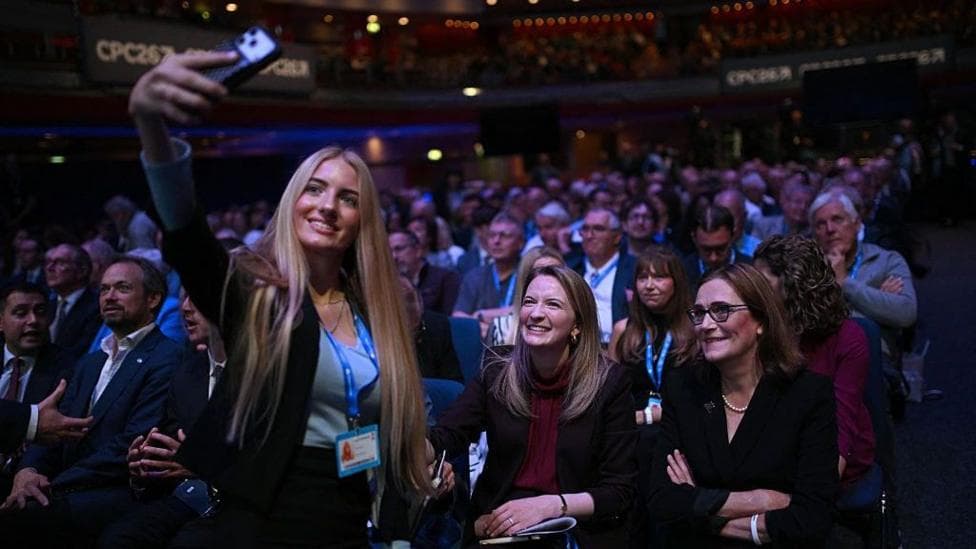
Beyond the youth employment measures, the Conservative conference in Birmingham has unveiled additional commitments. According to live coverage from the conference, the party has pledged to construct 50,000 additional prison places and to expand 30 hours of free childcare to working parents. According to reporting on the childcare proposal, the scheme would provide 30 hours of free care to parents working at least 16 hours per week, removing the current £100,000 earnings threshold that previously restricted eligibility.
Badenoch has also outlined broader policy ambitions, stating:
"I want to get this economy growing, I want to make the country richer, I want to stop the boats, we've got a plan on borders, we've got a plan on welfare, we've got a plan on defence and bringing energy costs down."
What is the significance of The Right Way document?
Badenoch's policy manifesto deliberately references Margaret Thatcher's 1976 essay The Right Approach, signalling an attempt to reconnect the party with its ideological heritage. The document's timing reflects advice given to Conservative MPs by former MI6 chief Alex Younger in February, who recommended that the party establish clear governing principles before returning to office, according to reporting from the conference.
The manifesto serves as Badenoch's attempt to define what a renewed Conservative Party stands for, moving beyond the party's record in government and establishing a forward-looking platform for the next election.
What happens next for the Conservatives?
Shadow Chancellor Andrew Griffith was scheduled to present the Conservatives' detailed economic policies on Monday, 5 October, during the ongoing Birmingham conference. These announcements are expected to flesh out the party's fiscal strategy and provide voters with a comprehensive understanding of how the Conservatives plan to address the UK's economic challenges.
The next general election must take place by August 2029. Prime Minister Andy Burnham stated last month that he had no intention of calling an early election, describing such a move as throwing
"the country into a backward-looking process."
Key Facts
- Badenoch has ruled out any coalition with Reform UK, stating she would prefer another election if no party wins an overall majority
- The Conservatives are proposing to cut employer National Insurance contributions from 15% to 7.5% for workers aged 21 to 24
- The party has pledged to build 50,000 additional prison places and expand free childcare to working parents earning over £100,000
- Current polling suggests a hung parliament, with Labour as the largest party, followed by Reform and the Conservatives
- Badenoch's policy document The Right Way deliberately echoes Margaret Thatcher's 1976 essay The Right Approach