Scotland's public spending watchdog has demanded significantly greater transparency from the Scottish government regarding its plans for the £755 million generated through the ScotWind offshore wind farm leasing programme.
The Auditor General for Scotland's report highlighted that ministers have accessed £96 million of the ScotWind funds to date, with projections indicating a further £507 million will be spent by 2031. However, the government has failed to provide clear public guidance on how these revenues will be allocated.
Opposition parties have accused the administration of breaking its commitment to establish a dedicated "ScotWind wealth fund", arguing instead that the money has been diverted to address shortfalls in Scotland's overall budget position. The Scottish government responded by acknowledging the need for clarity and committing to provide detailed information through its annual budget-setting procedures.
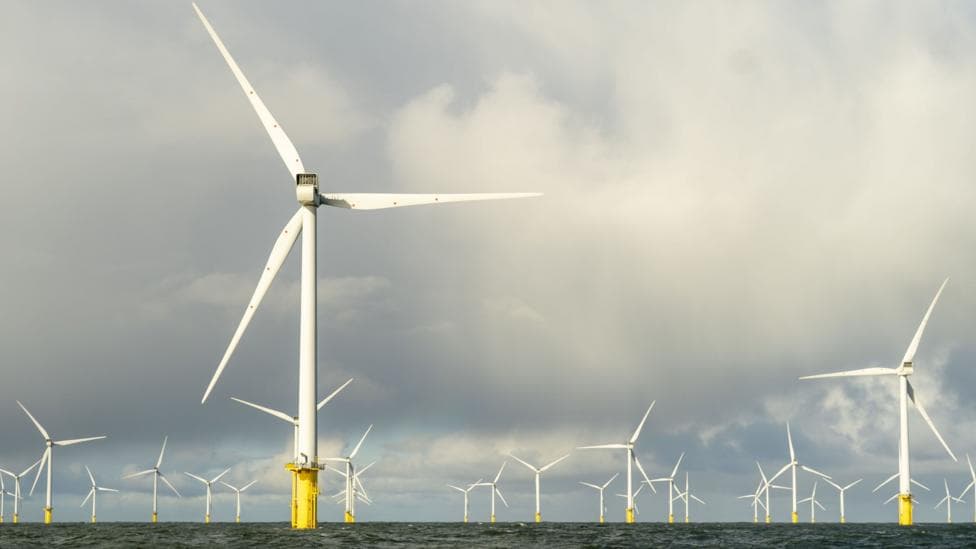
ScotWind refers to the leasing of Scotland's seabed to developers seeking to construct offshore wind farms. Crown Estate Scotland, which manages the seabed historically owned by the Crown, receives the profits from these leases and passes them to the Scottish government.
In April 2022, Crown Estate Scotland announced the successful bidders for 17 sea areas around Scotland's coastline, encompassing significant zones near Orkney, Lewis and Islay. Three additional sea areas off Shetland were added later that year. The total revenue from this leasing round reached £755 million.
This represents a single upfront payment, with smaller annual leasing revenues expected to follow approximately a decade later. According to government records released through freedom of information, the full amount raised was £755.2 million, with £96 million spent entirely during 2022–23.
The ScotWind windfall could have been substantially larger had Crown Estate Scotland pursued a different bidding strategy. Rather than conducting an open auction to the highest bidder, the organisation prioritised bids demonstrating the strongest project credibility and long-term viability. This approach aimed to secure decades of consistent lease payments rather than maximising immediate returns.
South of the border, Crown Estate UK adopted an alternative "open pricing" model that generated significantly higher-than-expected revenues. The auditor general's assessment concluded that the Scottish strategy could deliver considerable long-term benefits if developers proceed with their projects and execute full leases. However, he cautioned that economic benefits could be substantially diminished if companies abandon their options.

Stephen Boyle, Auditor General for Scotland, stated:
"Whether that decision represents value for money will be determined in the coming years. If developers sign long-term leases before their option periods end, then annual payments will continue to benefit Scotland for the next 60 years. However, if they give up their options the capped option pricing model will result in limited wider economic benefits and substantially reduced public revenues."

Boyle emphasised the urgency of government action, declaring:
"What is now important is that the Scottish government is much more transparent about their plans for how the ScotWind funds will be used across this parliamentary term and beyond."
How will the money be spent?
The Scottish government has not clearly specified how individual ScotWind revenues will be deployed. According to government information, the funds have been used to support the overall fiscal position and cannot be allocated to specific projects. The 2026–27 Scottish Budget allocation designates £50 million of ScotWind money to support the 2026–27 resource position, with £488 million planned for the remainder of the spending review period.
Energy Minister Stephen Gethins characterised ScotWind as a success story that will generate an estimated £80 million to £110 million in annual income across the 60-year project lifetime.
"This vindicates the decision to focus on project delivery and attracting investment, rather than upfront revenues,"he said.
Gethins acknowledged the requirement for improved communication:
"I recognise the importance of providing clarity on how offshore wind revenues will be managed, and we will continue to do so through our annual budget setting process."He confirmed the government's commitment to establish a ScotWind Wealth Fund by the end of the current parliamentary term, a pledge now reflected in the 2026–2031 Programme for Government.
What are opposition parties saying?
Scottish Labour energy spokesman Daniel Johnson criticised the administration's handling of the windfall:
"The SNP sold off our seabeds on the cheap and then spent years frittering away the proceeds plugging their own budget gaps. With hundreds of millions of pounds on the table, the SNP must set out how it will put this money to good use."
Scottish Conservative energy spokesman Liam Kerr accused SNP ministers of deliberate opacity:
"They have repeatedly used these funds to plug other gaps in Scotland's finances which are facing a £5bn blackhole thanks to two decades of SNP economic mismanagement."He added:
"John Swinney needs to be upfront about his plans otherwise his Scotwind Wealth Fund election pledge will look like another headline grabbing policy that will not be delivered."
Scottish Liberal Democrat finance spokesman Liam McArthur stated:
"This report is rightly sceptical of how the government has acted. If Scotland's renewable energy wealth is truly to serve the Scottish public, the government need to massively improve governance and transparency."He noted his party's longstanding criticism of the seabed sale terms and the subsequent use of revenues to address budget pressures.
What happens next?
Audit Scotland's scope documentation indicates the organisation planned to publish its comprehensive ScotWind report in September 2026, with findings subsequently presented to the Scottish Parliament. The audit was specifically designed to examine whether the funds have been deployed in accordance with government commitments and to assess the decision-making processes surrounding the leasing round.
The Scottish government has indicated that detailed plans for ScotWind revenue allocation from 2026–27 onwards will be disclosed through the annual budget process. Analysis from the Institute for Fiscal Studies suggests the government now intends to deploy substantially fewer Crown Estate and ScotWind proceeds than previously anticipated in its budget forecasts.
Key Facts
- Crown Estate Scotland raised £755.2 million from the ScotWind seabed leasing round in 2022, with £96 million spent in 2022–23
- The Scottish government projects spending a further £507 million by 2031, but has not publicly detailed how individual revenues will be allocated
- The government committed to establishing a ScotWind Wealth Fund by the end of the current parliamentary term under its 2026–2031 Programme for Government
- Annual revenues of £80–£110 million are projected over the 60-year lease period if developers proceed with full projects
- Opposition parties have criticised the government for using ScotWind funds to plug budget gaps rather than investing in dedicated long-term wealth creation