

A Syrian court sentenced ousted leader Bashar al-Assad to death in absentia on 11 August 2026 after finding him guilty of war crimes and crimes against humanity committed during the country's civil war. The ruling marks the first conviction handed down against Assad since he fled the country in December 2024, when his family's five-decade hold on power collapsed. According to CNN, this is the first legal action taken against Assad or those closest to him since his government fell roughly 20 months ago.
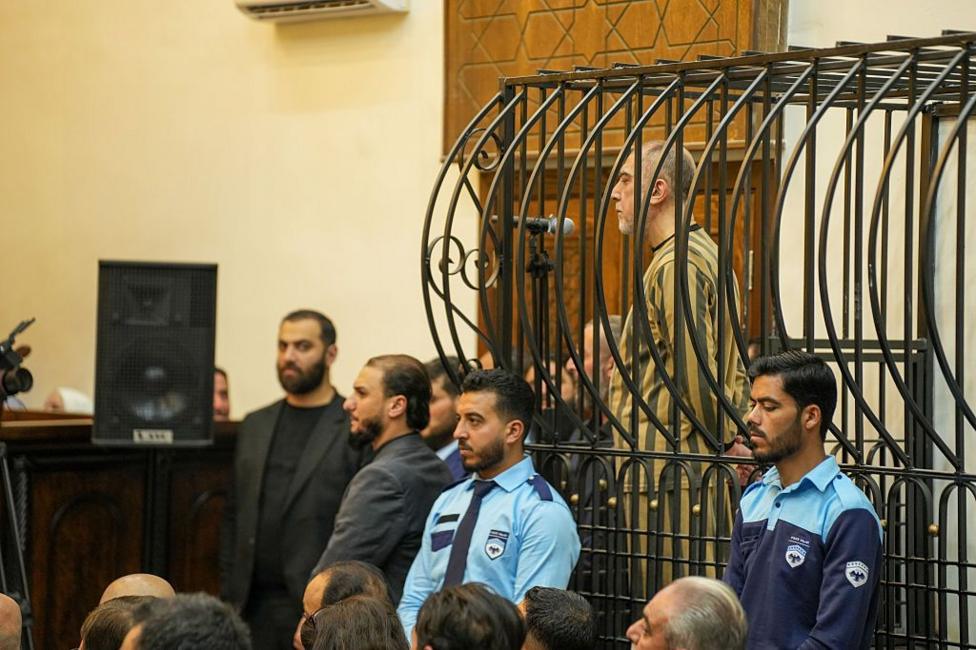
Atef Najib, Assad's cousin and the former head of political security in Deraa province in southern Syria, was also sentenced to death. He stood trial in person and appeared in a striped prison uniform, held inside a cage in the courtroom, as the judge delivered the sentence.
Deraa holds particular significance as the city widely regarded as the starting point of the uprising against Assad's government. In March 2011, security forces responded violently to protests that erupted after a group of teenagers were detained and reportedly tortured for writing anti-government graffiti. That crackdown is credited with triggering the nationwide demonstrations that eventually spiralled into full-scale civil war.
What was Assad convicted of?
Najib was found guilty of a range of offences, including murder, the intentional killing of children under the age of 15, and torture leading to death. According to the Washington Post, he led the crackdown in Daraa, the province most closely associated with the beginning of the uprising, and the wider conflict is described as having lasted 14 years and claimed roughly half a million lives.
During sentencing, Judge Fakhareddine al-Aryan addressed the court on live state television, stating that Assad had used the machinery of the state to carry out mass atrocities, as reported by CNN:

"[Assad] utilized state agencies to perpetrate war crimes and crimes against humanity."
The same court also handed down death sentences in absentia to six former military and security officials, among them Maher al-Assad, the ousted leader's younger brother, who commanded the army's elite Fourth Division and also fled to Moscow when the government fell. Former defence minister Fahd al-Freij was among the others convicted.
Why does this ruling matter for Syria's transition?
The verdict represents the first conviction issued by Syria's transitional authorities, who began prosecuting former regime officials earlier this year, according to France 24, covering both defendants tried in person and those sentenced in absentia. Najib is among the most senior former officials to face trial so far under the new government.
Nouha al-Masri, who lost her brother in the March 2011 crackdown and massacre at Al-Omari Square in Deraa, has waited 15 years for this outcome. She served on the five-person prosecution team while also acting as a plaintiff in the case. She told a broadcaster:
"The verdict reflects the magnitude of the sacrifices we made, the sacrifices of the martyrs, the suffering and pain of the victims, the missing, and the detainees. We have been waiting for 15 years to reclaim even a small part of our rights, for all those who have spilled our blood, committed crimes, violated our rights, killed, and tortured us."
She described the ruling as marking the start of a new phase rather than an endpoint, adding:
"Our demand is that this not be the end of the trials... In the new Syria, there will be no impunity from this day forward."
How does this fit with other efforts to hold Assad-era officials accountable?
This case follows a series of separate actions against figures tied to the former government. Earlier this year, a suspect was arrested in connection with the 2013 Tadamon massacre, in which extrajudicial killings of civilians were documented in leaked footage. In a separate case outside Syria, an Austrian court recently convicted a former Syrian intelligence chief of torture and abuse committed against regime opponents in Raqqa, sentencing him and another official to eight years in prison; both have denied the charges. Meanwhile, Syria's political transition has continued to move forward, with the interim president recently completing the appointment of the country's new parliament, filling the last 70 seats.
What happens next?
It remains uncertain whether Syria's current leadership will be able to secure the extradition of Bashar and Maher al-Assad from Russia, where both are believed to be residing. An arrest warrant was first issued against Bashar al-Assad in December 2025 on charges of murder and torture. He fled to Russia as forces led by Ahmed al-Sharaa, now Syria's president, seized power in an 11-day offensive that ended the Assad dynasty's rule. Since then, the new government has detained numerous former officials and security personnel, though most senior figures from the old regime, including Assad himself, remain beyond reach in Russia. Earlier attempts by Syrian opposition figures to pursue legal action against Assad in Western courts during the final years of his rule failed to produce any convictions.
Who was Bashar al-Assad before the war?
Assad took power in 2000 following the death of his father, Hafez al-Assad. He was not originally expected to lead the country; that path opened only after his older brother, Basil, died in a car accident in 1994. As a member of Syria's Alawite minority, he maintained the group's dominant presence across military, security and intelligence institutions throughout his rule, a large part of which was ultimately defined by the civil war that erupted in 2011.
Key Facts
- Bashar al-Assad was sentenced to death in absentia on 11 August 2026 for war crimes and crimes against humanity.
- Cousin Atef Najib was also sentenced to death and appeared in court in a cage wearing a prison uniform.
- Six former military and security officials, including Assad's brother Maher, were also sentenced to death in absentia.
- The conflict lasted roughly 14 years and killed about half a million people, according to reporting.
- Both Bashar and Maher al-Assad are believed to remain in Russia, and extradition prospects remain unclear.


